
By Crescent Shores Retreats · Naivasha, Kenya · Published May 2026 · 12 min read
Of all the wildlife destinations on earth, the Maasai Mara stands alone. It is the stage for the Great Wildebeest Migration — the largest movement of land mammals on the planet. It holds the densest lion population in Africa. It is where leopards drape themselves over acacia branches in the afternoon heat and cheetahs sprint across open grassland at seventy kilometres an hour. If you are planning a Kenya safari in 2026, the Maasai Mara is not just one option among many — it is the centrepiece around which great itineraries are built.
This guide covers everything you need to know before you go: the wildlife, the migration timing, which zone to stay in, how to get there, what to budget, and the experiences that will define your trip.
Why the Maasai Mara Is in a Class of Its Own
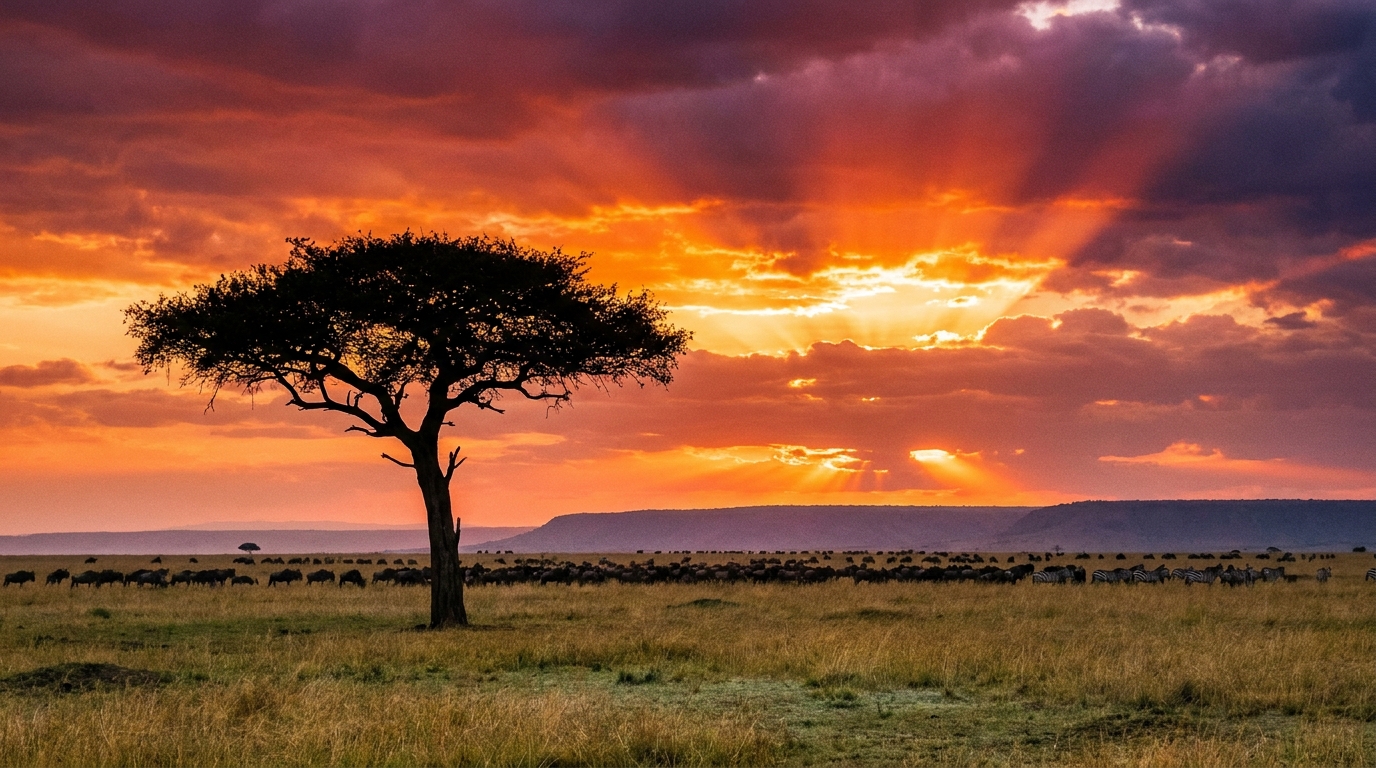
The Maasai Mara National Reserve covers 1,510 square kilometres of open grassland, riverine forest, and rolling hills in southwestern Kenya. Together with Tanzania’s Serengeti National Park — which shares its southern boundary — it forms the greatest intact savanna ecosystem remaining on earth.
What sets the Mara apart from every other African safari destination is a combination of factors that rarely align anywhere else: open landscape that allows unobstructed sightlines across kilometres of terrain, extraordinary predator density, a permanent water source in the Mara and Talek Rivers, and the seasonal spectacle of the Great Wildebeest Migration passing through between July and October.
The Maasai people, after whom the reserve is named, have coexisted with this wilderness for centuries. Their presence — bright red shukas, elaborate beadwork, and proud posture on the horizon — adds a human dimension to the Mara that makes it feel alive in a way that pure wilderness cannot replicate.
Whether you visit during peak migration season or in the quieter green months, the Maasai Mara will exceed what you imagined.
Maasai Mara Wildlife — The Big Five and Beyond
The Mara is one of only a handful of places on earth where you have a genuine chance of seeing all of the Big Five in a single day. Here is what you can expect from each species.
Lions
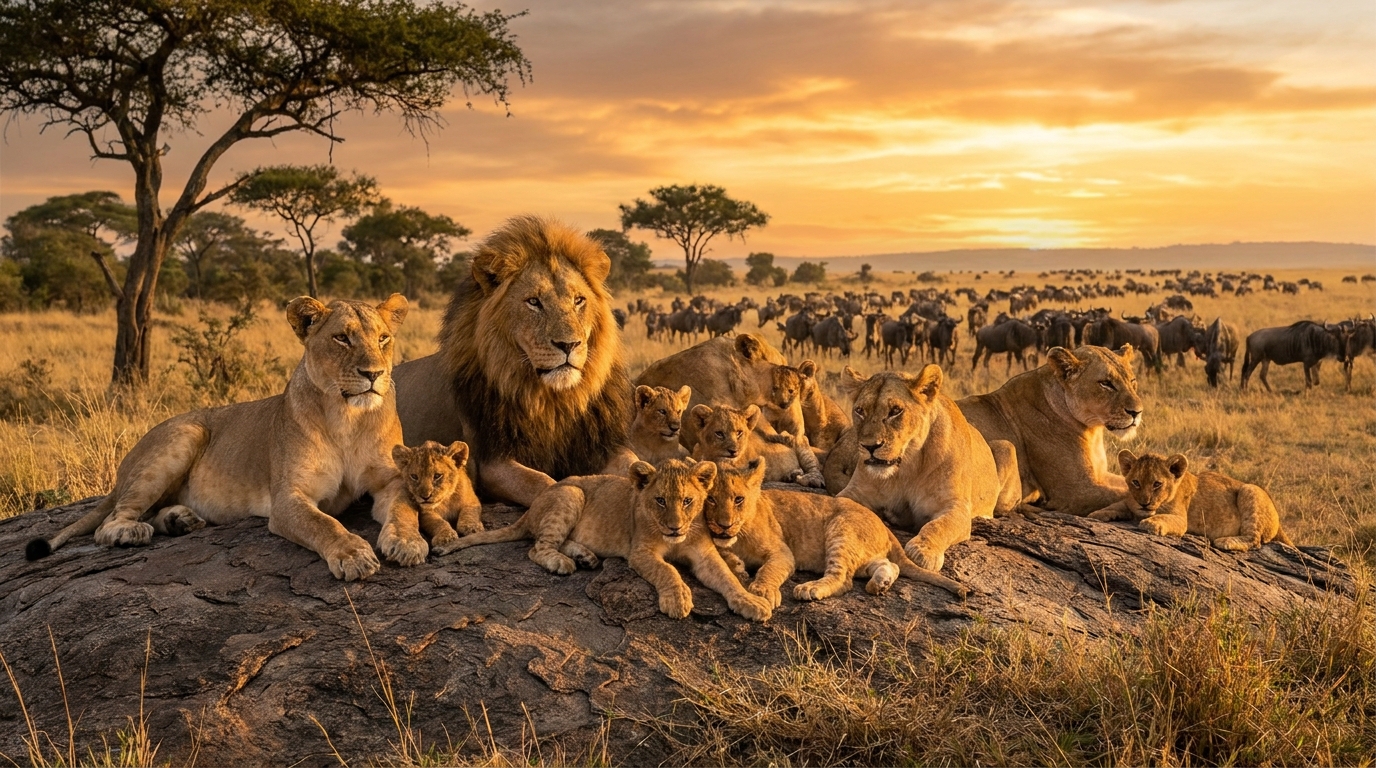
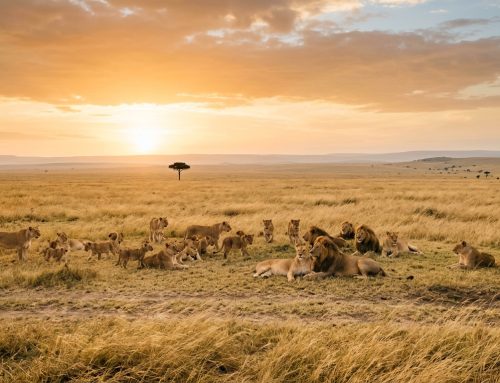
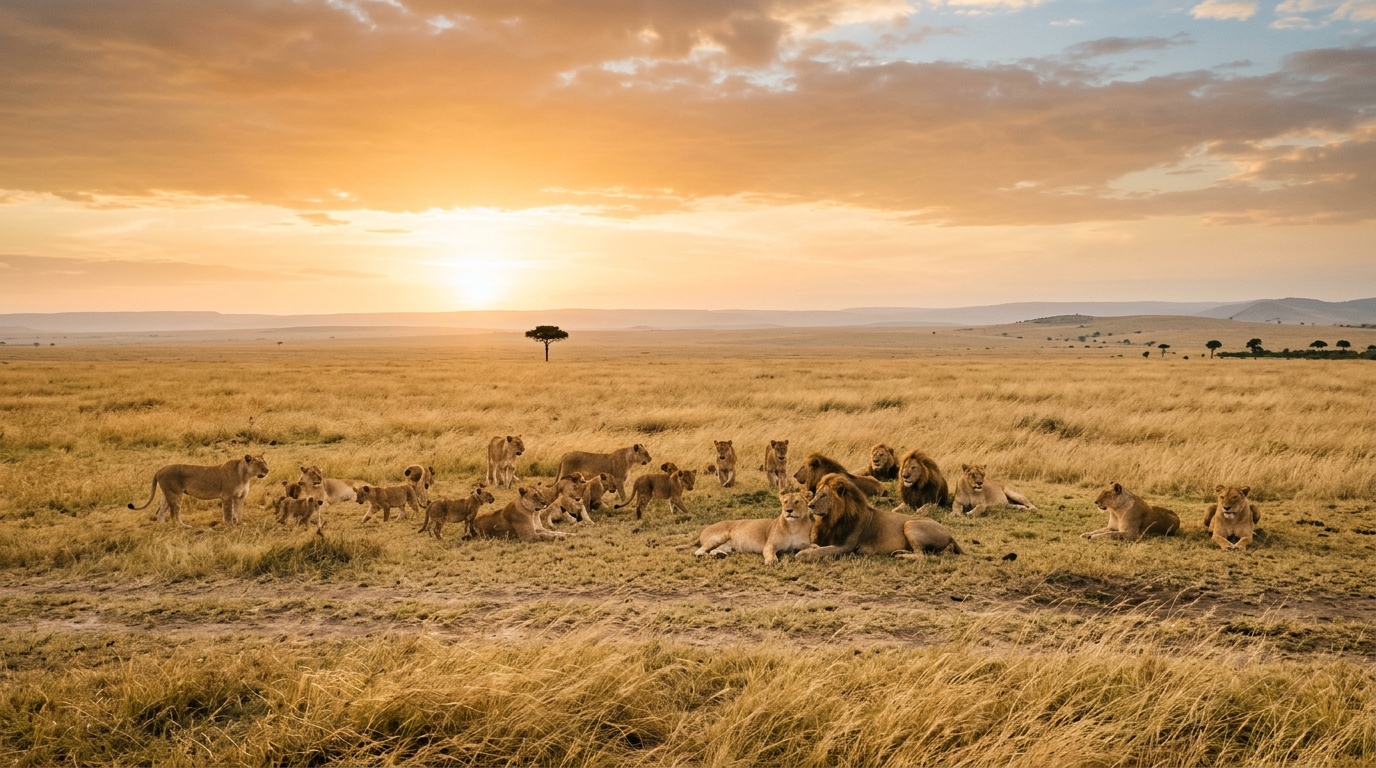
The Maasai Mara has the largest concentration of lions in Africa. Multiple prides — some of them famous and well-studied, like the Marsh Pride — roam territories that overlap with the main game-drive circuits. Early morning drives consistently produce lion sightings, often with cubs. The Mara’s open terrain means you watch lions hunt in full view, without the cover that makes sightings frustrating in denser bush environments.
Leopards
The Mara’s fig trees and riverine forest along the Talek and Sand Rivers hold resident leopards. They are harder to find than lions but the open canopy means that when a guide spots one resting in a tree, you get a prolonged, unobstructed sighting. Dedicated early morning drives specifically targeting leopard territory significantly improve your chances.
Elephants
Large elephant herds move through the Mara seasonally, concentrated around the Mara River and Oloololo Escarpment. The Mara’s elephants are known for their size — bulls carrying exceptional ivory are occasionally sighted, particularly in the northern areas toward Mara North Conservancy.
Rhinos
Black rhinos are present in the Mara but rare and shy. Your best chances come from early morning drives in the less-trafficked northern and western sections of the reserve. A rhino sighting in the Mara is genuinely special — tell your guide it is a priority and they will dedicate time to finding them.
Buffalo
Buffalo herds of several hundred animals are a common and spectacular sight in the Mara, particularly around the Mara River and Musiara Marsh. These large herds attract lion prides that follow them closely — making buffalo sightings an excellent predictor of nearby predator activity.
Beyond the Big Five
The Mara also holds exceptional populations of cheetahs (the open grassland is ideal territory), large hippo pods in the river pools, enormous Nile crocodiles, and over 470 recorded bird species. The Mara is one of Africa’s great birding destinations in its own right — secretary birds, crowned cranes, lilac-breasted rollers, and fish eagles are among the most celebrated.
The Great Wildebeest Migration — Dates, Timing and What to Expect
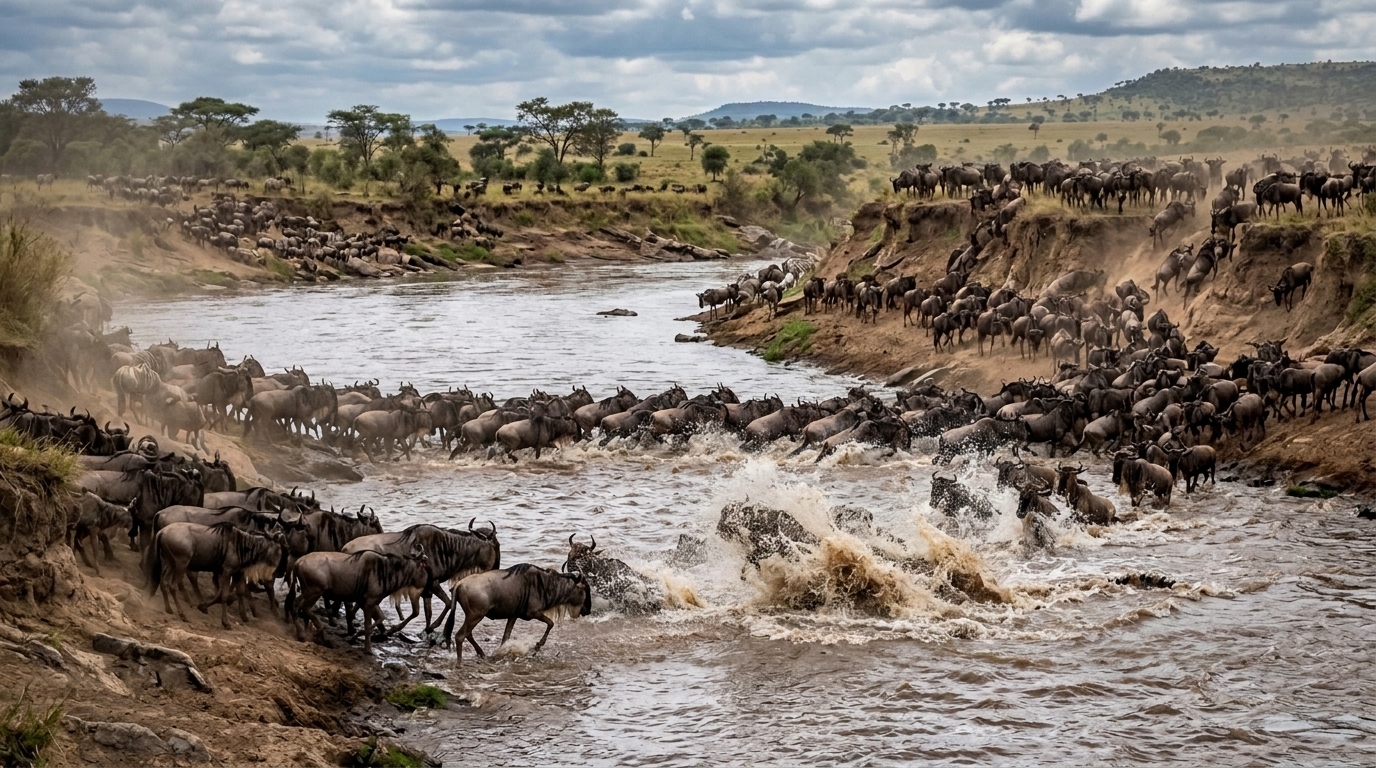
The Great Migration is the annual journey of approximately two million wildebeest, along with hundreds of thousands of zebra and gazelle, following the rains in a circular route between the Serengeti in Tanzania and the Maasai Mara in Kenya. It is the largest terrestrial migration on earth and the defining safari experience of East Africa.
Here is the full migration cycle and when each phase reaches the Mara:
| Period | What is happening | Where |
|---|---|---|
| January – March | Calving season. Up to 500,000 calves born in the southern Serengeti | Tanzania (Ndutu) |
| April – May | Herds move northwest through central Serengeti following green grass | Tanzania |
| June | Herds massing on the Serengeti’s northern plains, approaching the Mara | Tanzania / border |
| July | First herds enter Kenya. Early river crossing attempts begin | Maasai Mara |
| August | Peak crossing season. Thousands of animals cross and re-cross the Mara River daily | Maasai Mara |
| September | Crossings continue. Best month for dramatic action photography | Maasai Mara |
| October | Herds begin moving south as short rains arrive in Tanzania | Departing Mara |
| November – December | Herds back in the Serengeti for another cycle | Tanzania |
The River Crossings — What Actually Happens
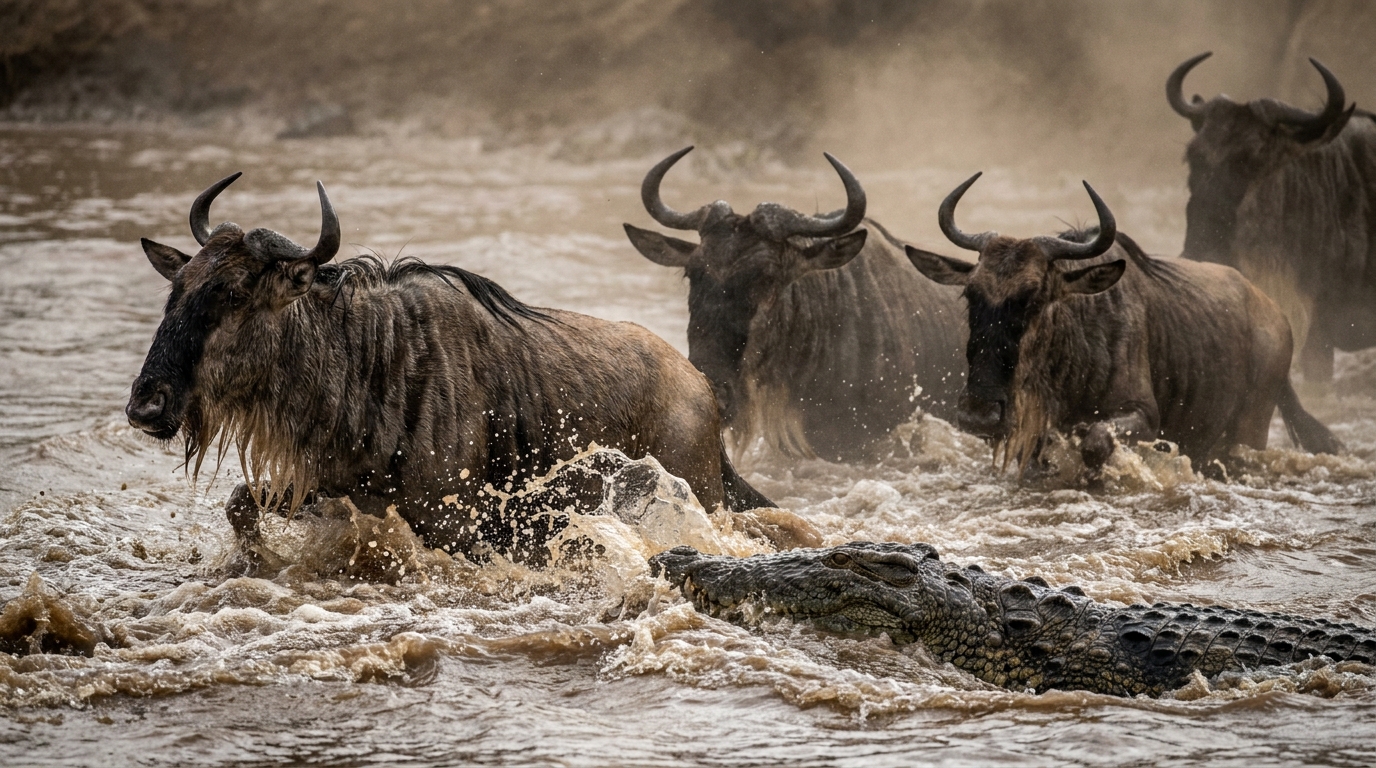
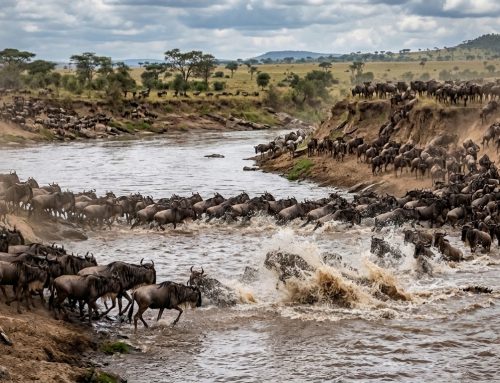
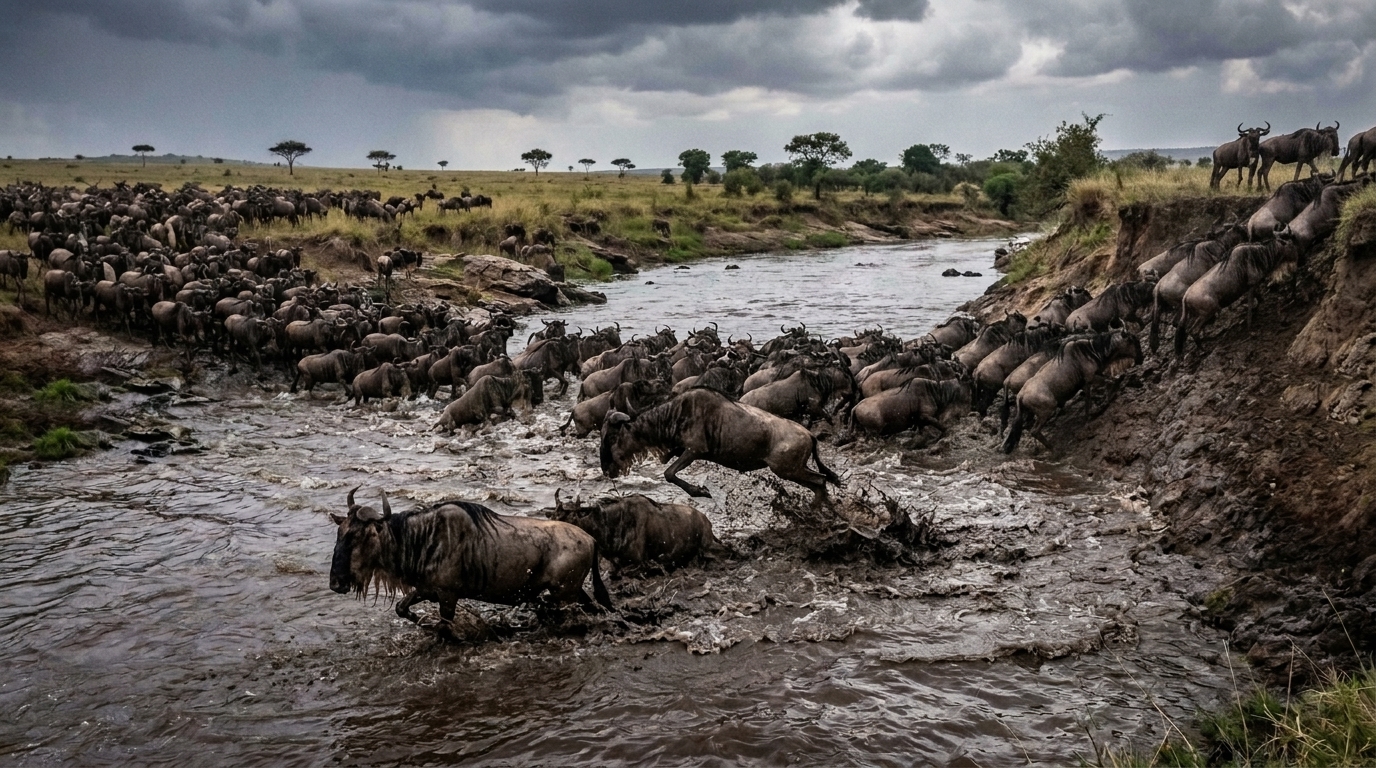
The Mara River crossings are the most dramatic single event in African wildlife. A herd of several thousand wildebeest approaches the bank, mills nervously for hours, then — triggered by a single animal — plunges in. Crocodiles averaging four metres in length surge forward. The noise is extraordinary. Calves are swept downstream. Within minutes, thousands of animals have crossed or turned back.
Key crossing points watched by guides include:
- Crossing Point 1 (inside the reserve near Mara Serena) — most reliable
- Crossing Point 5 (Lower Mara River, Tanzania Triangle) — dramatic and often less crowded
- Lookout Hill crossing — elevated view, excellent for photography
The honest truth about crossings: They cannot be predicted with certainty. Your guide will watch the herds and position you correctly, but herds sometimes spend two full days at a bank without crossing. Plan a minimum of three nights in the Mara during migration season to maximise your crossing chances.
The Maasai Mara’s Zones — Which Area Should You Choose?
This is the single most important decision you make when planning a Mara safari, and most first-time visitors do not know this choice exists.
The National Reserve (Public Zone)
The core Maasai Mara National Reserve is managed by the Narok County government. It is accessible to all visitors and ranges from excellent to overwhelming depending on season and time of day. During peak migration (August–September), the reserve’s main crossing points can see 30 or more vehicles waiting simultaneously.
Best for: Budget to mid-range travellers, first-time visitors, self-drive visitors, anyone prioritising access to the main migration crossings.
Entry fee: USD $200 per person per day (non-resident, peak season). USD $80 in low season.
The Private Conservancies
Surrounding the national reserve on three sides are a series of private conservancies — community-owned land where wildlife moves freely but vehicle numbers are strictly limited. These include:
- Olare Motorogi Conservancy — arguably the best for big cats, shares a boundary with the reserve
- Naboisho Conservancy — large, excellent lion and elephant numbers, limited vehicles
- Ol Kinyei Conservancy — small and exclusive, superb leopard territory
- Mara North Conservancy — remote, great for elephants and fewer tourist vehicles
- Lemek Conservancy — western side, excellent value with fewer visitors
What the conservancies offer that the reserve cannot:
- Night game drives (not permitted inside the national reserve)
- Guided walking safaris with armed rangers
- Off-road driving to follow wildlife at closer range
- No vehicle queuing at any sighting
- Maximum 6–12 vehicles per sighting at most conservancies
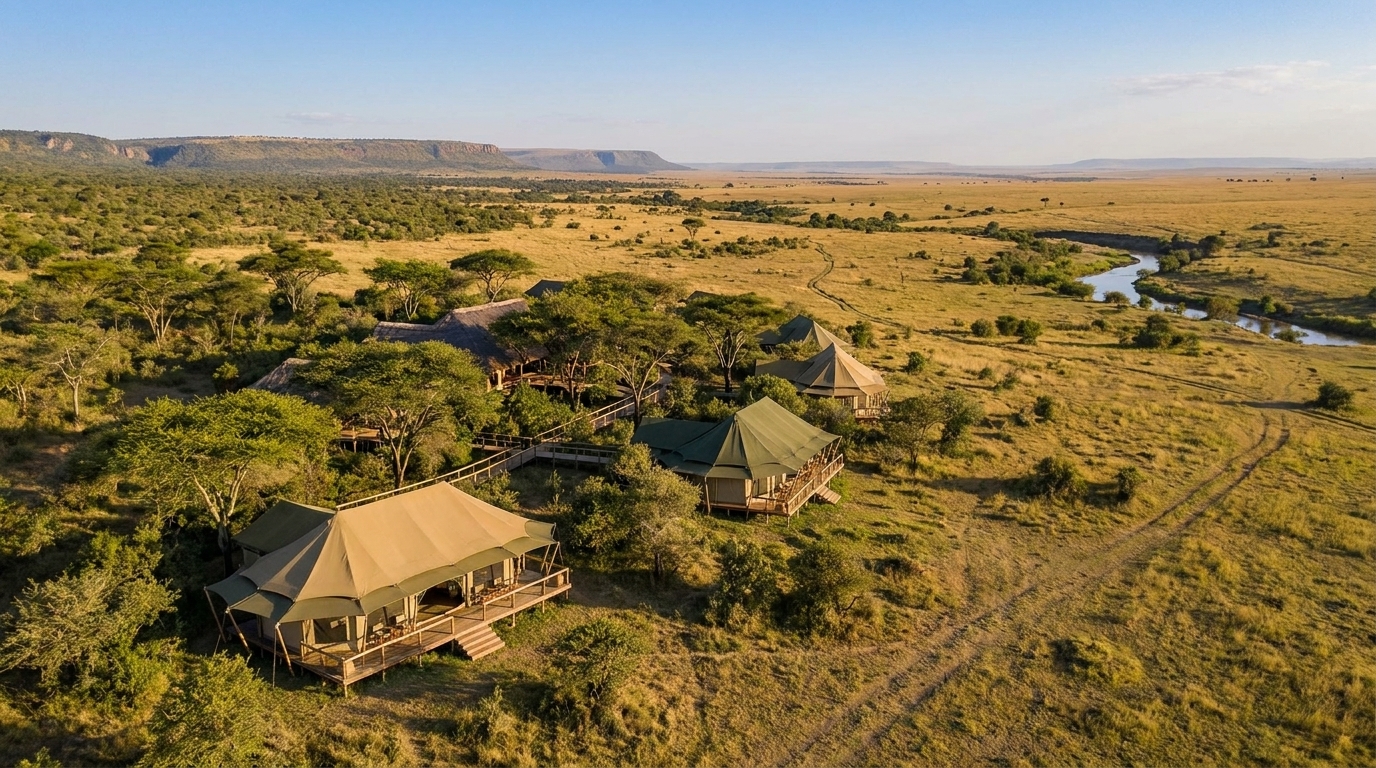
Best for: Luxury and mid-range travellers, second-time Mara visitors, anyone who has already seen the migration and wants a more exclusive experience.
Conservancy fees: Typically USD $100–$150 per person per day on top of camp rates (often included in all-inclusive lodge pricing).
Our recommendation: If budget allows, split your time — two nights in the national reserve for the main migration experience, two nights in a conservancy for exclusivity and night drives.
How to Get to the Maasai Mara from Naivasha and Nairobi
From Naivasha — The Road Route (Crescent Shores Clients)
As a Naivasha-based operator, we position Naivasha as your natural first stop in Kenya, and the Mara as your second. The road from Naivasha to the Maasai Mara runs approximately 4 to 5 hours via Narok town, through the Great Rift Valley and the Mara escarpment. The final stretch down the escarpment into the reserve is one of the most dramatic drives in East Africa, the plains open below you like a map.
We provide door-to-door 4×4 transfers from Naivasha to your Mara camp, with a game drive en route through the Rift Valley.
From Nairobi — Road or Air
By road from Nairobi: Approximately 5 to 6 hours via Narok. The road is sealed to Narok and murram beyond. Passable year-round in a 4×4, though the rainy season (April–May, November) slows the final stretch significantly.
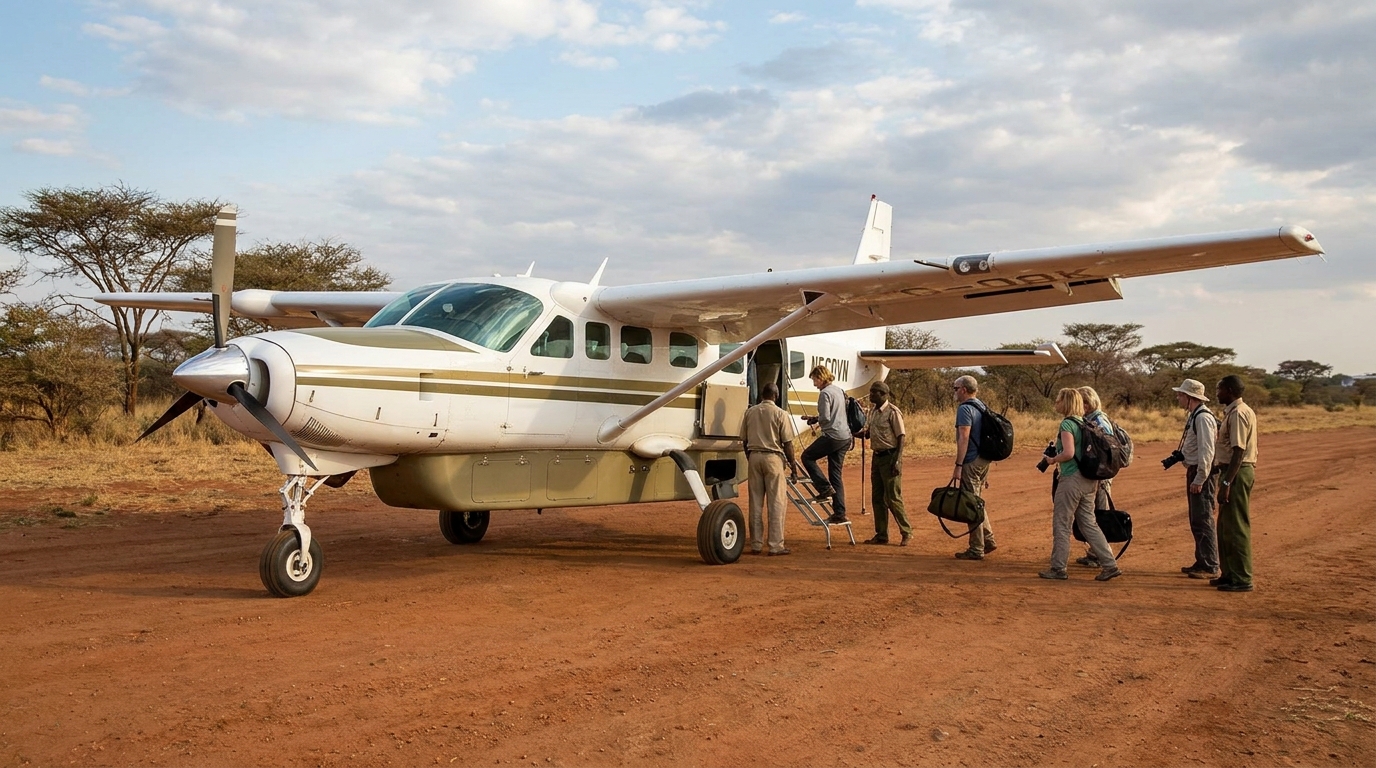
By scheduled flight from Wilson Airport: The fastest and most scenic option. Multiple operators (Safarilink, AirKenya, Fly540) run daily scheduled flights from Wilson Airport in Nairobi to various Mara airstrips. Flight time: approximately 45 minutes. Cost: approximately USD $120–$180 one way. We coordinate these flights as part of any Crescent Shores Mara package.
By charter flight: For groups or luxury travellers, a charter from Wilson or JKIA gives you flexibility on timing and a private airstrip arrival at your camp. We arrange charters on request.
Maasai Mara Safari Costs — Budget vs Luxury
The Mara accommodates every budget tier — but the experience gap between budget and luxury is wider here than at most Kenya destinations.
Budget (USD $150–$300 per person per night)
Basic tented camps inside the reserve. Shared vehicles, fixed game drive timings, full-board meals. No night drives or walking. Park fees are paid separately on arrival. Entirely adequate for a first Mara experience, you are in the same reserve as the luxury camps, watching the same wildlife.
Mid-Range (USD $300–$600 per person per night)
Comfortable tented camps or lodges, semi-private or private vehicles, experienced guides, game drives morning and afternoon. Some are located in or adjacent to conservancies. This tier offers the best value-to-experience ratio on the Mara.
Luxury and Ultra-Luxury (USD $600–$1,800+ per person per night)
Exclusive conservancy camps with private plunge pools, gourmet cuisine, private guides, night drives, walking safaris, and often a maximum of 8–12 guests in camp. Some legendary camps — Angama Mara, Governors’ Camp, Sanctuary Olonana, have defined the global standard for luxury safari accommodation. At this level, the Maasai Mara offers one of the finest travel experiences on earth.
The Experiences That Define a Maasai Mara Safari
Beyond the standard game drive, these are the moments most remembered by guests who visit with Crescent Shores.
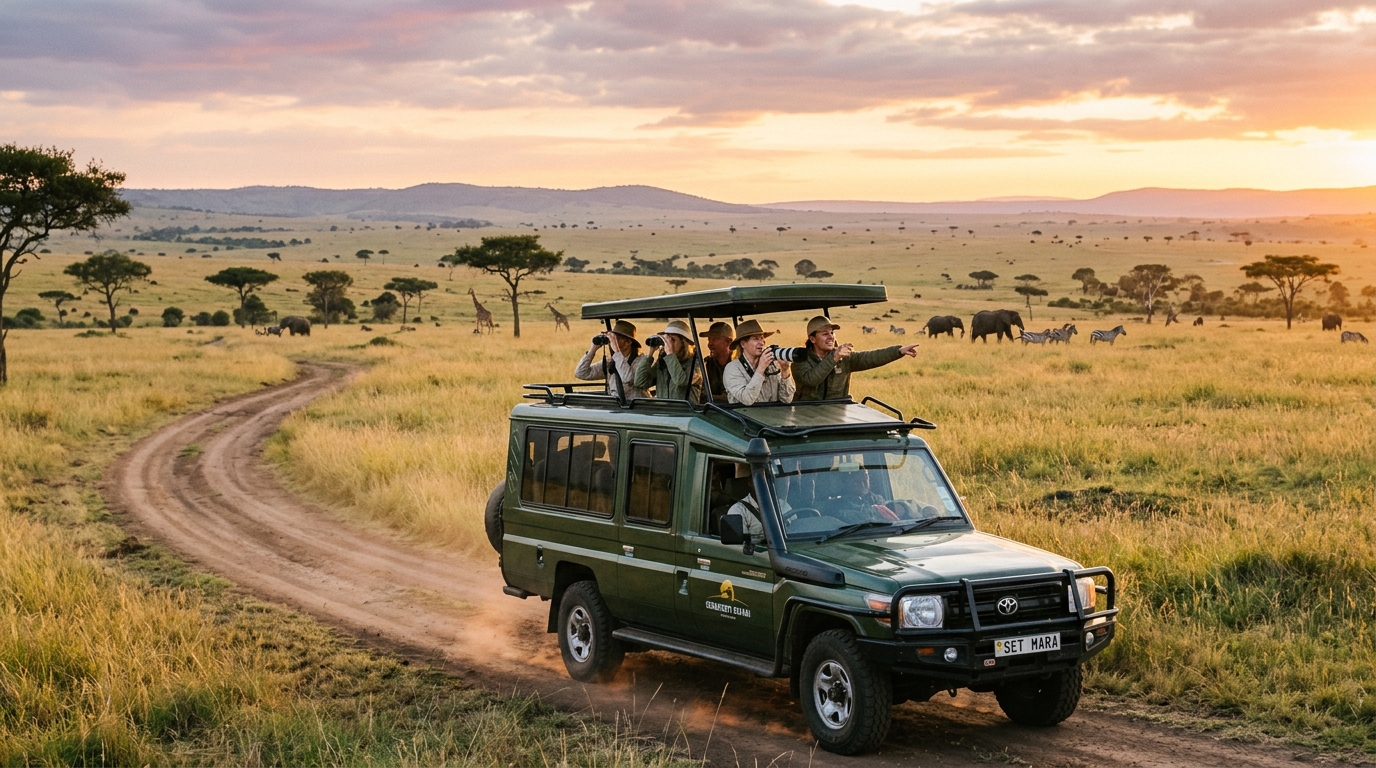
Sunrise game drive. Leaving camp before first light, sitting in silence as the Mara plains emerge from darkness. Lions call in the near distance. The sky turns amber above the escarpment. Nothing prepares you for your first Mara sunrise.
Watching a river crossing from Lookout Hill. The elevated viewpoint gives you a panorama of the Mara River below, the herd massing on the far bank, and the full sweep of the plains beyond. This is where the best crossing photography is made.
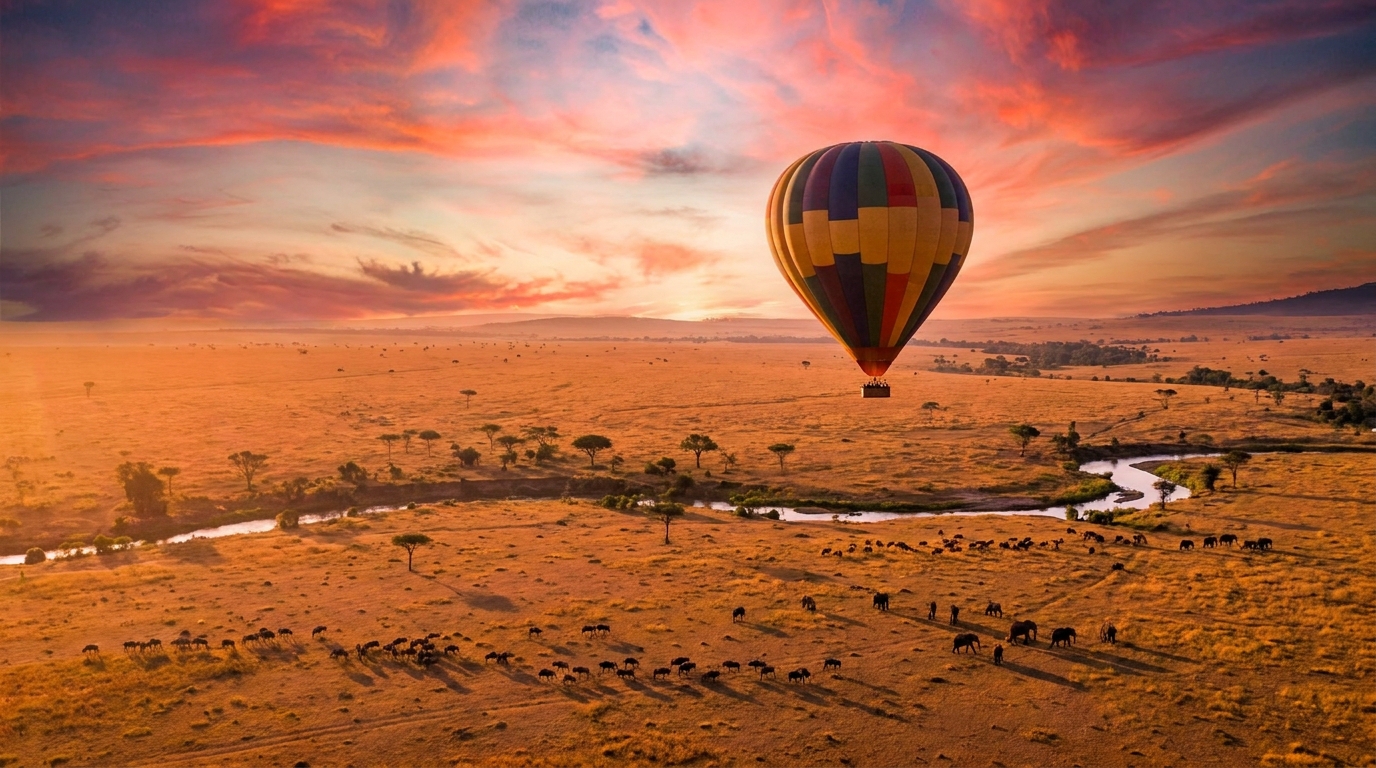
A hot air balloon at dawn. Floating silently above the migration at sunrise — the herds moving below, the Serengeti horizon in the distance, total silence broken only by the occasional gas burst. A champagne bush breakfast follows on landing.
Sundowners on the Oloololo Escarpment. At the end of an afternoon game drive, your guide stops on the high ground with the plains stretching to the horizon below. Cold drinks, the sky turning gold, and a view across the greatest wildlife ecosystem on earth.
A Maasai village visit. An hour with a Maasai community, the welcome dance, the jumping competition, the explanation of traditional life, the bead market, adds a human dimension to the Mara that pure game viewing cannot provide.
Plan Your Maasai Mara Safari with Crescent Shores Retreats
We build Maasai Mara packages that start from Naivasha, giving you a Lake Naivasha experience on arrival before heading to the Mara. We coordinate road or air transfers, select camps matched to your budget and priorities, and give you a personal briefing on the migration status before you travel.
 WhatsApp or call: +254 790 292 838
  Email: welcome@crescentshoresretreats.com
  View Mara packages: Browse Itineraries Also read: Kenya Safari Packages 2026 — The Complete Guide
Frequently Asked Questions About the Maasai Mara
How long should I spend in the Maasai Mara?
The minimum we recommend is three nights. Two nights is possible but leaves very little margin if a river crossing does not happen on your first day. Four nights gives you full confidence that you will witness something extraordinary. If you are combining the Mara with other Kenya destinations such as Amboseli or Samburu, three nights in the Mara is the right balance.
What months are best for seeing the river crossings?
The Mara River crossings are most frequent and dramatic in August and September. July sees the first crossings as herds arrive from the Serengeti, and October has the last crossings before herds return south. The most concentrated and dramatic action is typically in the last two weeks of August and the first two weeks of September. Book this period at least six months in advance as camps fill quickly.
What is the difference between the national reserve and the private conservancies?
The national reserve is open to all visitors and has no limit on vehicle numbers. It offers access to the main migration routes and crossing points and is the right choice for budget and mid-range safaris. The private conservancies surrounding the reserve limit the number of vehicles, offer night game drives and walking safaris, and provide a more exclusive experience — but at a higher price. For a first-time visitor on a standard budget, the reserve is excellent. For luxury or repeat visitors, a conservancy stay is transformative.
Can I do a self-drive safari in the Maasai Mara?
Technically yes — the national reserve allows self-drive with a hired 4×4. In practice, we strongly advise against it for first-time visitors. The Mara’s terrain is complex, the game-drive tracks are not well signposted, and — most importantly — locating specific wildlife across 1,510 square kilometres requires local knowledge that takes years to build. The value a professional guide adds to your Mara experience cannot be overstated. A good guide transforms a game drive into a naturalist education.
How do I get to the Maasai Mara from Naivasha?
From Naivasha the drive to the Maasai Mara takes approximately 4 to 5 hours via Narok town and the Mara escarpment. Crescent Shores Retreats provides door-to-door 4×4 transfer from Naivasha directly to your Mara camp, with a scenic Rift Valley game drive en route. Alternatively, scheduled flights from Wilson Airport in Nairobi take 45 minutes and are coordinated through us as part of any Mara package.
Does the Maasai Mara have rhinos?
Yes — black rhinos are present in the Maasai Mara, though they are shy and rarely seen. They are most likely encountered in the less-trafficked northern and western sections of the reserve and in parts of the Mara North Conservancy. A rhino sighting in the Mara is a genuine special event rather than a reliable daily occurrence. If rhinos are a priority for you, we also recommend combining your Mara safari with a visit to Lake Nakuru National Park — Kenya’s dedicated rhino sanctuary, just one hour from Naivasha — where both black and white rhino sightings are much more reliable.
— Crescent Shores Retreats, Naivasha, Kenya Naivasha-based safari tour operator · Kenya · Tanzania · Uganda · Rwanda +254 790 292 838 · welcome@crescentshoresretreats.com

Leave A Comment