
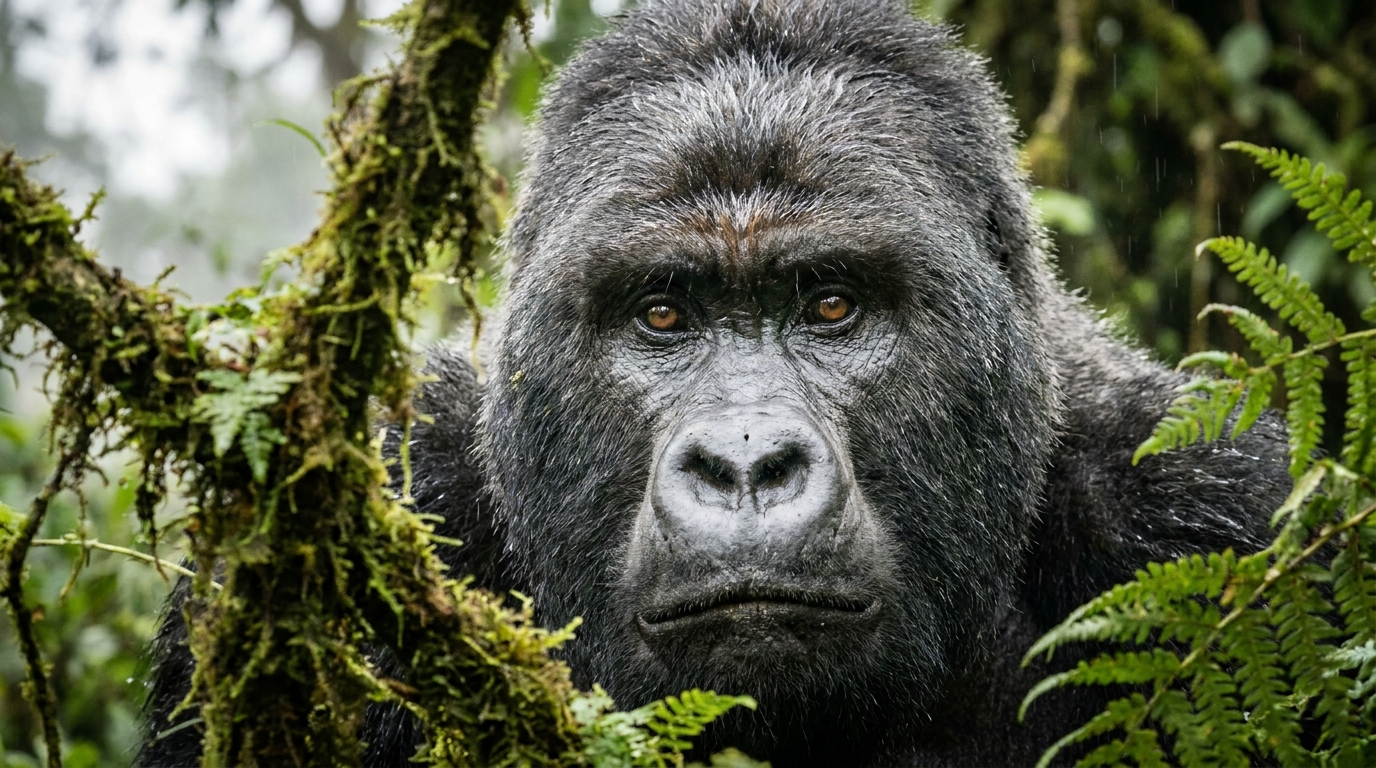
By Crescent Shores Retreats · Naivasha, Kenya · Published May 2026 · 14 min read
There are approximately 1,063 mountain gorillas left on earth. Every single one of them lives in a small strip of equatorial rainforest spanning the borders of Uganda, Rwanda, and the Democratic Republic of Congo. Of those, Uganda is home to roughly half — and of Uganda’s gorillas, the majority live in one extraordinary place: Bwindi Impenetrable Forest.
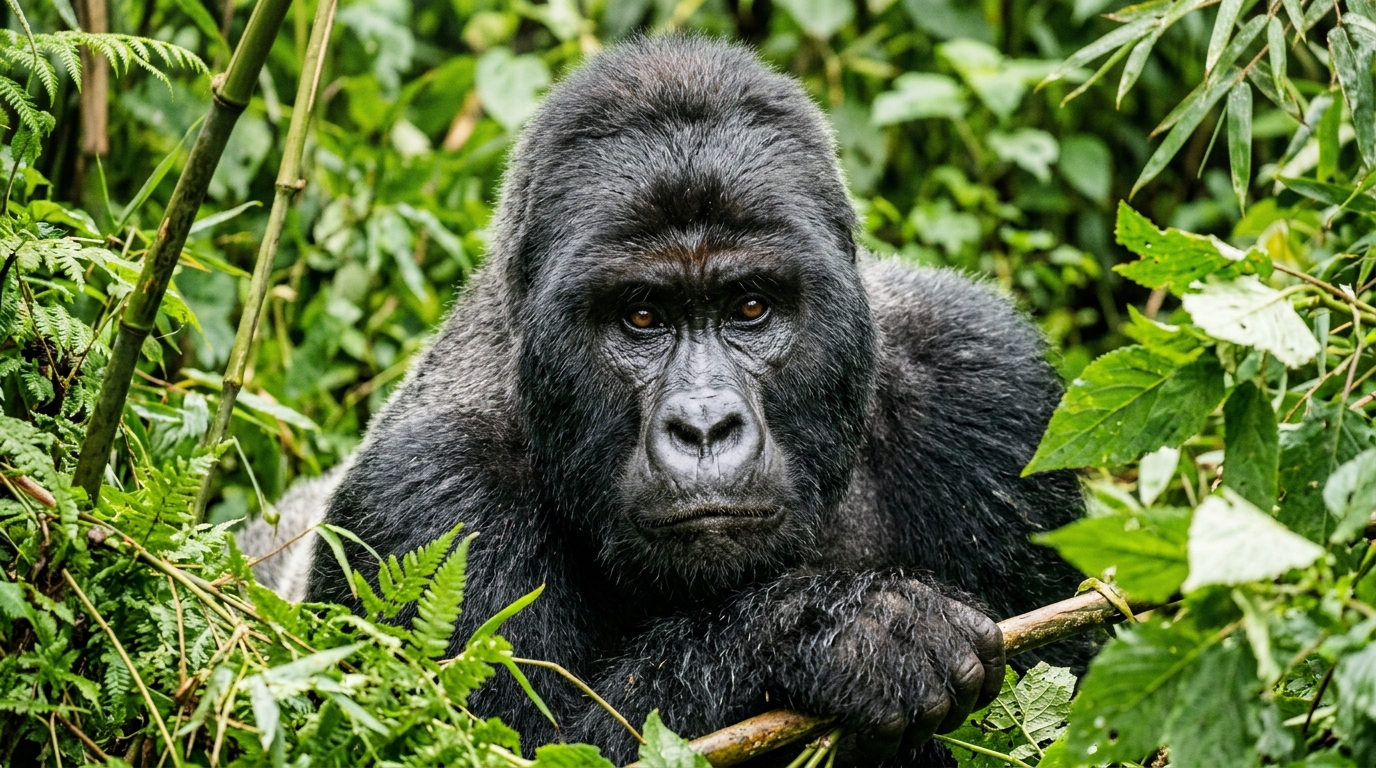
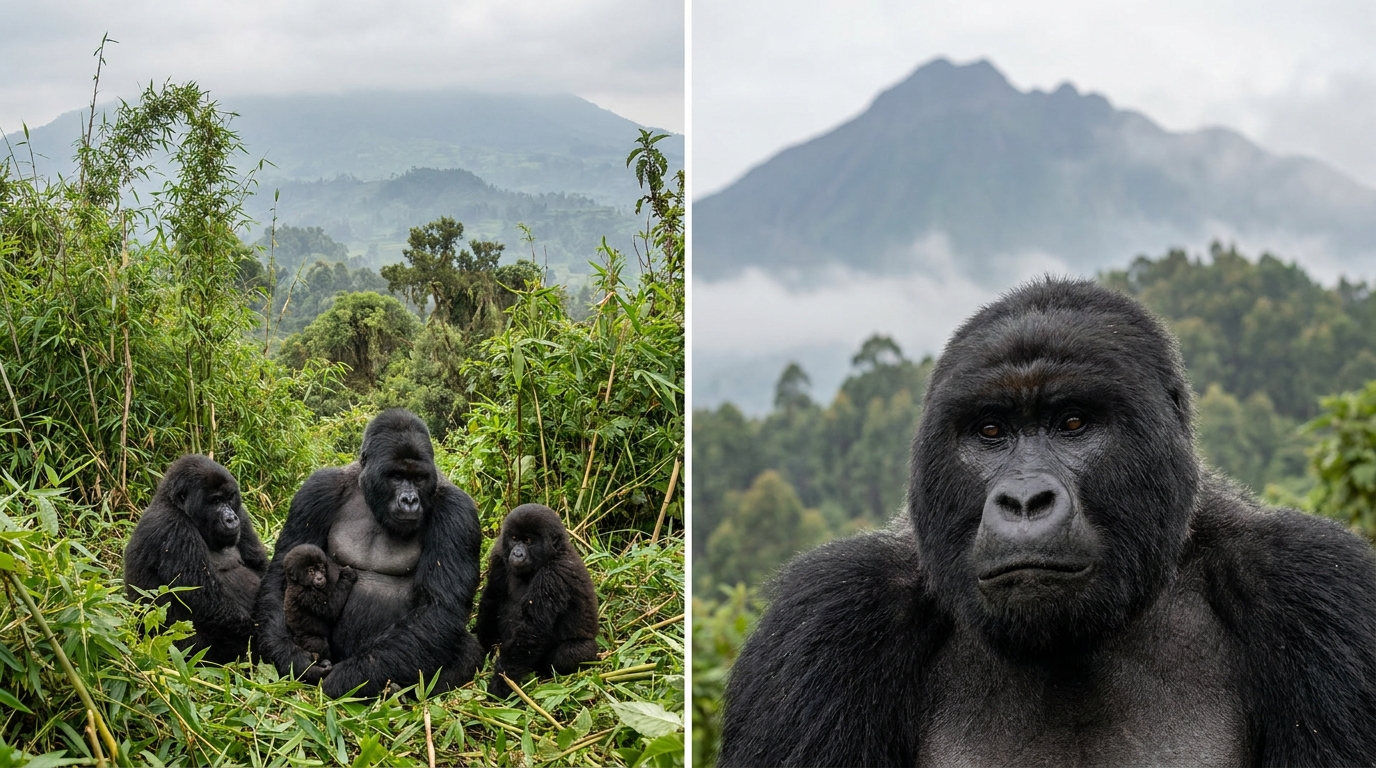
A gorilla trekking safari is not like any other wildlife experience. You walk into ancient rainforest, often for several hours, following trackers through dense vegetation and steep terrain. Then, without warning, you find them — a silverback the size of a large sofa, sitting three metres in front of you, pulling leaves from a branch. Juveniles tumble past your boots. A female nurses an infant in the undergrowth. For one hour, you exist in the same space as one of our closest living relatives, in a forest unchanged for millions of years.
It is, by almost universal agreement among those who have done it, the most profound wildlife experience on earth.
This is your complete guide to planning a Uganda gorilla trekking safari in 2026.
Why Uganda Is East Africa’s Premier Gorilla Trekking Destination
Uganda and Rwanda are the two primary gorilla trekking destinations in the world. Both are extraordinary. But Uganda holds several specific advantages that make it the choice for the majority of gorilla trekkers.
Cost. A Uganda gorilla trekking permit costs USD $700 per person. The equivalent permit in Rwanda costs USD $1,500. For a couple, that is a saving of $1,600 — enough to fund several additional days of travel. The gorilla experience itself is identical.
Gorilla numbers. Uganda has more gorilla families available for trekking across more locations. Bwindi alone has over 459 mountain gorillas distributed across four trekking sectors, with 19 habituated families open to visitors. This gives much greater flexibility in scheduling and availability.
Additional wildlife. Uganda is an exceptionally biodiverse country. Combining gorilla trekking with chimpanzee trekking in Kibale Forest, a Big Five safari in Queen Elizabeth National Park, or a boat safari below Murchison Falls creates an itinerary with no parallel in East Africa.
Atmosphere. Bwindi’s ancient forest — 25,000 years old and never cleared — has a depth and atmosphere that is impossible to describe adequately. The mist, the density of the vegetation, the calls of 350 bird species, the complete absence of any other reference point — it feels genuinely primeval.
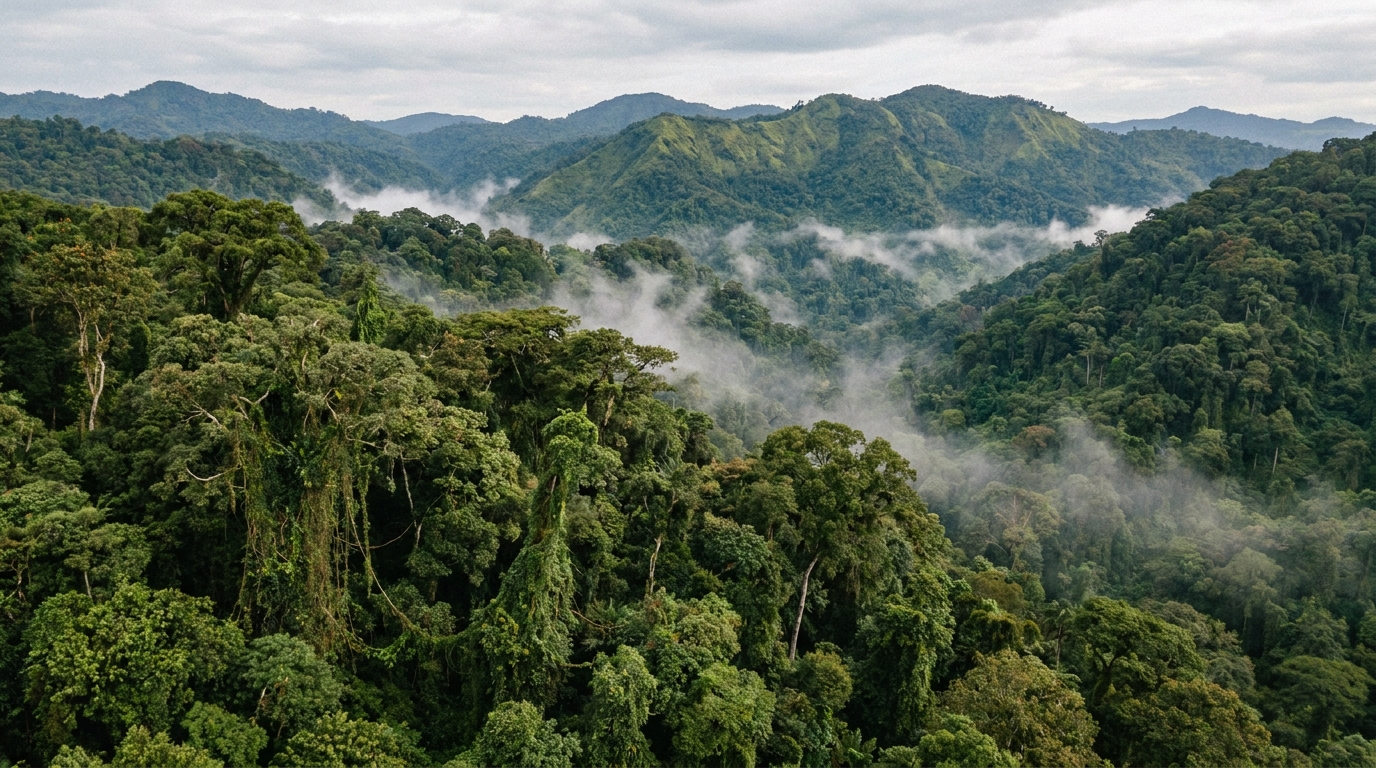
Uganda’s Mountain Gorillas — The Facts
Mountain gorillas (Gorilla beringei beringei) are a subspecies distinct from the lowland gorillas found in Central and West Africa. They are larger, have longer and darker fur adapted to the cooler mountain climate, and — unlike their lowland cousins — have never survived in captivity. Every mountain gorilla on earth lives wild.
They live in family groups of between 5 and 30 individuals, led by a dominant silverback male. The silverback coordinates the group’s movements, defends against threats, and — contrary to their terrifying appearance — is almost always the calmest animal in the family.
Habituation is the process by which specific gorilla families are gradually accustomed to the presence of humans over a period of two to three years, through daily contact with research teams. Only habituated families are open for trekking. The gorillas are never fed, never confined, and never interfered with — they simply tolerate human presence within their territory.
The current global mountain gorilla population of 1,063 represents a remarkable conservation success. In 1981, the count was fewer than 250. The recovery is directly linked to gorilla trekking revenue — which funds ranger salaries, anti-poaching patrols, and community income that makes conservation economically viable.
When you buy a gorilla trekking permit, you are directly funding the survival of the species.
Bwindi vs Mgahinga — Which Should You Choose?
Uganda has two mountain gorilla trekking destinations: Bwindi Impenetrable National Park and Mgahinga Gorilla National Park. For the vast majority of travellers, the answer is Bwindi — but here is an honest comparison.
Bwindi Impenetrable National Park
Bwindi is home to 19 habituated gorilla families across four trekking sectors, each with a different character.
| Sector | Location | Best for |
|---|---|---|
| Buhoma | North — closest to Entebbe, most accessible | First-time visitors, those short on time |
| Rushaga | South — largest number of gorilla families | Best overall availability, more permits |
| Ruhija | East — highest altitude (2,350m), fewer visitors | Serious birdwatchers, altitude photography, quieter experience |
| Nkuringo | Southwest — dramatic escarpment landscape | Combining with Rwanda, most scenic terrain |
Overall: Bwindi is the right choice for virtually all first-time gorilla trekkers. The variety of sectors means you will find a permit when you need one, and the forest quality in all four sectors is exceptional.
Mgahinga Gorilla National Park
Mgahinga is Uganda’s smallest national park and shares the Virunga Volcano chain with Rwanda and the DRC. It has one habituated gorilla family — the Nyakagezi group — which is sometimes found across the border in Rwanda, meaning trekking is occasionally cancelled.
Mgahinga also offers golden monkey trekking (the only place in Uganda to do this), which is outstanding. And the Virunga volcano landscape is unlike Bwindi’s jungle — more open, volcanic, dramatic.
Best for: Travellers combining Uganda and Rwanda who want to approach the Virungas from the Ugandan side, or anyone with a specific interest in golden monkeys.
Our recommendation: Book Bwindi for gorilla trekking. If combining with Rwanda, consider ending your trip at Mgahinga for a golden monkey trek and a night in the Virungas before crossing to Rwanda.
Uganda Gorilla Permit — Cost, Booking and What You Need to Know
The Current Permit Cost
A Uganda gorilla trekking permit costs USD $700 per person as of 2026, issued by the Uganda Wildlife Authority (UWA). This permits you to spend one hour with a single habituated gorilla family, accompanied by a maximum of seven other visitors and UWA rangers.
Compare: Rwanda permit = USD $1,500 per person.
The permit includes all park and ranger fees for the trek itself. It does not include accommodation, meals, transport to the park, or porter hire.
How Many People Trek Per Group?
A maximum of 8 visitors per gorilla family per day. This strict limit is the most important number in gorilla conservation — it limits stress on the animals while generating enough revenue to sustain the protection programme.
How Far in Advance Should You Book?
- Peak season (June–August, December–January): Book 4 to 6 months in advance minimum. These months sell out fastest.
- Shoulder season (September–November, February–May): 2 to 3 months in advance is usually sufficient.
- Last-minute permits: Occasionally available at UWA headquarters in Kampala, but do not rely on this.
Crescent Shores Retreats handles permit acquisition on your behalf as part of any Uganda gorilla package. We manage the UWA application process, secure your preferred sector and date, and confirm everything before you make a final booking commitment.
Physical Fitness Requirements
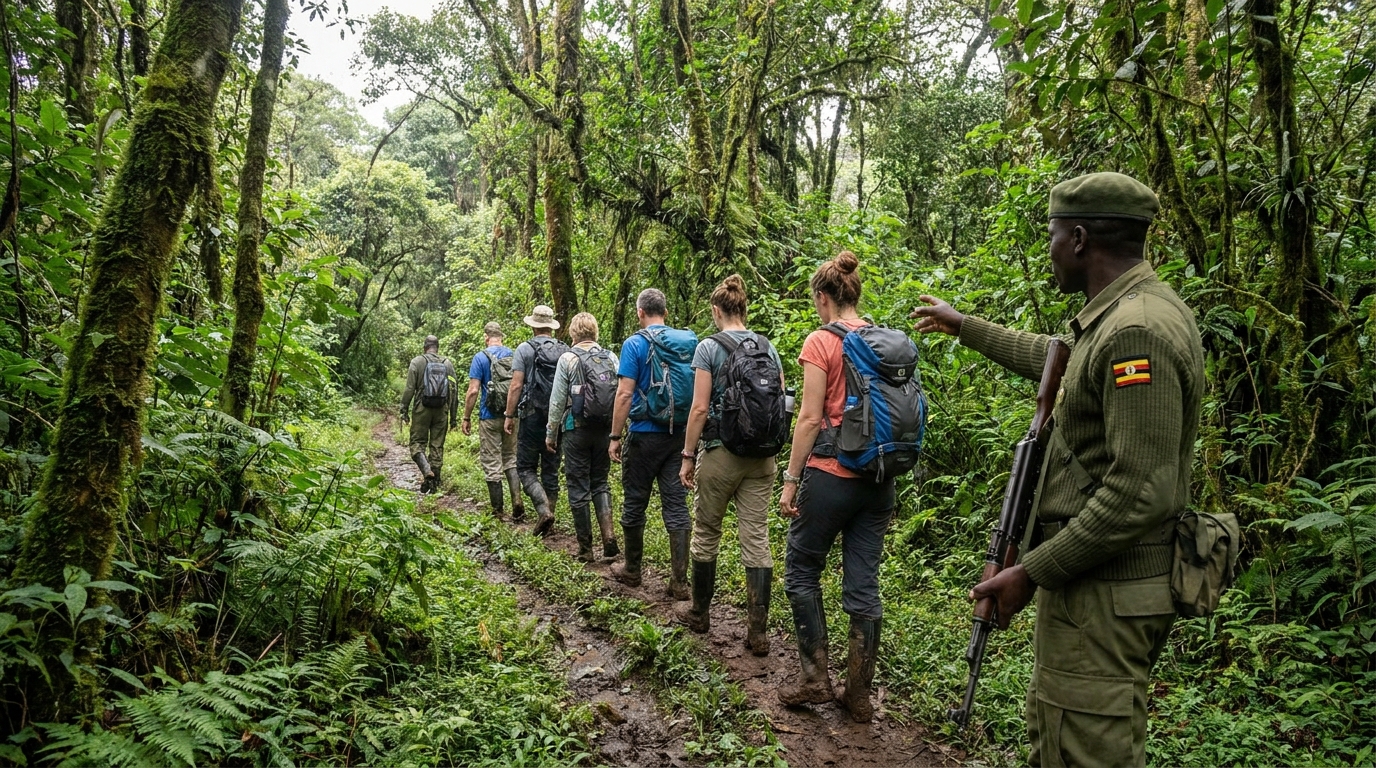
Gorilla trekking is physically demanding. Trails are steep, often wet and muddy, and trek duration can range from 1 hour to 8 hours depending on where the gorilla family has moved overnight. There is no minimum fitness standard, but you should be comfortable walking on uneven, inclined terrain for several hours. Porters are available at the trailhead to carry your bag and provide physical support on difficult sections — we strongly recommend hiring one.
Minimum age: 15 years. No upper age limit, but older travellers should consult their doctor regarding altitude (Ruhija sector reaches 2,350 metres) and terrain difficulty.
What to Expect on the Day of Your Gorilla Trek
Before the Trek
You will be called at 6:00 to 6:30 AM on trek day. After breakfast, transfer to the park headquarters for a 45-minute briefing from the UWA ranger team. They will cover gorilla behaviour, photography rules, health protocols (anyone with cold or flu symptoms must not trek — gorillas are extremely susceptible to human respiratory illness), and what to do if a gorilla charges (stay still, crouch down, do not run).
Your guide will announce which gorilla family you have been assigned to — families vary in size, location, and personality. Some are close and easy to reach; others require a full-day trek.
The Trek Itself
Trackers set out before dawn from HQ and radio your guide with the family’s location. Trek duration is entirely dependent on where the gorillas slept and have moved to by morning. It can be 45 minutes on a good day or five to six hours through dense terrain on a difficult one.
The forest in Bwindi is genuinely impenetrable in places. Guides use machetes on some routes. The terrain is steep and the vegetation dense. This is not a zoo. This is a 25,000-year-old forest, and the gorillas move through it on their own schedule, entirely indifferent to yours.
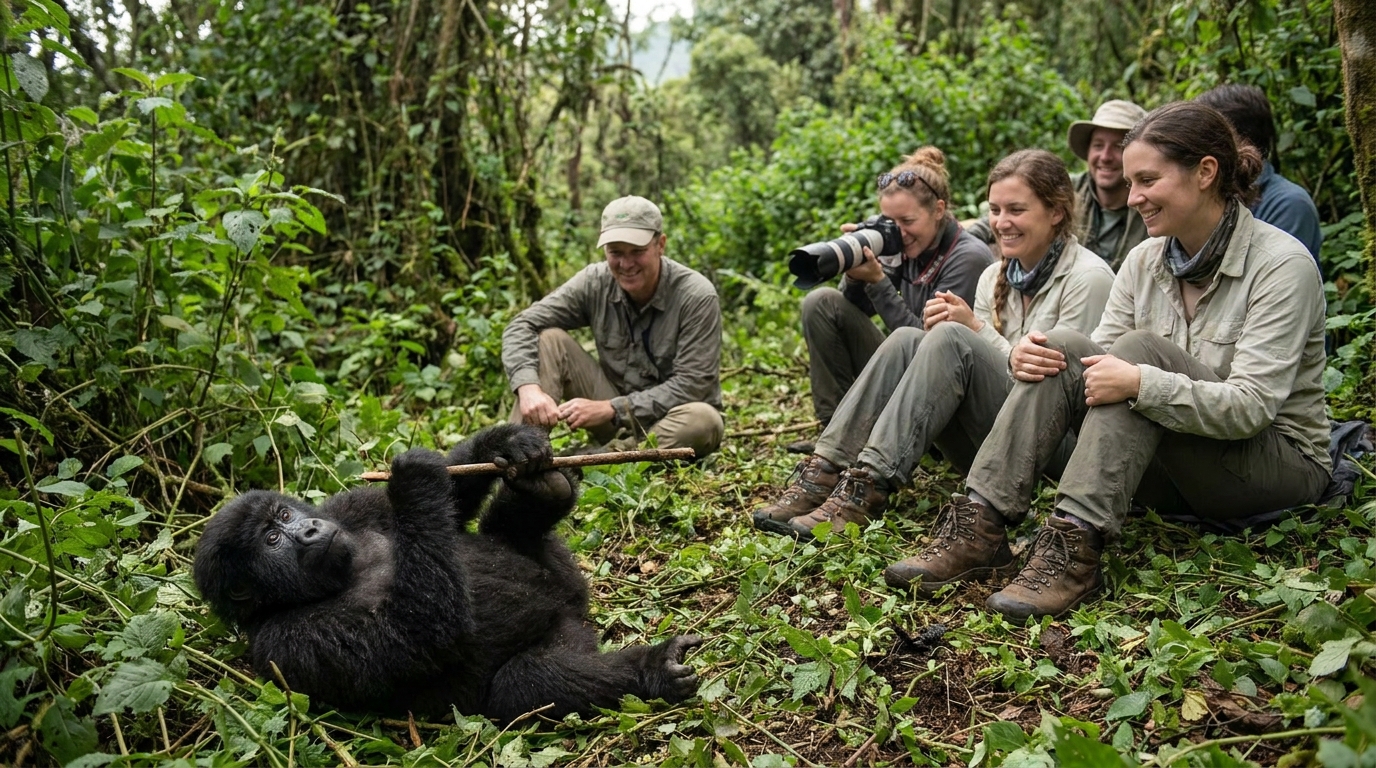
The Encounter — One Hour That Changes Everything
When your guide signals to stop and crouch, the gorillas will be close — sometimes already visible, sometimes announced by the deep rumble of a silverback making his presence known. The UWA rule is a 7-metre minimum distance from the gorillas, but habituated families do not read the rulebook. Juveniles often approach within two metres. A silverback may walk directly past your position.
You have exactly one hour with the family. This is a strict conservation rule enforced globally. One hour is both not enough and somehow exactly the right amount of time.
What the gorillas do in that hour varies. Most commonly, they eat — pulling vegetation with enormous hands, chewing methodically, occasionally making eye contact with visitors in a way that creates a peculiar and overwhelming sense of recognition. Juveniles tumble, chase each other, and investigate strange-smelling humans. The silverback may stand and chest-beat — a sound that registers less as a noise than as a physical sensation — and then return calmly to eating. A mother nurses an infant with a tenderness that requires no interpretation.
Most visitors are silent afterwards for a long time.
After the Trek
Your guide will present a certificate of completion at the trailhead. Most camps offer a late breakfast or brunch on return. The rest of the day is typically unstructured — afternoon forest walks, community visits, or simply sitting with what you have just experienced.
What to Combine with Gorilla Trekking in Uganda
A Uganda gorilla trekking safari becomes genuinely exceptional when combined with one or more of these experiences.
Chimpanzee Trekking — Kibale National Park
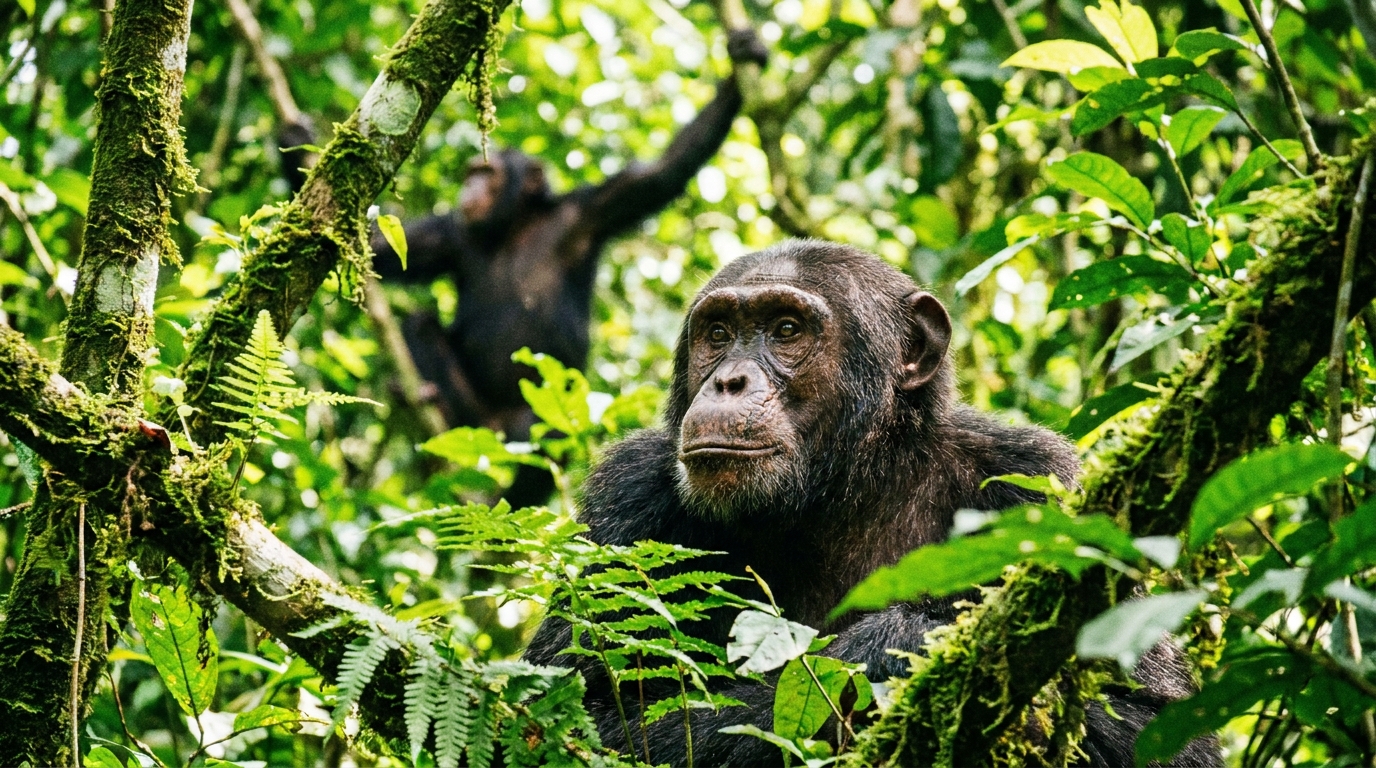
Kibale National Park is the best place in the world to track habituated chimpanzees. The park has over 1,000 chimpanzees and the highest primate density of any forest in Africa — 13 primate species including red colobus, L’Hoest’s monkey, and the olive baboon. A Kibale chimpanzee tracking permit costs USD $200 per person and follows the same format as gorilla trekking: professional guide, forest trek, one hour with a habituated chimpanzee community.
Combining Bwindi gorilla trekking with Kibale chimpanzee trekking makes Uganda the only place on earth where you can reliably track both of our closest living relatives on the same trip.
Queen Elizabeth National Park
Uganda’s most popular general safari destination. Queen Elizabeth offers tree-climbing lions (the only lions in Africa known to routinely climb and rest in fig trees), a boat safari on the Kazinga Channel with the highest hippo and buffalo density anywhere in East Africa, and excellent elephant sightings. It sits between Bwindi and Kibale, making it the natural midpoint of a Uganda triangle itinerary.
Lake Bunyonyi
A stunning crater lake near Bwindi, described by many visitors as one of the most beautiful places in Africa. Rolling green hills descend to clear blue water dotted with islands. After the physical and emotional intensity of gorilla trekking, a night or two at Lake Bunyonyi is a perfect counterbalance — canoeing, swimming, and complete quiet.
Murchison Falls National Park
Uganda’s largest national park, in the north near the DRC border. Famous for the Murchison Falls themselves — the world’s most powerful waterfall, where the entire Nile forces itself through a seven-metre gap in a roar of white water — and for boat safaris on the Nile offering exceptional hippo, crocodile, and bird sightings. Add Murchison for a full Uganda circuit.
Best Time to Go Gorilla Trekking in Uganda
Mountain gorillas can be trekked year-round — they do not migrate. The question is not whether you can find gorillas; the question is trail conditions and crowd levels.
| Season | Months | Trek Conditions | Crowds | Price |
|---|---|---|---|---|
| Dry (Peak) | Jun–Aug, Dec–Feb | Firm trails, clearest skies | Busiest, book 4–6 months ahead | Highest |
| Dry (Shoulder) | Late Sep, late Nov | Good conditions | Moderate | Mid |
| Green Season | Mar–May, Oct | Muddy trails, lush forest | Quietest | Lowest accommodation |
Our honest recommendation: June to August is the most popular and most reliably comfortable for trekking. December to January is equally excellent and less crowded than summer. The “green season” (March–May) is genuinely underrated — the forest is at its most photogenic, permit availability is easier, and accommodation prices drop considerably. The gorillas are no harder to find. The mud is simply a fact of life.
What to Wear and Pack for a Gorilla Trek
Getting this right makes a significant difference to your experience, especially on a long trek day.
Essential clothing:
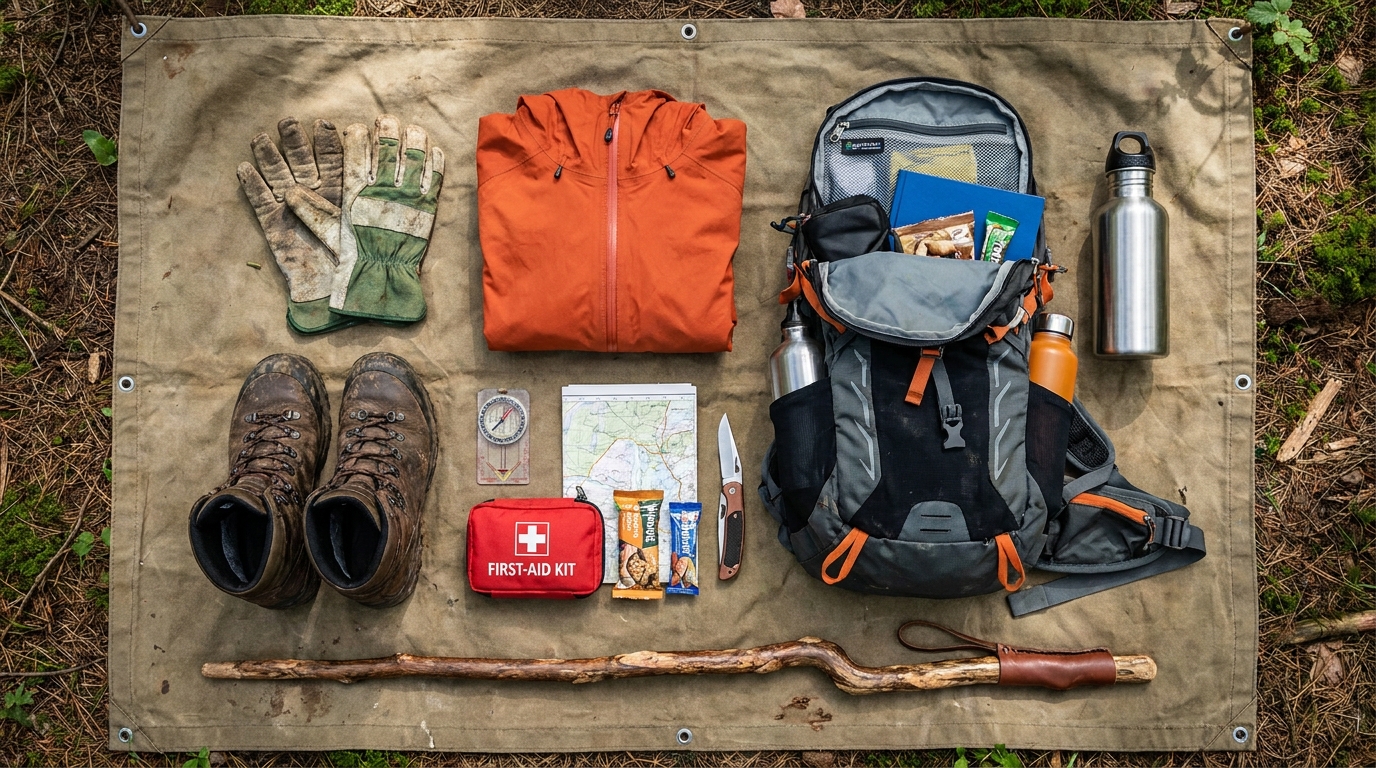
- Long-sleeve shirt in neutral colours (khaki, olive, brown, grey) — no bright colours
- Waterproof, breathable hiking trousers — long-legged, not shorts
- Waterproof hiking boots — already broken in before travel. New boots on a steep muddy trail are a serious mistake
- Waterproof rain jacket or poncho — rain can arrive without warning
- Garden gloves or lightweight work gloves — vegetation scratches and provides grip on steep sections
- Gaiters — optional but excellent for keeping mud out of boots in wet season
In your day pack:
- 2 litres of water minimum
- High-energy snacks (nuts, protein bars, fruit)
- Camera (no flash permitted within gorilla range)
- Extra memory card and fully charged battery
- Insect repellent
- Small first aid kit
- Walking stick — often provided at trailhead but bring your own foldable pole if possible
Leave at camp:
- Perfume and cologne (strong scents disturb the gorillas)
- Anything blue or bright — some families are disturbed by vivid colours
- Large camera bags — a small day pack is essential
Getting to Bwindi from Kenya
Step 1 — Nairobi to Entebbe by Air
Fly from Jomo Kenyatta International Airport (JKIA) in Nairobi to Entebbe International Airport in Uganda. Multiple daily flights operate on this route — Kenya Airways, Ethiopian Airlines, RwandAir. Flight time: approximately 1 hour 30 minutes. Cost: approximately USD $80–$200 return depending on airline and booking lead time.
Crescent Shores coordinates all your Uganda flights as part of a combined Kenya–Uganda safari package.
Step 2 — Entebbe to Bwindi
You have two options from Entebbe to Bwindi Impenetrable Forest:
By road: Approximately 7 to 8 hours from Entebbe to Buhoma sector, through Mbarara. The road is sealed and the journey is scenic through the Ugandan highlands. We arrange road transfers with a professional driver and guide who provides a running commentary on Uganda’s landscapes, culture, and wildlife en route.
By domestic flight: Aerolink Uganda operates scheduled flights from Entebbe and Kajjansi to Kihihi Airstrip near Bwindi (Buhoma sector) and Kisoro Airstrip (Nkuringo and Rushaga sectors). Flight time: approximately 1 hour. Cost: approximately USD $150–$250 one way. This is the fastest and most scenic option, flying low over the Ugandan Rift Valley.
Plan Your Uganda Gorilla Safari with Crescent Shores Retreats
We coordinate the complete Uganda gorilla trekking experience from permit acquisition through to your final transfer back to the airport. As a Kenya-based operator, we also build combined Kenya–Uganda itineraries — starting with a Naivasha excursion, a Maasai Mara safari, then crossing into Uganda for gorilla trekking and chimpanzee trekking. One operator, one itinerary, one point of contact.
📞 WhatsApp or call: +254 790 292 838 📧 Email: welcome@crescentshoresretreats.com 🌐 Request Uganda Safari Details: Contact Our Team 🌐 Also read: Rwanda Gorilla Trekking Guide · Uganda vs Rwanda — Which is Right for You?
Frequently Asked Questions — Uganda Gorilla Trekking
How much does a Uganda gorilla trekking permit cost in 2026?
A Uganda gorilla trekking permit costs USD $700 per person in 2026, issued by the Uganda Wildlife Authority (UWA). This includes all ranger fees and covers one hour with a single habituated gorilla family, with a maximum of 8 visitors per group per day. For comparison, a Rwanda gorilla trekking permit costs USD $1,500 per person. Crescent Shores Retreats handles permit acquisition on your behalf as part of any Uganda gorilla safari package.
How far in advance should I book a Uganda gorilla trekking permit?
For peak season travel — June to August and December to January — book your permit at least 4 to 6 months in advance. These dates sell out consistently. For shoulder and green season travel, 2 to 3 months is generally sufficient. Crescent Shores recommends booking as early as possible regardless of season, since gorilla trekking permits are strictly limited to 8 visitors per family per day and cancellations at short notice are uncommon.
What is the minimum age for gorilla trekking in Uganda?
The minimum age for gorilla trekking in Uganda is 15 years. There is no upper age limit. Older travellers should note that trek duration can be physically demanding — up to 6 to 8 hours on a difficult day — and should discuss physical fitness requirements with their doctor before booking, particularly if planning to trek in the higher-altitude Ruhija sector of Bwindi.
Is gorilla trekking in Uganda safe?
Yes. Uganda gorilla trekking is very safe. Gorilla families are habituated over years to human presence and gorilla-related injuries are extremely rare. Uganda Wildlife Authority rangers accompany every trek, are armed, and are highly experienced. The most common hazard is the terrain itself — steep and muddy trails — which is managed by hiring a porter. Uganda as a country is stable and safe for tourism in the main visitor areas, including Bwindi, Kibale, and Queen Elizabeth National Park.
Can I combine Uganda gorilla trekking with a Kenya safari?
Yes — this is one of our most popular itinerary combinations. A typical 10 to 12-day Kenya–Uganda itinerary begins with a Lake Naivasha excursion and Maasai Mara safari in Kenya (3 nights), then flies Nairobi to Entebbe for gorilla trekking in Bwindi (2 nights) and chimpanzee trekking in Kibale (2 nights), before returning through Entebbe. Crescent Shores coordinates the complete itinerary — permits, flights, transfers, accommodation, and guides — as a single package.
What is the difference between gorilla trekking in Uganda and Rwanda?
The gorilla experience itself is identical — one hour with a habituated mountain gorilla family in ancient rainforest. The main differences are permit cost (Uganda $700 vs Rwanda $1,500 per person), the number of gorilla families available (Uganda has more), and logistics. Rwanda’s location is slightly more accessible from Kigali, and Rwanda’s parks are generally more polished and tourist-facing. Uganda offers better value, greater biodiversity (adding chimp trekking), and a wilder, more remote feel. For a detailed comparison, read our Uganda vs Rwanda Gorilla Trekking Guide.
— Crescent Shores Retreats, Naivasha, Kenya Naivasha-based safari tour operator · Kenya · Tanzania · Uganda · Rwanda +254 790 292 838 · welcome@crescentshoresretreats.com

Leave A Comment