
By Crescent Shores Retreats · Naivasha, Kenya · Published May 2026 · 13 min read
Bwindi Impenetrable Forest is 25,000 years old. It survived the last ice age as a refugium — an island of forest in a landscape that was becoming grassland and scrub around it and the species that sheltered here survived with it. The forest’s extraordinary biodiversity, its 160 tree species and 100 fern species and 360 bird species and 200 butterfly species, is partly a consequence of that age and that continuity. Nothing as complex as a montane rainforest 25,000 years old comes from anywhere else.
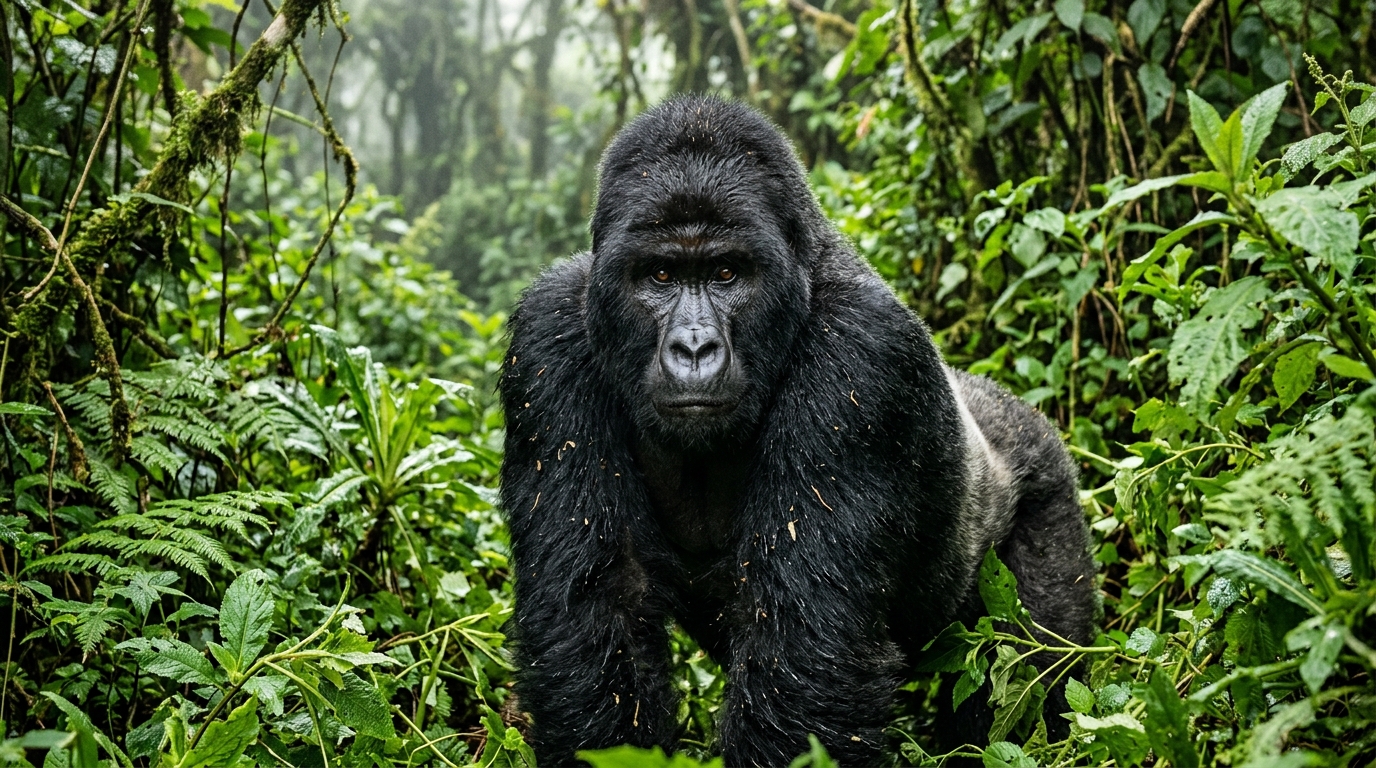
And somewhere in it, on a slope that a guide with decades of experience can find but a visitor alone cannot, there is a family of mountain gorillas doing precisely what they were doing before the first human settlers arrived in this part of Africa. The silverback is probably asleep. The infants are probably wrestling. The mother is probably watching both with the expression that is somehow legible even across the enormous evolutionary distance between a gorilla and a person looking at one.
That encounter ,one hour with a gorilla family in one of Africa’s oldest forests — is the reason Bwindi exists on any itinerary. This guide covers everything around it.
Bwindi at a Glance — Key Facts for 2026
| Detail | Information |
|---|---|
| Location | Southwestern Uganda, near the DRC border |
| Size | 331 km² |
| UNESCO status | World Heritage Site (1994, shared with Mgahinga) |
| Forest age | ~25,000 years |
| Elevation | 1,160–2,607 m (Rwamunyonyi Peak) |
| Forest type | Afromontane rainforest |
| Managing authority | Uganda Wildlife Authority (UWA) |
| Gorilla permit | USD $700 per person per trek |
| Gorilla habituation permit | USD $1,500 per person (Rushaga only) |
| Habituated gorilla families | 19 (Bwindi) + 1 (Mgahinga) |
| Mountain gorillas in Bwindi | ~459 individuals (~55% of world population) |
| Sectors | Buhoma (N), Ruhija (E), Rushaga (S), Nkuringo (SW) |
| Bird species | 350+ (23 Albertine Rift endemics) |
| Distance from Entebbe | 7–8 hours by road; ~1 hour by air |
The Forest Itself — Why Bwindi Is Extraordinary
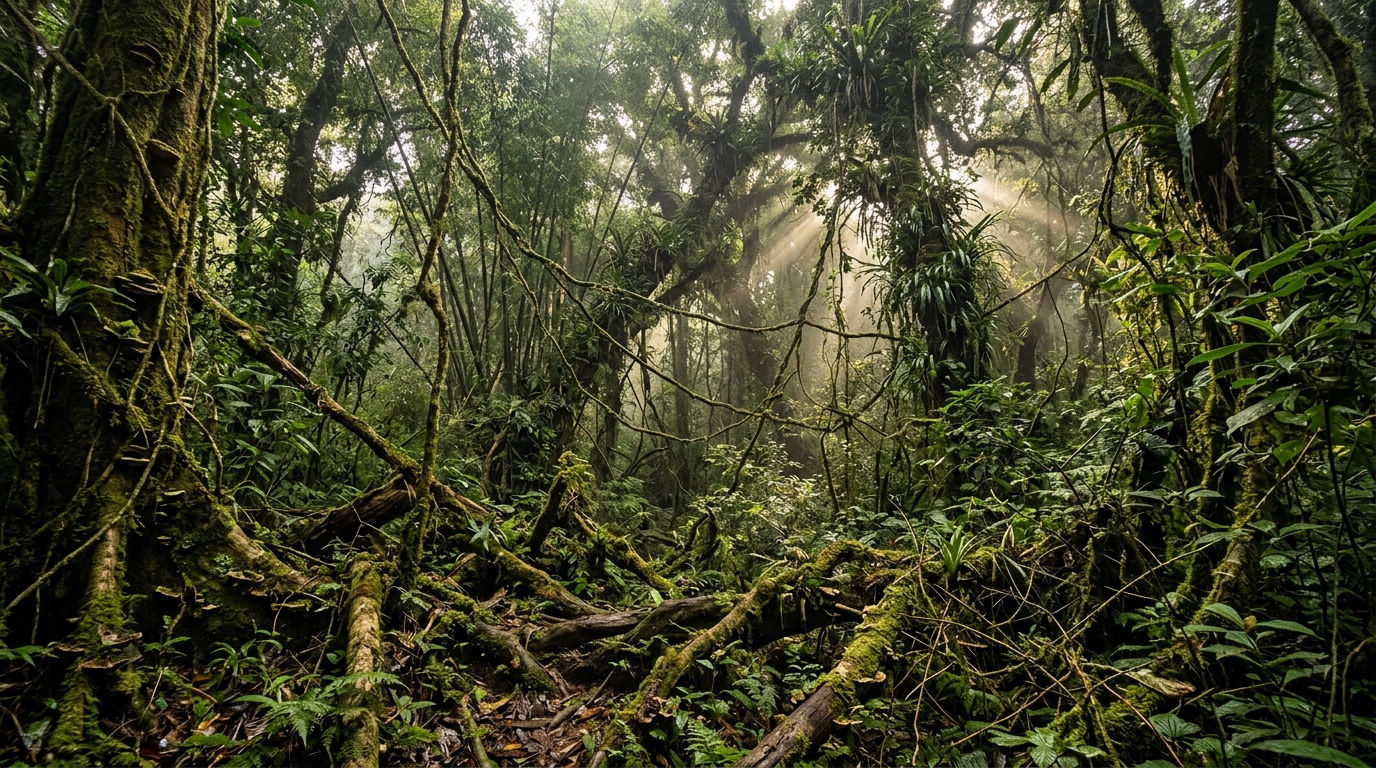
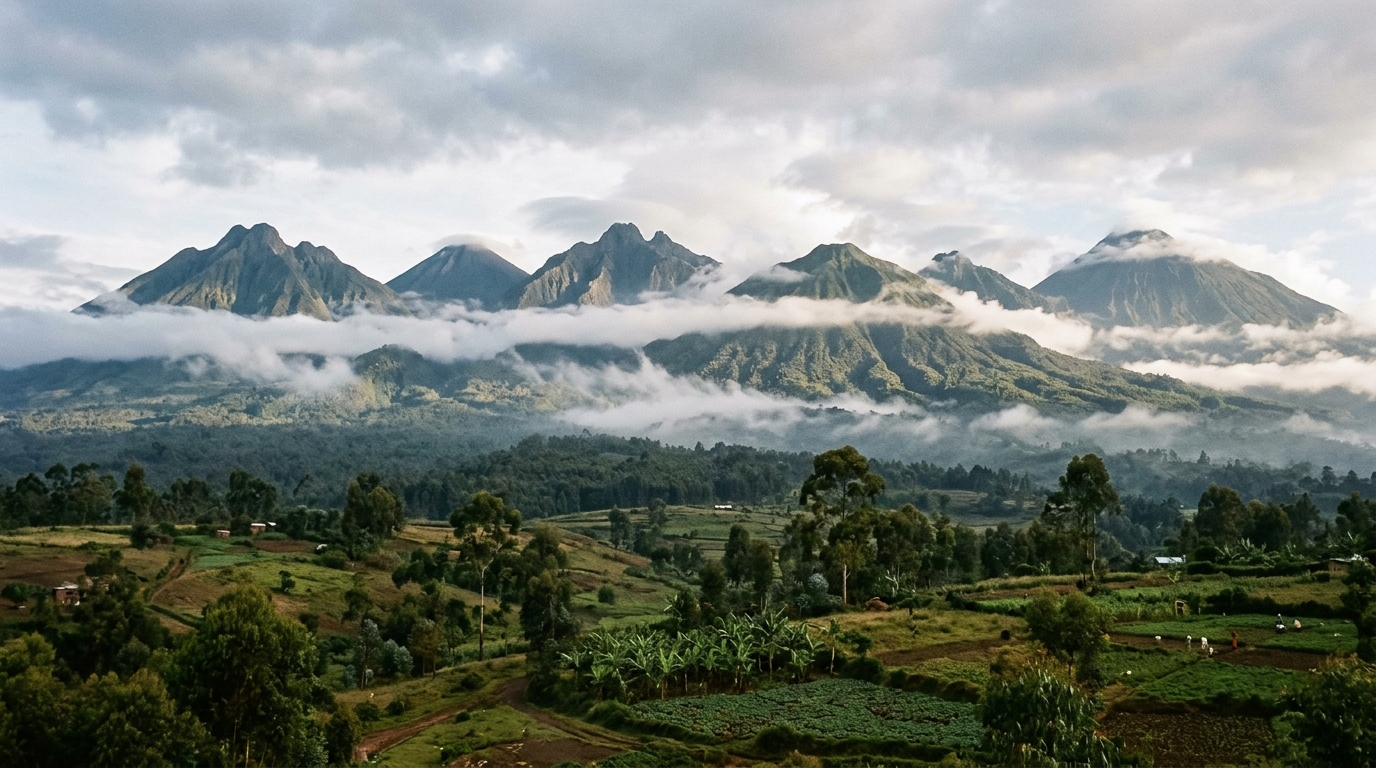
The name is honest. Bwindi — from the Rukiga word meaning “place of darkness” — and impenetrable are both accurate descriptions of what the forest is to anyone without a machete and a guide who has spent decades learning its paths.
The undergrowth is multiple layers deep: ground ferns, climbing plants, fallen branches, root systems crossing the surface at every angle, epiphytes covering every trunk. The canopy is largely closed, filtering the light to a green dimness that gives the forest its characteristic quality at midday not dark, but dimensionally deep. The paths your guide takes through it are real paths worn by gorilla families and the guides who follow them. Without those paths, navigation is essentially impossible.
The age matters biologically. A forest that has been continuous for 25,000 years has had time to develop the specific plant communities that specific animals require. Bwindi’s mountain gorillas feed on over 100 plant species in the forest, many of which grow nowhere else in the same combination. The forest is not a backdrop to the gorilla story, it is the reason the gorillas are there. Remove the forest and the gorillas disappear within a generation. This is the conservation logic behind everything the Uganda Wildlife Authority and its international partners do in southwestern Uganda.
The biodiversity context. Bwindi holds:
- 160 tree species
- 100 species of fern
- 350+ bird species (including 23 Albertine Rift endemics found nowhere else)
- 200 butterfly species
- At least 120 mammal species
It is, by any ecological measure, one of Africa’s most biodiverse protected areas — not despite its small size but partly because of its age and its continuity.
The Four Bwindi Sectors — Choosing the Right One
Bwindi’s 19 habituated gorilla families are divided across four sectors. Each sector has a different character, a different physical demand profile, and a different practical context. Choosing the right sector for your specific priorities significantly affects the experience.
| Sector | Families | Trek difficulty | Best for | Access |
|---|---|---|---|---|
| Buhoma | 4 | Moderate | First-timers, chimps, accessibility | 7–8 hrs road from Entebbe; 1 hr flight to Kihihi |
| Rushaga | 5+ | Moderate | Most choice, habituation experience | 8–9 hrs road; 1 hr flight to Kisoro |
| Ruhija | 3 | Hard (high altitude) | Birders, experience trekkers | 8+ hrs road or Kihihi + 2 hrs road |
| Nkuringo | 2 | Very hard (very steep) | Remote experience, Lake Bunyonyi combo | 9–10 hrs road; 1 hr flight to Kisoro |
Buhoma — The Northern Gateway
Buhoma is Bwindi’s most accessible sector and the one where the park’s tourism infrastructure is most developed. It holds four habituated families including the Mubare group — habituated in 1993, the longest-habituated gorilla family in Uganda and one of the best-known in the world. Mubare treks are often shorter because the family ranges at relatively low altitude.
Buhoma is also the only Bwindi sector with a habituated chimpanzee community available for tracking — making it the only location in East Africa where you can trek both mountain gorillas and chimpanzees in the same park on consecutive days. For visitors on a tight schedule who want maximum wildlife variety from a single base, Buhoma offers this combination uniquely.
Rushaga — The Southern Powerhouse
Rushaga holds the highest number of habituated gorilla families of any Bwindi sector — five or more — which means the most permit availability and the most flexibility for last-minute or short-lead booking. For travellers who struggle to plan 5 to 6 months ahead (the recommended lead time for peak season), Rushaga often has availability when Buhoma and Nkuringo are sold out.
Rushaga is also the only sector offering the Gorilla Habituation Experience — the extended 4-hour visit to families in the habituation process (described in detail below). The sector has a Batwa pygmy community near its boundaries, whose traditional forest knowledge and cultural history add a compelling human dimension to the Bwindi visit.
Ruhija — The Birder’s Sector
Ruhija sits at the highest altitude of the four sectors — 2,300 to 2,600 metres — which produces two consequences: the trekking is the most physically demanding in Bwindi (steep, cold, and often muddy), and the forest at this altitude holds the highest concentration of Albertine Rift endemic bird species in Uganda.
Ruhija is less visited than Buhoma or Rushaga, which means the three habituated families here are encountered in a quieter context. Serious trekkers and dedicated birders — who are often the same people — tend to prefer Ruhija’s combination of physical challenge and species richness.
Nkuringo — The Remote Frontier
Nkuringo is Bwindi’s most remote and most beautiful sector, and its trekking is its most physically demanding. The two habituated families range across extremely steep terrain in the southwestern corner of the park, and the approach from the lodges above the escarpment involves descents and ascents that few activities anywhere in East Africa can match for sheer physical effort.
The reward is proportional. The Nkuringo gorilla encounter typically happens in deep, quiet forest with very few other visitors. The views from the escarpment over the DRC border are extraordinary. And the proximity to Lake Bunyonyi — 1 hour away near Kisoro — makes Nkuringo the natural starting or ending point for a combined gorilla-and-lake itinerary.
What to Expect on the Gorilla Trek
The briefing: You arrive at the sector headquarters for a 7:00 AM briefing — approximately 30 minutes covering gorilla behaviour, photography rules (no flash, 7-metre minimum distance, mask wearing if feeling unwell), health protocols, and what to do if a gorilla approaches you.
The trek: Duration is entirely determined by where the gorilla family slept the night before and where they have moved since dawn. In Buhoma, some families are found in 30 to 45 minutes. In Nkuringo, the same day’s conditions can mean 3 to 6 hours of trekking before contact. You cannot know in advance. Pack accordingly: 2 litres of water, high-energy snacks, a rain layer, and the understanding that the difficulty is part of what makes the hour with the gorillas mean what it means.
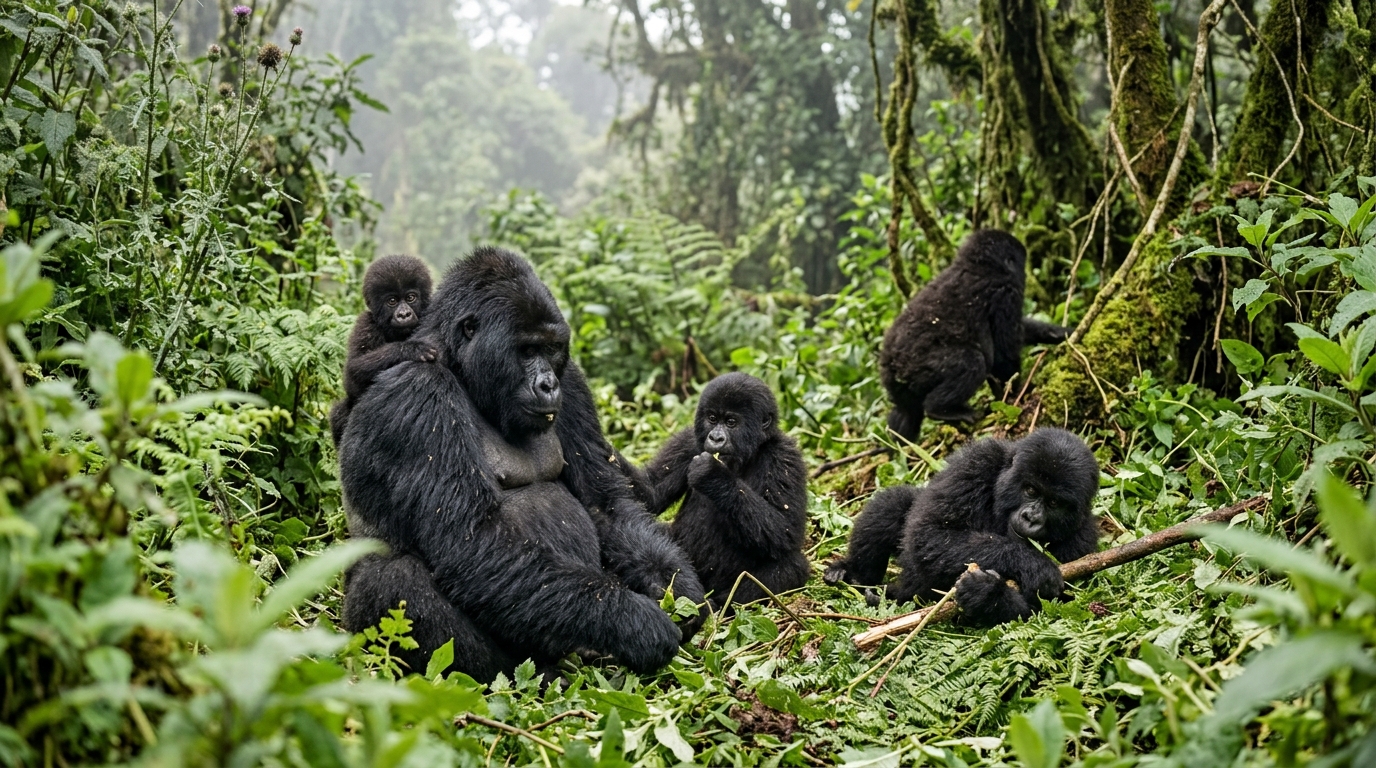
The hour: When the guide stops, crouches, and signals silence, you are probably already watching a gorilla — or a gorilla is watching you. The hour passes simultaneously too fast and with a quality of suspended time that people struggle to describe afterwards. The silverback’s scale is only apparent at close range. The juveniles’ play has a specific quality chaotic, inventive, unguarded. The mothers’ attention on their infants carries recognisable meaning across the full evolutionary distance between a human observer and the animal being observed.
Photography rules: No flash. No closer than 7 metres. Do not make prolonged eye contact with the silverback. If he chest-beats or charges, stand your ground, look away, and follow your ranger’s instructions. Move slowly and calmly.
The porters: Porter hire at Bwindi headquarters is strongly recommended for all sectors and essential for Nkuringo. A porter carries your daypack, steadies you on steep descents, and in some sectors provides literal physical support ,gripping your arm on the most treacherous sections. The cost is approximately UGX 20,000 to 30,000 (approximately USD $5 to $8) per porter for the day. It is one of the best investments in comfort you can make anywhere in East Africa.
The Gorilla Habituation Experience — The 4-Hour Alternative
Available only in Rushaga, and only for two specific families still in the habituation process, the Gorilla Habituation Experience is a fundamentally different kind of visit from standard gorilla trekking.
Instead of 8 visitors for 1 hour, the habituation experience allows maximum 4 visitors for 4 hours — spending the full morning with a family that is still becoming accustomed to human presence, observing the habituation process itself alongside the researchers and rangers who conduct it.
The permit costs USD $1,500 per person — significantly more than the standard USD $700, and approaching Rwanda’s standard permit price. What this buys is time: four hours is long enough to see full behavioural sequences, to watch the family move, feed, and interact across a morning, and to understand something about gorilla society that a one-hour window cannot provide.
The habituation experience is best for: experienced gorilla trekkers doing a repeat visit who want something deeper than the standard encounter; researchers or conservationists with a professional interest in habituation methodology; and travelers with the stamina for a potentially very long day in difficult terrain.
Bwindi for Birders
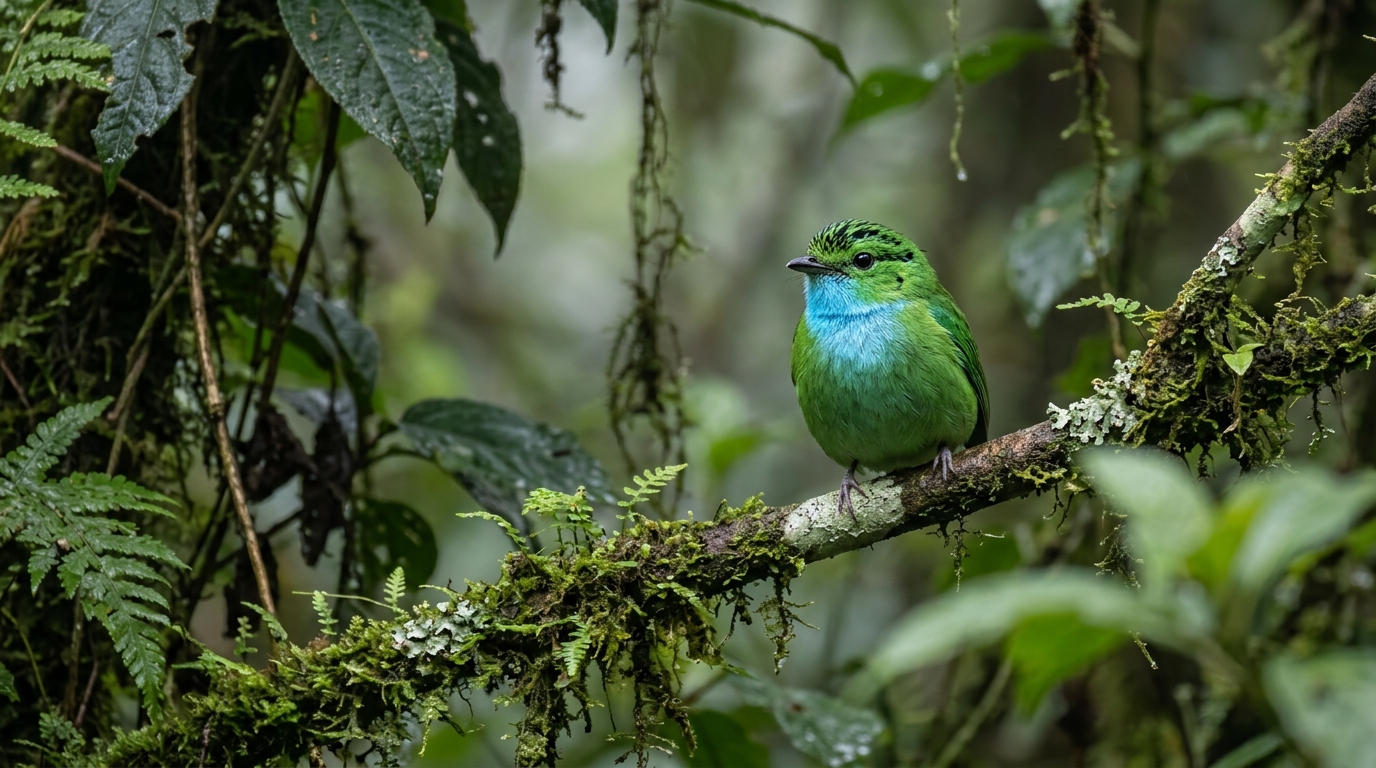
Bwindi’s bird list — 350+ species including 23 Albertine Rift endemic species — makes it one of the most important birding destinations in Africa. The Albertine Rift endemics are species whose global range is restricted to the montane forests of the western branch of the Great Rift Valley — they exist nowhere else on earth.
Key Albertine Rift endemics in Bwindi include:
- African green broadbill (Pseudocalyptomena graueri) — globally threatened; Bwindi is one of its last significant habitats
- Grauer’s broadbill (Pseudocalyptomena graueri)
- Shelley’s crimsonwing (Cryptospiza shelleyi)
- Handsome francolin (Pternistis nobilis)
- Purple-breasted sunbird (Nectarinia purpureiventris)
- Ruwenzori turaco (Gallirex johnstoni)
- Ruwenzori nightjar
- Multiple Albertine Rift warbler, robin-chat, and flycatcher species
The Ruhija sector is the most productive for Albertine Rift endemics — the high altitude and undisturbed forest at this sector’s elevation hold the highest density of these specialised species. A dedicated birding day in Ruhija, beginning before the gorilla trekking briefing and continuing into the afternoon, can produce encounters with a significant proportion of the 23 endemic species in a single session.
Lake Bunyonyi — The Perfect Rest Day
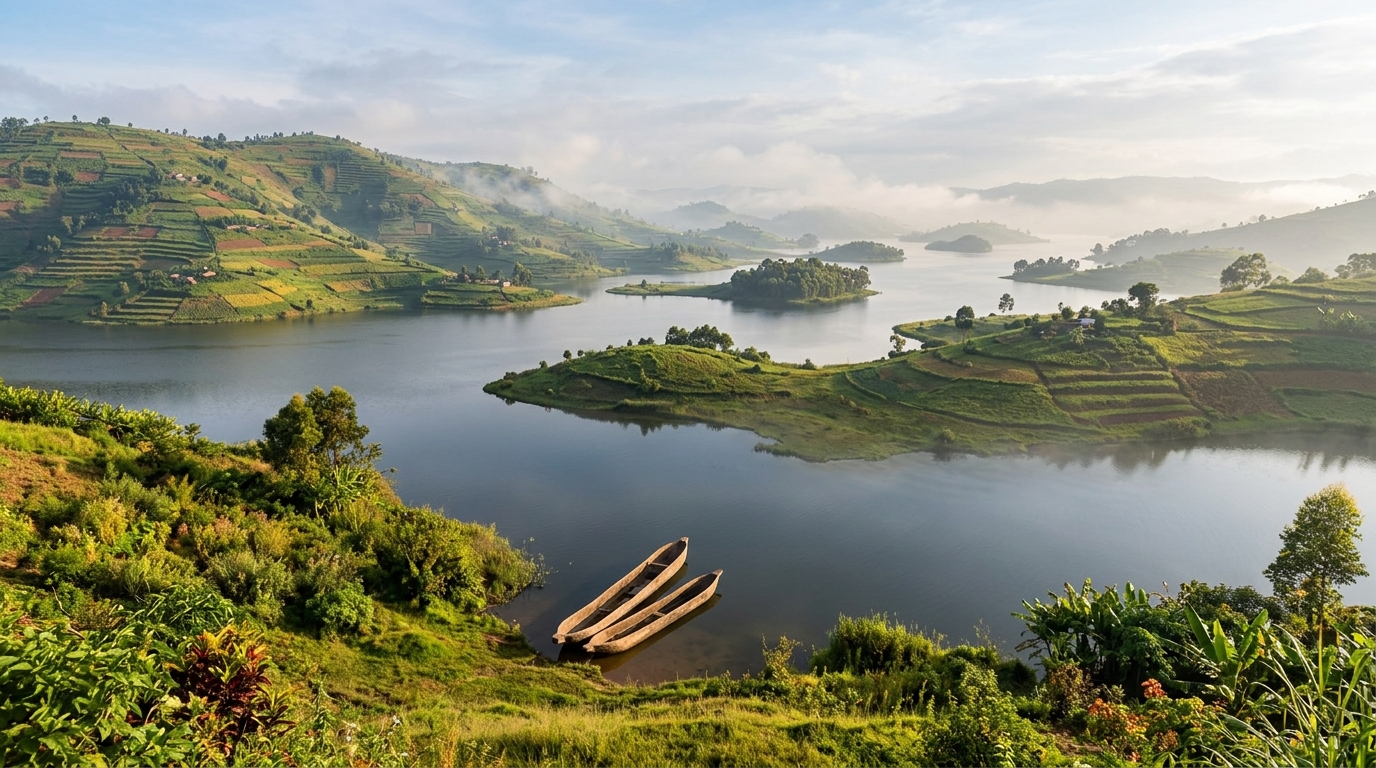
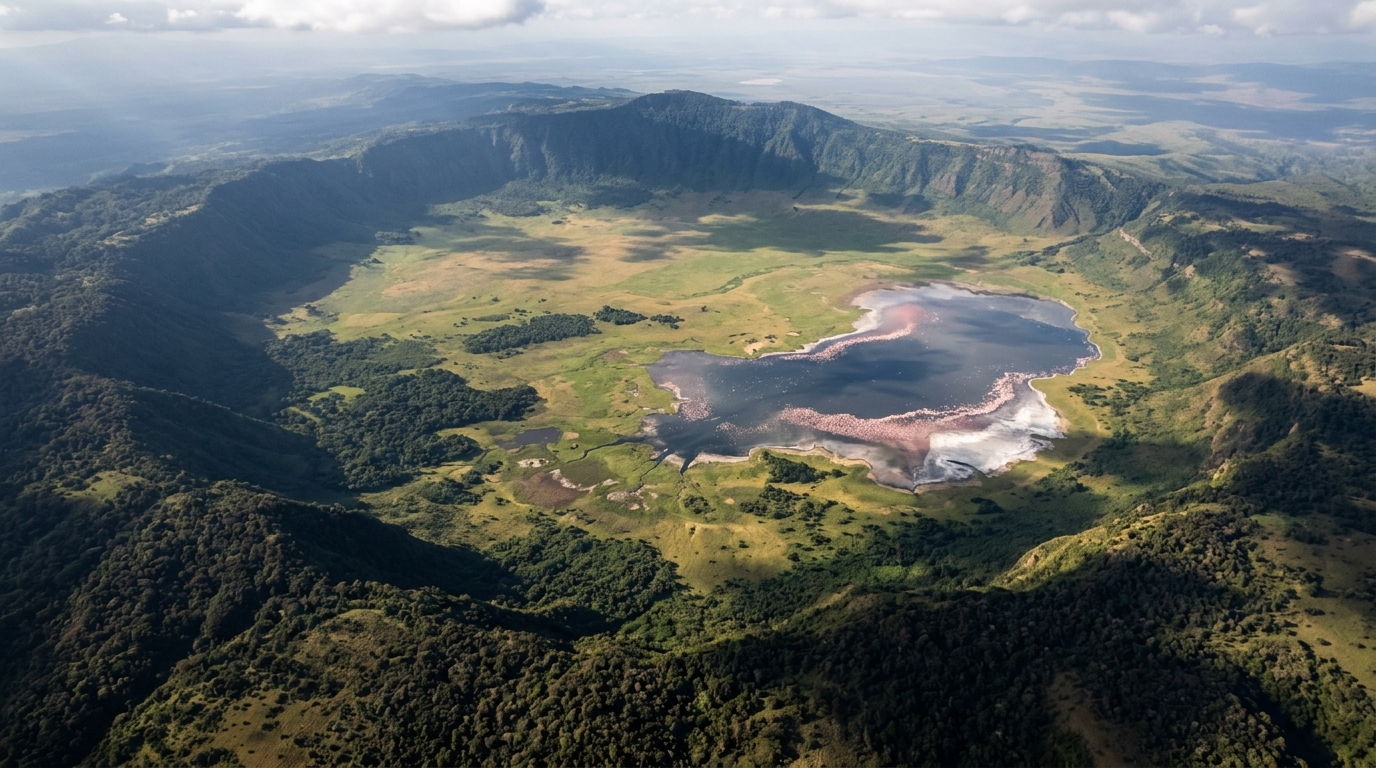
One hour’s drive from Bwindi’s Kisoro entrance (nearest to Rushaga and Nkuringo), Lake Bunyonyi sits in a volcanic crater at 1,962 metres above sea level — a still, deep, island-dotted lake enclosed by the terraced green hills of southwestern Uganda.
The lake is extraordinary for its beauty and for what it offers after the physical demands of a gorilla trek: a flat canoe or dugout ride on still water, the absence of any urgency, and a landscape of an entirely different character from the dark forest interior. Several comfortable and characterful lodges and camps sit on the lake shore or on its islands, operating from simple to mid-range. The lake has no hippos (too deep and too cold) and no crocodiles — making it one of the few lakes in East Africa where swimming is generally considered safe.
Adding two nights at Lake Bunyonyi between or after gorilla trekking in Bwindi converts what would otherwise be a purely demanding wildlife itinerary into a balanced trip that includes recovery, beauty, and the specific quality of highland Uganda at rest.
Best Time to Visit Bwindi
Mountain gorillas can be tracked year-round in Bwindi — they are resident in the forest regardless of season. The seasonal differences are primarily about trek conditions rather than gorilla availability.
| Season | Months | Trek conditions | Notes |
|---|---|---|---|
| Dry season | Jun–Aug | Drier paths, firmer underfoot | Best conditions; book 6 months ahead |
| Dry season | Dec–Feb | Similar to Jun–Aug | Equally good; slightly fewer visitors |
| Rainy season | Mar–May | Muddy, slippery, lush | More challenging trekking; forest at its most photogenic |
| Short rains | Sep–Nov | Variable; often brief afternoon showers | Good conditions; moderate bookings |
The rainy season case: For photographers who want the forest at its richest green — deepest colours, most atmospheric light, ferns fully extended — the March to May period produces conditions that the dry season cannot replicate. The trekking is harder. The images are often better.
Getting to Bwindi from Nairobi
By air to Entebbe, then road: Fly from Nairobi JKIA to Entebbe International Airport (approximately 1.5 hours). From Entebbe, road transfer to Bwindi Buhoma sector takes approximately 7 to 8 hours via Mbarara and Kabale.
By air to Entebbe, then domestic flight: From Entebbe, domestic flights to Kihihi Airstrip (nearest to Buhoma, 1 hour) or Kisoro Airstrip (nearest to Nkuringo and Rushaga, 1 hour) significantly reduce the road time. From Kihihi or Kisoro, transfer to your sector camp is 1 to 2 hours by road.
We organise the complete routing from Nairobi — international flight coordination, Entebbe ground transfer, domestic connections, and all Bwindi camp arrangements — as a single package.
Plan Your Bwindi Safari with Crescent Shores Retreats
📞 WhatsApp or call: +254 790 292 838 📧 Email: welcome@crescentshoresretreats.com 🌐 Uganda Gorilla Guide: Uganda Gorilla Trekking: The Complete 2026 Guide → 🌐 Uganda vs Rwanda: Uganda vs Rwanda Gorilla Trekking — Which is Right? → 🌐 Plan your safari: Contact Our Team →
Frequently Asked Questions — Bwindi Impenetrable Forest
How many mountain gorillas are in Bwindi Impenetrable Forest?
Approximately 459 mountain gorillas live in Bwindi Impenetrable Forest, representing over 55% of the world’s remaining mountain gorilla population. The global mountain gorilla population is approximately 1,063 individuals — found only in Bwindi, Uganda’s Mgahinga Gorilla National Park, Rwanda’s Volcanoes National Park, and the DRC’s Virunga National Park. Bwindi’s 19 habituated families are the largest concentration of gorilla families open to tourist trekking anywhere in the world.
How difficult is gorilla trekking in Bwindi?
Gorilla trekking in Bwindi ranges from moderate (Buhoma sector, where some families are found within 30 to 45 minutes) to very demanding (Nkuringo sector, where treks can last 6 hours on extremely steep terrain). All trekking involves walking through dense forest with uneven ground, roots, and mud. A reasonable level of physical fitness — the ability to walk for potentially several hours on steep and unpredictable terrain — is required for any sector. Porter hire is strongly recommended and transforms the experience for less fit visitors. There is no single “easy” gorilla trek at Bwindi; even the shorter treks involve forest terrain unlike anything most visitors have experienced.
Which Bwindi sector is best for gorilla trekking?
The best sector depends on your priorities: Buhoma for accessibility, chimpanzee tracking combination, and the famous Mubare group. Rushaga for the most family choices and the gorilla habituation experience. Ruhija for birders and experienced trekkers who want a challenge. Nkuringo for the most remote experience and proximity to Lake Bunyonyi. For a first gorilla trek visit, Buhoma or Rushaga are most commonly recommended. For a second visit or for specialist interests, Ruhija and Nkuringo have specific advantages.
What is the gorilla habituation experience at Bwindi?
The gorilla habituation experience is an extended 4-hour visit (versus the standard 1 hour) to gorilla families still in the process of becoming accustomed to human presence. It is available only in Rushaga sector for two specific habituating families, for a maximum of 4 visitors per session. The permit costs USD $1,500 per person — compared to USD $700 for standard gorilla trekking. The experience provides much more time with the gorilla family and the opportunity to observe the habituation process itself alongside researchers and rangers.
How do I get to Bwindi Impenetrable Forest from Nairobi?
Fly from Nairobi JKIA to Entebbe International Airport (approximately 1.5 hours). From Entebbe, either take a road transfer to Bwindi (7 to 8 hours to Buhoma), or a domestic flight to Kihihi Airstrip (for Buhoma, 1 hour) or Kisoro Airstrip (for Nkuringo and Rushaga, 1 hour), then a 1 to 2-hour road transfer to your camp. Crescent Shores Retreats coordinates the complete routing from Nairobi as a single package.
What is the best time to visit Bwindi for gorilla trekking?
Mountain gorillas can be trekked year-round — they are resident in the forest regardless of season. The dry seasons (June to August and December to February) offer drier, firmer paths and the easiest trekking conditions. The rainy seasons (March to May and September to November) produce muddy and more challenging terrain, but the forest is at its most photogenic and visitor numbers are lower. Permits are available year-round; peak season (June to August) requires booking 5 to 6 months ahead.
— Crescent Shores Retreats, Naivasha, Kenya Naivasha-based safari tour operator · Kenya · Tanzania · Uganda · Rwanda +254 790 292 838 · welcome@crescentshoresretreats.com

Leave A Comment