By Crescent Shores Retreats · Naivasha, Kenya · Published May 2026 · 11 min read
The single biggest risk in planning an East Africa safari is not choosing the wrong park, the wrong season, or the wrong camp. It is choosing the wrong operator.
A good safari operator shapes every element of your experience — the quality of your guide, the condition of your vehicle, the accuracy of your wildlife positioning, the transparency of your pricing, and the reliability of your logistics when the unexpected happens. A poor operator delivers none of these. You do not find out which you have chosen until you are in the field, thousands of kilometres from home.
This guide gives you the ten questions to ask before you commit to any safari company. They are the same questions we would want you to ask us.
Why Your Operator Matters More Than Your Destination
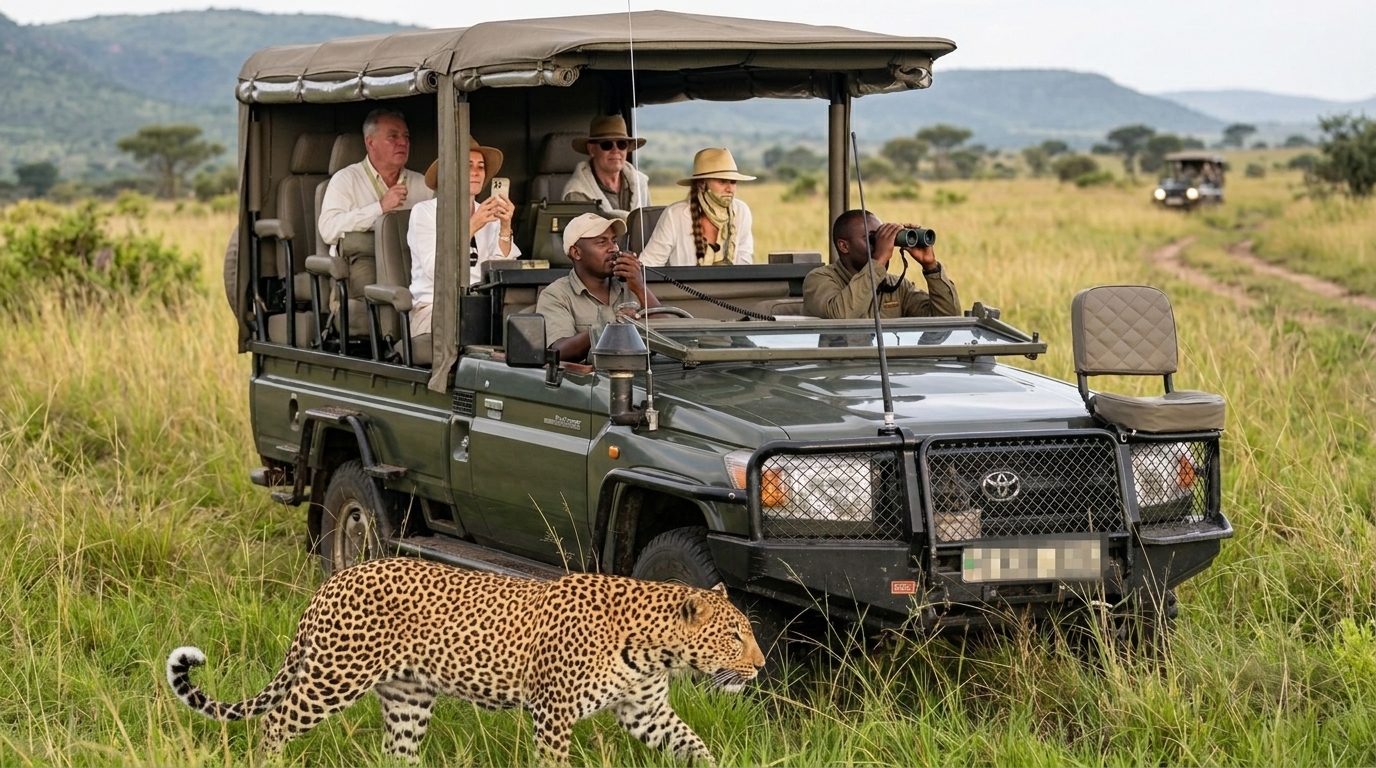
The Maasai Mara can be extraordinary or ordinary depending entirely on who guides you through it. The same lion kill, the same river crossing, the same dawn experienced with a guide who has spent 15 years reading this landscape versus one who has been doing it for six months, in a well-maintained private vehicle versus an overcrowded shared bus produce completely different safari experiences.
Wildlife does not care who paid for your permit. The operator determines everything around it.
The 10 Things to Check Before You Book
1. Are They Properly Licensed and Registered?
A legitimate Kenya safari operator must hold a valid licence from the Kenya Tourism Board (KTB) and should ideally be a member of the Kenya Association of Tour Operators (KATO) — the industry body that sets professional standards and handles disputes.
How to verify:
- Ask directly for their KTB licence number
- Search KATO’s member directory at kato.co.ke
- Check their registered business address is a real Kenya location, not a P.O. box
Legitimate operators will provide this information immediately and without hesitation. An operator who deflects this question or cannot provide a licence number should be avoided.
2. Are They Actually Based in Kenya?
There is an important difference between a Kenya-based operator a company physically operating from Kenya with local staff, local vehicles, and local partnerships and an international travel agent who sells Kenya safaris from London, New York, or Sydney.
International agents often use the same ground product as local operators — the same camps, sometimes the same guides — but with their commission added to the price. That commission typically runs 15 to 25% of the package cost. On a USD $3,000 safari, you may be paying USD $450 to $750 for the privilege of booking through an intermediary.
More importantly, real-time local intelligence — knowing which crossing point is active today, which lion pride was sighted yesterday morning, which camp track is passable after last night’s rain — is only available to operators physically present in the field.
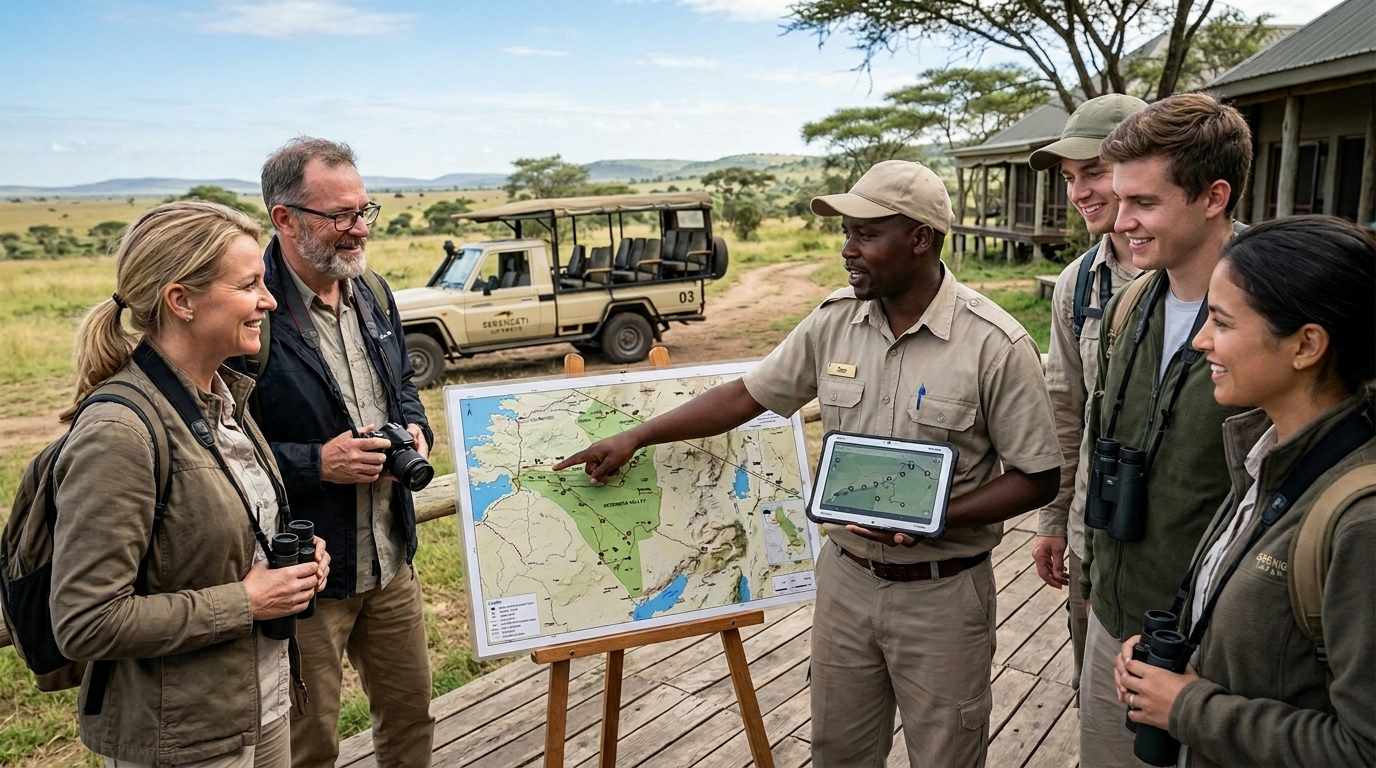
Ask where the operator’s main office is located and who will actually be guiding you. The answer should be a specific Kenyan address and a named guide or team.
Crescent Shores Retreats is based in Naivasha, Kenya. Our team is on the ground in the Rift Valley year-round.
3. Do They Have Genuine Local Knowledge?
Local knowledge in the safari industry is not the same as having read the same guidebooks and websites as your clients. Genuine local knowledge means knowing:
- Which crossing points are active in the current week, not the general July–October window
- The names, territories, and current status of specific lion prides in your destination park
- Which guides at which camps are genuinely excellent and which are average
- Which camp tracks become impassable after rain and need re-routing
- Where specific leopards have been sighted in the last 72 hours
A simple test: ask your prospective operator what is happening in the Maasai Mara right now. A locally-based operator with current field relationships can give you a specific, current answer. An international agent will give you a brochure answer.
4. Are Their Prices Fully Transparent and All-Inclusive?
The hidden-fee problem is one of the most common complaints in the East Africa safari industry. Operators quote a low headline price, then add park fees, conservancy fees, transfers, tips, and activity costs at the point of confirmation — or worse, on the day.
Ask for a written breakdown that itemises:
- Accommodation cost per night
- All national park and conservancy entry fees
- Ground transfers (camp-to-camp, airport transfers)
- Meals included
- Game drives per day
- Guide fees
- Any activity fees (balloon safari, gorilla permits, etc.)
Red flag: Any operator who cannot or will not provide this breakdown before you confirm a booking.
At Crescent Shores, every quote is itemised in writing. Park fees are included and listed separately. There are no additions after you confirm. This is not unusual among reputable operators — it is the minimum standard.
5. Do They Customise, or Do They Just Sell Off-the-Shelf Packages?
Cookie-cutter safari packages — fixed itineraries sold identically to every client regardless of their interests, fitness level, group composition, or travel dates — are the mark of a volume operator rather than a quality one.
A good operator asks you questions before presenting an itinerary:
- What do you most want to see or experience?
- Who is in your group and what are their fitness levels?
- Have you done a safari before?
- What is your approximate budget per person?
- Are there specific dates you need to avoid?
The answers to these questions should shape a different itinerary for different clients. A honeymoon couple and a family of five with young children visiting the same park in the same month have completely different needs — their itineraries should not be identical.
6. What Are Reviews Saying — Across Multiple Platforms?
Google Reviews, TripAdvisor, and SafariBookings.com together give the most complete picture. Look for:
Positive signs:
- Specific, detailed reviews mentioning guide names, exact sightings, and personal interactions
- Consistent quality across 20+ reviews over several years
- Thoughtful responses from the operator to both positive and negative reviews
Red flags:
- Reviews that are generic and could apply to any safari (“amazing experience, highly recommend!”)
- Multiple reviews posted on the same day with similar phrasing
- No response from the operator to negative reviews
- A dramatic gap between the most recent and oldest reviews
SafariBookings.com is particularly useful because it is a specialist safari review platform — reviews there are more likely to be from genuine safari clients than on general review platforms where fake reviews are easier to post.
7. Who Is Your Direct Point of Contact?
The question “who do I call at 6 AM when my transfer does not arrive?” should have a specific, named answer before you travel.
Best case: You speak directly with the person building your itinerary, who is also the person answering their phone when something goes wrong.
Red flag: Your booking is handled by a sales team who pass you to an “operations team” who communicate through a ticketing system.
In East Africa, WhatsApp is the most practical communication tool — it works on limited data, delivers when calls cannot get through, and allows you to share photos and location if needed. Any reputable Kenya-based operator should have an active WhatsApp number that they genuinely monitor.
Our team at Crescent Shores is available on WhatsApp at +254 790 292 838 — the same number throughout your pre-departure period and your entire trip.
8. What Are Their Vehicles?
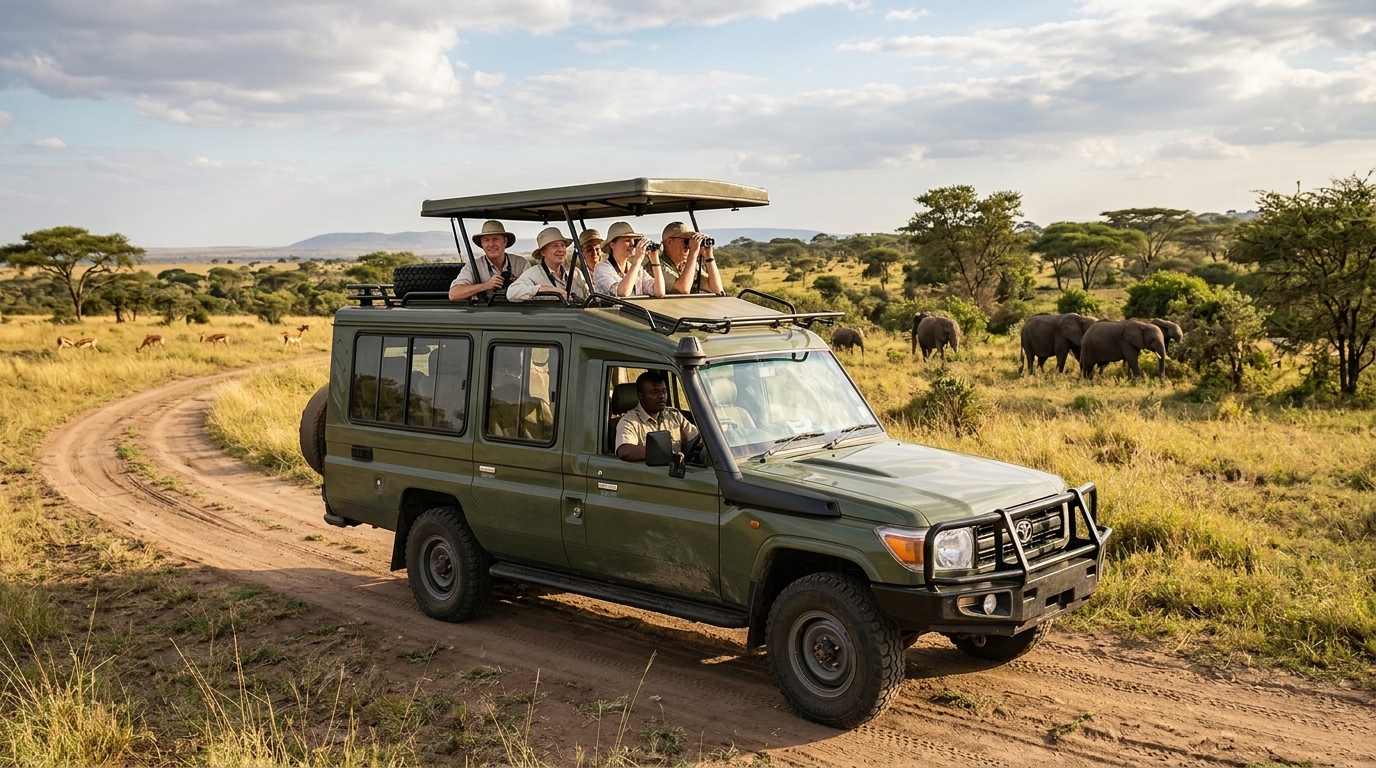
The minimum standard for a Kenya game drive vehicle is a 4×4 with a pop-up roof — the elevated position and unobstructed sightlines are fundamental to the game viewing experience. Closed minibuses or standard SUVs without roof access are significantly inferior for wildlife observation.
What to ask:
- What make and model are their safari vehicles?
- How many guests does each vehicle accommodate? (Maximum 6–8 for a quality experience)
- How old is the fleet and how often are vehicles serviced?
- Will my group have a private vehicle or share with other travellers?
A private vehicle — your group only — transforms the safari. You control the route, the timing, and how long you stay at each sighting. A quality mid-range operator at a slightly higher price with a private vehicle is almost always preferable to a cheaper operator with a shared vehicle.
9. Do They Brief You Thoroughly Before Travel?
A professional safari operator does not simply confirm your booking and then go quiet until you arrive. Before travel, you should receive:
- A detailed pre-departure pack covering visa requirements for your nationality, health and vaccination requirements, packing recommendations, and what to expect on arrival
- Real-time migration and wildlife intelligence in the 1 to 2 weeks before travel — where the herds currently are, which crossing points are active, which predators have been sighted recently
- Clear airport pickup instructions and contact details
- Information about your guide, your camp, and your daily schedule
This pre-departure communication is where you experience for the first time whether an operator genuinely cares about your trip or simply processed a booking.
10. Do They Support Local Conservation and Communities?
This criterion matters on two levels. Ethically, responsible wildlife tourism is the primary economic mechanism that funds anti-poaching operations, community income, and wildlife corridor protection across East Africa. Operators who do not invest in conservation — or who use non-conservancy camps to avoid fees — are indirectly undermining the very ecosystem they sell.
Practically, operators with conservancy partnerships give you access to experiences unavailable inside national parks: night drives, guided walking safaris, off-road driving, and maximum vehicle limits at wildlife sightings. Paying the conservancy fee buys both exclusivity and conservation impact.
Ask:
- Do they use private conservancy camps in the Mara ecosystem?
- Are they affiliated with any conservation programmes?
- Are their guides KATO-certified or equivalent?
- What is their wildlife photography ethics policy?
Red Flags — Signs to Walk Away
- Cannot provide an itemised price breakdown: Reputable operators always can
- No verifiable Kenya office address: A PO box or international address is a concern
- Slow response times or email-only communication: Good East Africa operators respond within 24 hours and are active on WhatsApp
- Prices significantly below market rate: The USD $200/person/day Mara park fee alone eliminates truly “cheap” Mara safaris — sub-market pricing means something has been cut
- Reviews that mention the same issues repeatedly: One bad review might be an anomaly; three reviews mentioning the same guide problem or vehicle breakdown are a pattern
- Unwilling to share licence information: A legitimate operator has nothing to hide and shares this immediately
10 Questions to Ask Before You Book
Before committing to any safari operator, ask these directly:
- What is your KTB licence number and are you a KATO member?
- Where are your main offices located in Kenya?
- Who will be my guide and how many years of experience do they have in [specific park]?
- Can you provide a fully itemised, written breakdown of all costs?
- Will my group have a private vehicle or share with others?
- What is your cancellation and rebooking policy?
- How do you handle medical emergencies in the field?
- What are your vehicles — make, model, maximum guests per vehicle?
- Can you provide recent references from clients who did this specific itinerary?
- Will you provide pre-departure migration and wildlife intelligence updates?
Why Crescent Shores Retreats Meets Every Criterion
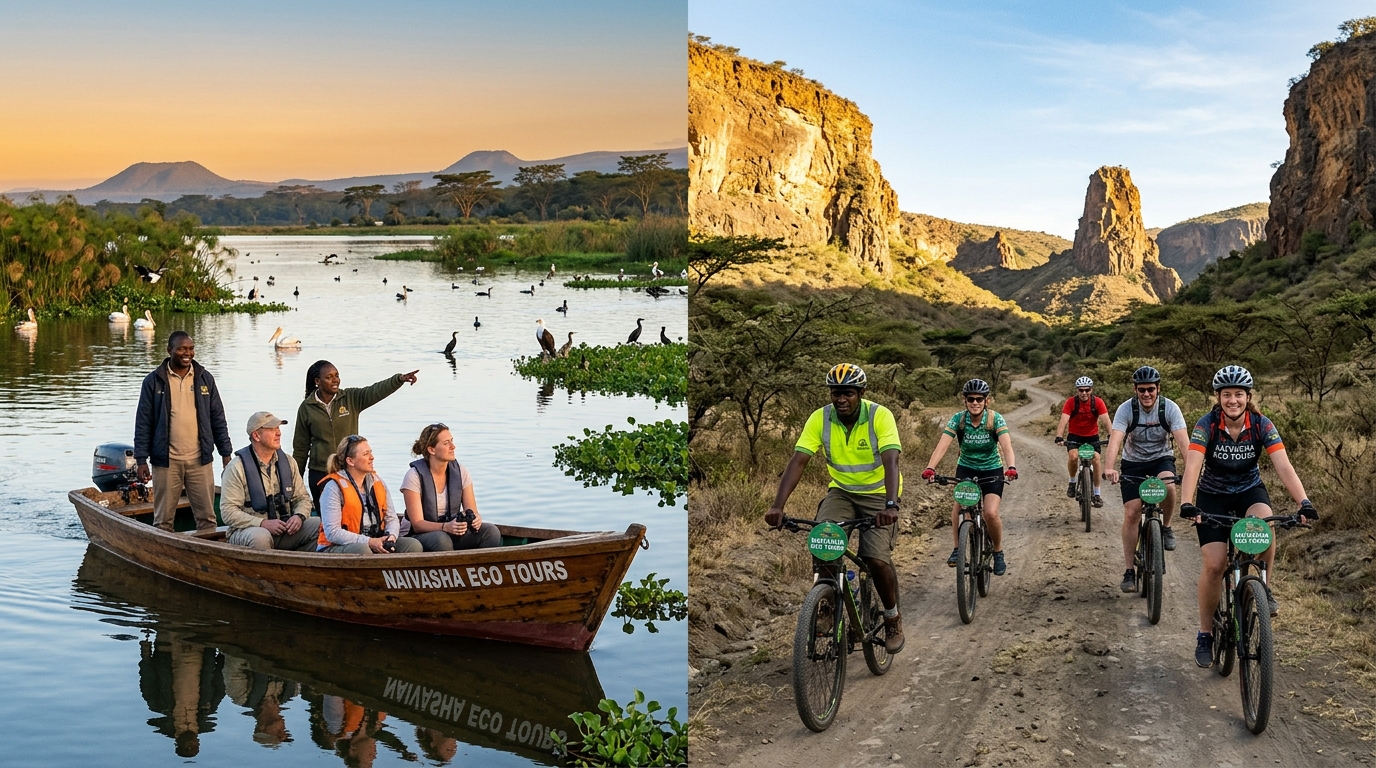
We are registered with the Kenya Tourism Board and members of KATO. We are based in Naivasha, Kenya — a two-hour drive from Nairobi and a four-hour drive from the Maasai Mara. Our operations team has been guiding in the Rift Valley and across East Africa for years. We customise every itinerary. We provide fully itemised pricing with no hidden additions. We use well-maintained 4×4 vehicles with pop-up roofs. We brief every client before departure and provide real-time migration intelligence from the field. And we are available on WhatsApp from the moment you make your first enquiry until the moment you land back home.
We are not the only operator who can say these things. But we are one of relatively few who can say all of them — and who will demonstrate each point before asking you to commit to a single booking.
 WhatsApp or call: +254 790 292 838
  Email: welcome@crescentshoresretreats.com
  Start planning: Contact Our Team → Kenya Safari Cost Guide: How Much Does a Kenya Safari Cost? → Browse packages: Kenya Safari Packages 2026 →
Frequently Asked Questions — Choosing a Safari Operator
How do I verify if a Kenya safari operator is legitimate?
A legitimate Kenya safari operator holds a valid licence from the Kenya Tourism Board (KTB) and should be a member of the Kenya Association of Tour Operators (KATO). Ask directly for their KTB licence number and verify KATO membership at kato.co.ke. Also check that they have a verifiable physical address in Kenya (not just a PO box or international address), active reviews on TripAdvisor, Google and SafariBookings.com, and an active local phone number — not just an email address.
Is it better to book directly with a Kenya operator or through a travel agent?
In most cases, booking directly with a Kenya-based operator is preferable for two reasons: cost and intelligence. International travel agents typically add 15 to 25% commission to the same ground product you can book directly from a local operator. More importantly, a Kenya-based operator has real-time field intelligence — migration position, specific wildlife activity, current camp conditions — that no international agent can access. Direct booking also gives you a direct line to the people actually executing your safari when things need adjusting.
What should a good safari operator provide before I travel?
Before departure, a good operator provides: a detailed pre-departure pack covering visa requirements, health and vaccination guidance, and packing recommendations; real-time migration and wildlife intelligence in the 1 to 2 weeks before travel; clear airport pickup instructions and contact details; information about your specific guide and camp; and a named WhatsApp or phone contact available throughout your trip. The quality and thoroughness of pre-departure communication is one of the strongest indicators of operator quality.
How do I know if a safari price is fair?
A fair Kenya safari price is one that is fully itemised and includes all park entry fees, accommodation, meals, game drives, guide fees, and ground transfers. For reference: the Maasai Mara park fee alone is USD $200 per person per day for international visitors at peak season any safari price that does not account for this is either hiding the fee or not including the Mara in the itinerary. A mid-range 4 to 5-day Kenya safari with private vehicle, quality lodge, and all park fees included should cost approximately USD $1,200 to $3,000 per person. Prices significantly below this range suggest hidden costs or reduced service quality somewhere in the package. See the full Kenya safari cost guide →
What is KATO and why does it matter for choosing an operator?
KATO — the Kenya Association of Tour Operators — is Kenya’s principal professional body for tour operators. Membership requires operators to meet professional conduct standards, maintain valid licences, and submit to a grievance process if clients have complaints. While KATO membership is not a guarantee of excellence, it is a credibility signal and means the operator has a professional accountability structure beyond their own claims. Non-KATO operators are not necessarily illegitimate, but membership provides an independent layer of verification.
Can I book a safari last minute?
Some safaris are bookable at short notice particularly green season (April–May and November) travel when accommodation availability is higher. However, peak season travel in July to October and December (Christmas/New Year) require 4 to 6 months advance booking for quality mid-range and luxury options. Gorilla trekking permits in Uganda ($700) and Rwanda ($1,500) frequently sell out 3 to 6 months ahead. Our general recommendation: book as early as your travel dates are confirmed. We have never had a client regret booking early. Last-minute availability exists, but you will be choosing from what is left after everyone else has booked.
— Crescent Shores Retreats, Naivasha, Kenya Naivasha-based safari tour operator · Kenya · Tanzania · Uganda · Rwanda +254 790 292 838 · welcome@crescentshoresretreats.com

Leave A Comment