
By Crescent Shores Retreats · Naivasha, Kenya · Published May 2026 · 13 min read
Tsavo is where Kenya goes when it wants to remind you what Africa actually looks like before anyone tries to make it accessible.
At over 20,800 square kilometres across its two sections, Tsavo East and Tsavo West together form the largest national park system in Kenya and one of the largest protected areas in the world. The landscape is semi-arid and vast: flat red plains stretching to heat-hazed horizons in the east, lava flows and volcanic hills in the west, and the Galana River cutting through red rock gorges that the park’s enormous elephants cross at dawn.
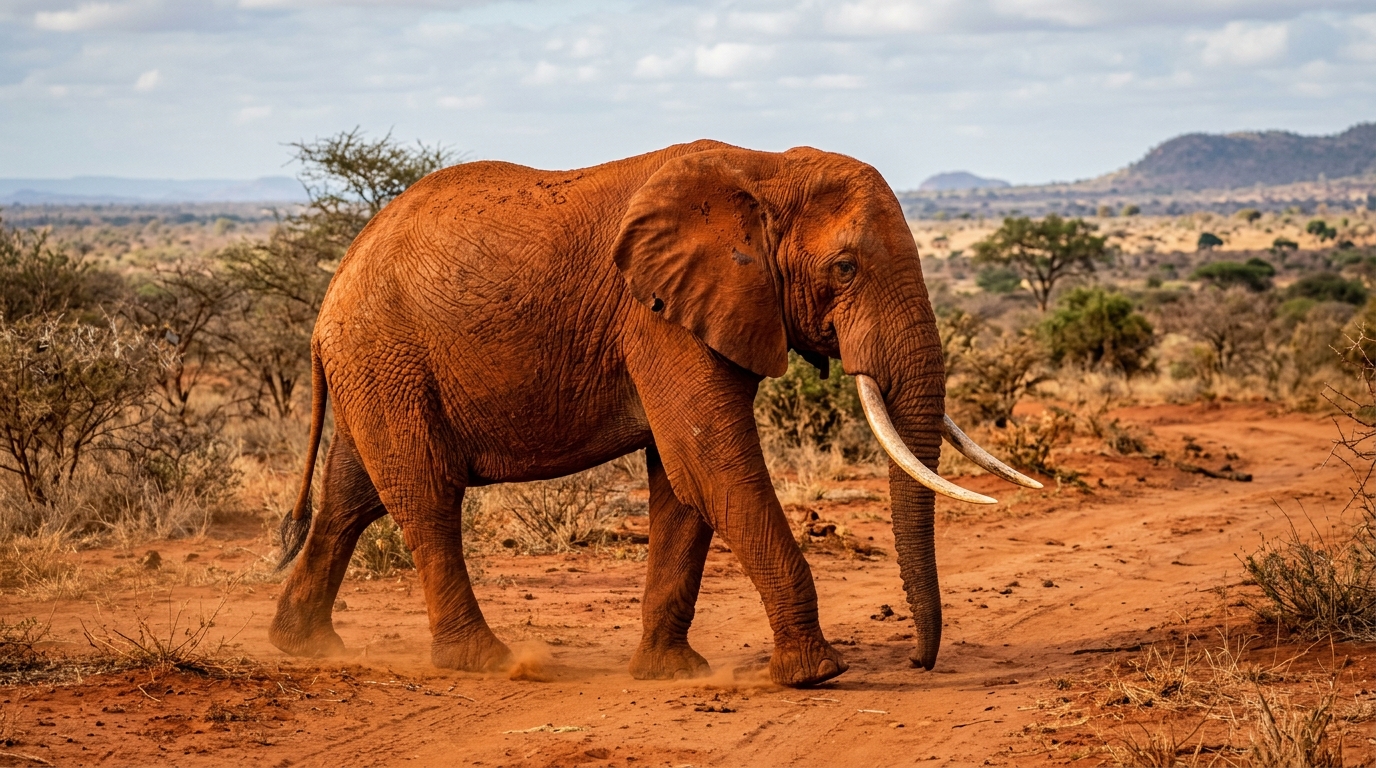
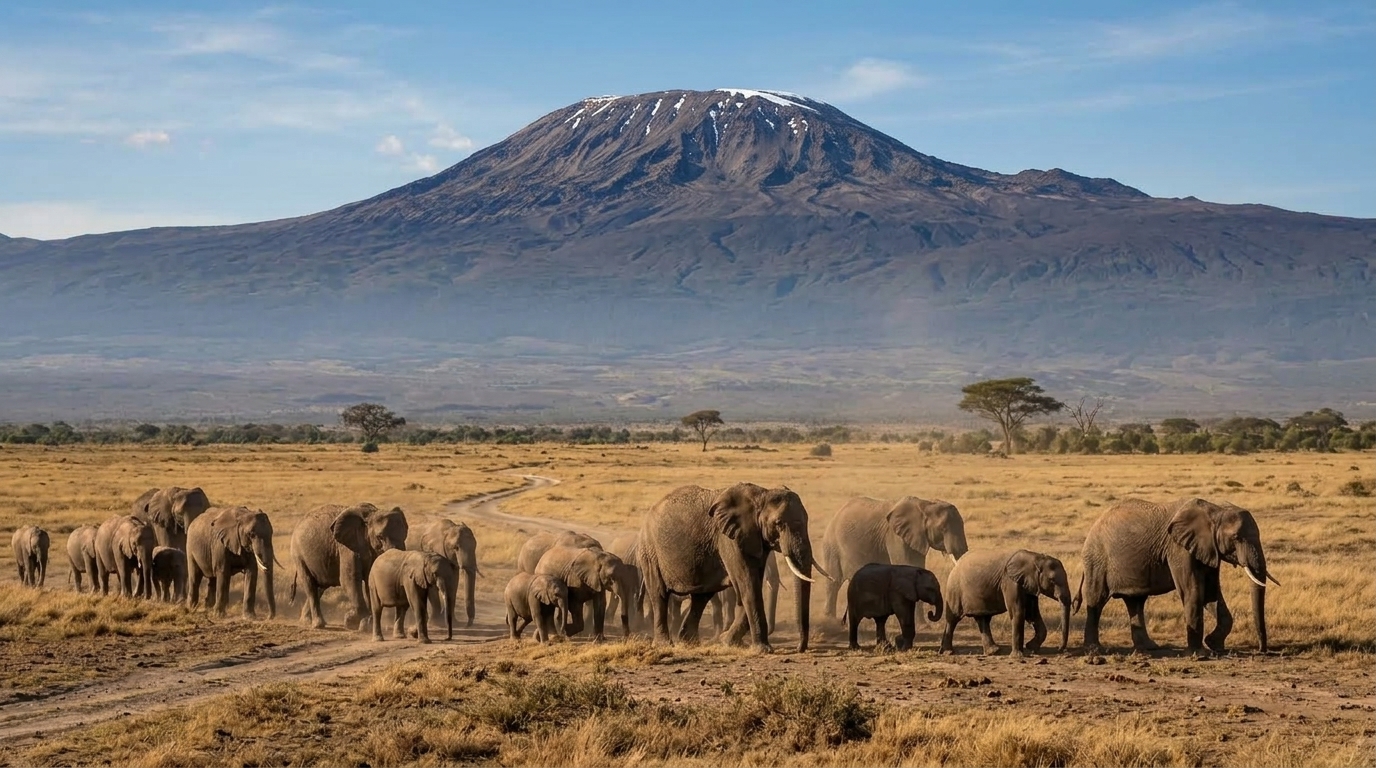
Those elephants are orange. Not quite, but almost the volcanic red dust of Tsavo’s soil coats every elephant that dust-bathes here, which is every elephant, turning their skin deep rust-red in a colour transformation that no photograph can quite prepare you for. They look like something that evolved somewhere else and is passing through this landscape on its way to somewhere more appropriate. But they are Tsavo’s. They have been here, in this specific form, since before the park had a name.
This is the complete guide to one of Africa’s great and undervisited wildernesses.
Tsavo at a Glance — Key Facts for 2026
| Detail | Tsavo East | Tsavo West |
|---|---|---|
| Size | 13,747 km² | 7,065 km² |
| Location | SE Kenya, along Galana River | S Kenya, near Voi / Taveta |
| Entry fee (non-resident) | USD $52/person/day | USD $52/person/day |
| Entry fee (EAC resident) | KES 745/person/day | KES 745/person/day |
| Terrain | Open semi-arid savanna | Hills, lava, woodland, swamps |
| Signature feature | Red elephants, Lugard Falls, Yatta Plateau | Mzima Springs, Shetani Lava Flow |
| Rhino | Rare | Ngulia Rhino Sanctuary (black rhino) |
| Road quality | Good in dry season | Good throughout |
| Crowding | Very low | Low |
| Distance from Nairobi | ~330 km (3.5–4 hrs) | ~220 km (2.5–3 hrs) |
| Natural combination | Coast, Amboseli | Amboseli, coast |
Tsavo East vs Tsavo West — Which Should You Choose?
The two parks are separated by the Nairobi–Mombasa railway and highway. Both are extraordinary. Both share the same park fee. They are, however, genuinely different in character and offer different primary experiences.
Choose Tsavo East if:
- The red elephants are your primary motivation
- You want Kenya’s most open, remote, least-visited landscape
- You are continuing to the coast and want the eastern route
- The sense of genuine wilderness — very few vehicles, vast distances — matters most
Choose Tsavo West if:
- Mzima Springs is on your list (it should be)
- You specifically want to see black rhino in the Ngulia Sanctuary
- A more varied landscape (hills, lava, wetlands alongside savanna) appeals
- You want easier access from Nairobi with Voi as a gateway
Best of all: The Nairobi–Tsavo West–Tsavo East–coast route follows the Mombasa highway naturally, allowing a few nights in each park without any doubling back. This is the structure we most commonly build for clients combining Tsavo with a Mombasa beach extension.
The Red Elephants — Tsavo’s Most Distinctive Sight
[PHOTO 02]
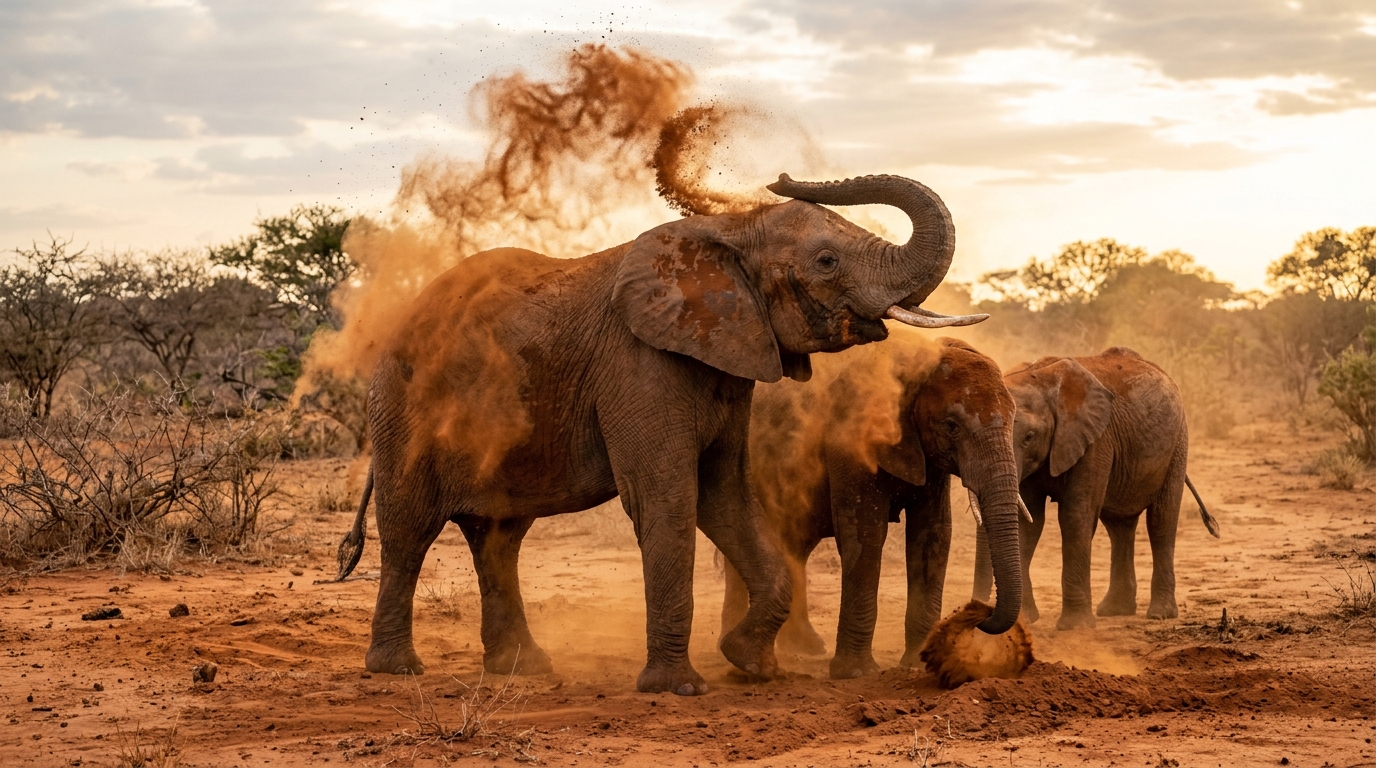
The elephants of Tsavo are not a different species and they are not genetically distinct. They are African savanna elephants (Loxodonta africana) whose skin appears deep orange-red because they live on soil that is deep orange-red.
Tsavo’s substrate is volcanic — red laterite soil derived from basaltic rock, iron-rich and fine-textured. Elephants dust-bathe regularly: they pick up soil with their trunks and throw it over their bodies, coating themselves to cool down, protect their skin from sunburn, and deter insects. In most East African parks, this produces a temporary grey-brown dusting. In Tsavo, the red soil produces a coating that accumulates and persists — turning the skin of every Tsavo elephant a shade of orange that deepens through the dry season and fades only partially after rain.
The effect is most dramatic on large bulls — whose accumulated dust-bathing over 50 years has produced a deep, almost uniform orange-red across vast bodies — and on calves, who have bathed less but carry the colour more vividly against their smaller frames.
Photographically, a red Tsavo bull against the park’s equally red earth, with sparse acacia above and nothing else in any direction, is one of Africa’s most distinctive and compelling wildlife images. Unlike the Amboseli–Kilimanjaro shot, it exists nowhere but here.
The Tsavo Elephant Population
The greater Tsavo ecosystem holds one of Kenya’s largest elephant populations — estimated at approximately 12,000 to 14,000 individuals across the two parks and the surrounding areas. This is a population that has recovered from serious pressure: poaching in the 1970s and 1980s devastated Tsavo’s elephants, reducing the population by an estimated 75%. The recovery has been sustained through decades of anti-poaching investment and is one of Kenya’s conservation success stories.
The Man-Eaters of Tsavo — A Dark History
In 1898, during the construction of the Uganda Railway, two maneless male lions killed and ate an estimated 35 construction workers at a camp near the Tsavo River. The killings lasted nine months and halted construction repeatedly before Lt. Colonel John Henry Patterson shot both lions — the first in December 1898, the second in January 1899.
Patterson wrote about the killings in a 1907 book, The Man-Eaters of Tsavo, which became one of the most widely read wildlife books of the colonial era. The lions’ skins and skulls are now at the Field Museum in Chicago, where they were sold by Patterson in 1925.
The incident raises questions that wildlife scientists still debate. Why did these two specific lions develop man-eating behaviour? Analysis of their remains suggests dental damage — broken teeth from old kills — may have made conventional prey harder to hunt, driving them toward easier targets. Others have proposed that the lions were exploiting a source of human remains from a nearby Arab slave trade caravan route.
The Tsavo lion type is distinctive and relevant today. Lions across the Tsavo ecosystem are consistently maneless or sparse-maned compared to the full-maned lions of the Serengeti and Maasai Mara. Researchers hypothesise this is a heat-adaptation response, the thick mane of savanna lions developed partly for display in environments where cooling is less urgent, and Tsavo’s heat selects against it. When you see a lion in Tsavo, it may look different from the lions you have seen in photographs from elsewhere. This is normal and correct.
Mzima Springs — Tsavo West’s Crown Jewel
In the middle of a landscape that receives less than 500mm of rain annually, in the heart of a semi-arid park where most water sources are seasonal at best, Tsavo West has a spring.
Not a trickle. Not a seasonal pool. A set of springs that produces 250 million litres of pure, cold, crystal-clear water per day — enough to supply a city — without any apparent source in the immediate landscape.
How Mzima Springs works: Rainfall on the Chyulu Hills, 50 kilometres to the northeast, percolates through the porous volcanic rock of the lava fields and travels underground, filtered clean by the rock over decades of slow movement, emerging at Mzima Springs as water of extraordinary clarity. The pipeline that supplies Mombasa with drinking water draws from the same source. The springs are simultaneously a geological curiosity, an ecological miracle, and a functioning municipal water supply.
The Springs Experience
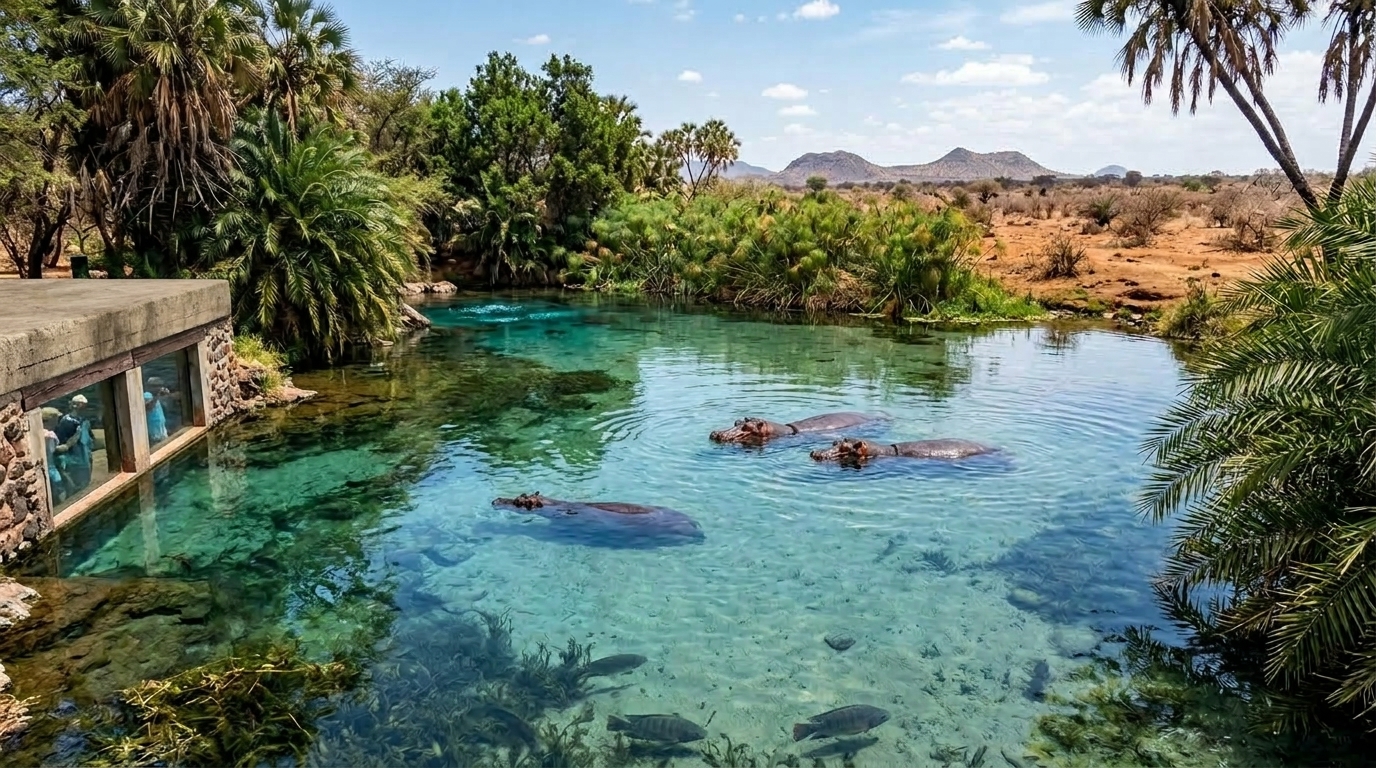
A boardwalk leads through the fig and raffia palm forest that the springs have generated — lush, tropical, startlingly green against the surrounding thorn scrub. Hippos wallow in the pools; crocodiles rest on sandy banks; Nile monitor lizards patrol the margins. In the clearest sections of the springs, river fish are visible through the water at depth.
The underwater viewing chamber — a glass-walled observation room sunk into the side of the main pool — allows visitors to watch hippos swimming from below the surface. Hippos in motion underwater — graceful, balletic, completely unlike their lumbering surface behaviour — is one of East Africa’s most surprising wildlife experiences. The chamber is functional and unique. It exists nowhere else in Kenya.
Shetani Lava Flow and the Chyulu Hills
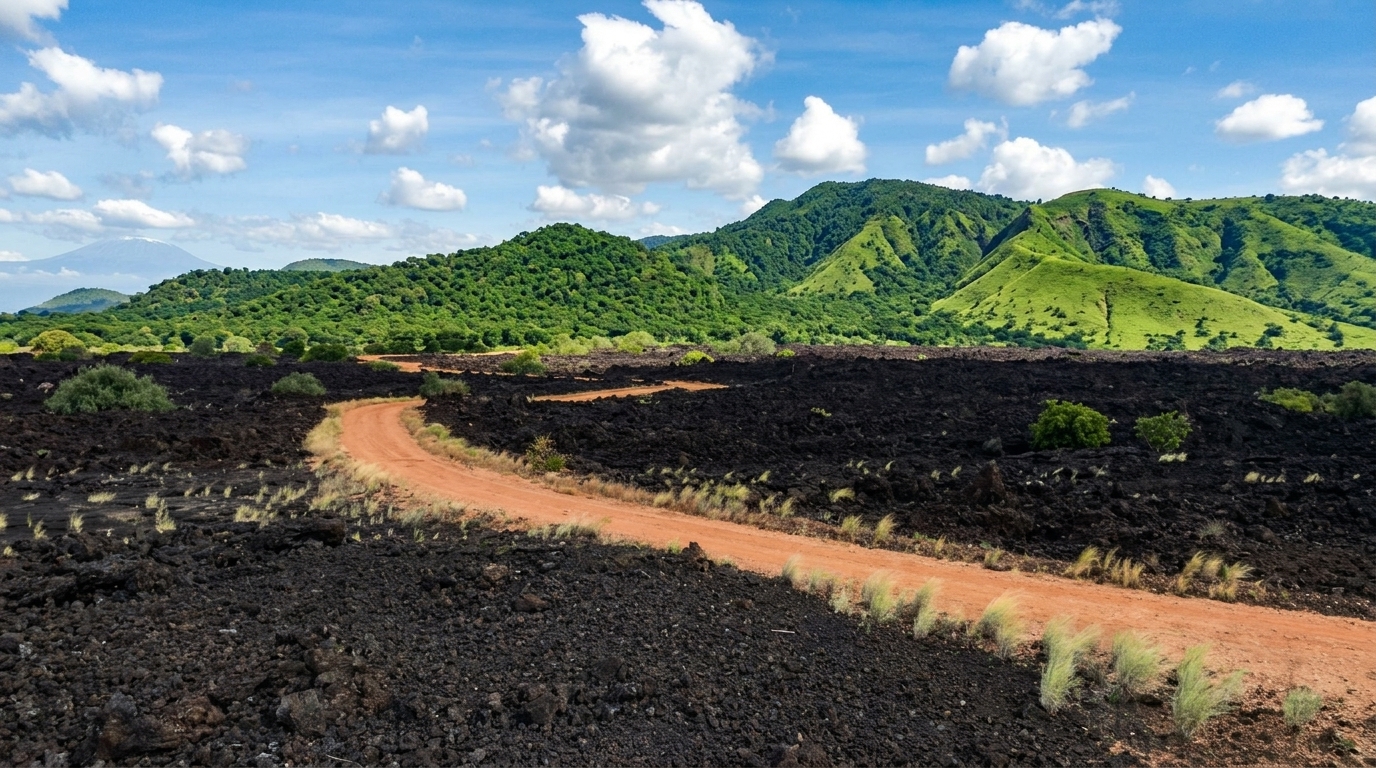
The word shetani means devil in Swahili. The 50-square-kilometre lava field in Tsavo West that bears the name looks exactly like what you might expect of a landscape with demonic associations: a surface of black, twisted, hardened lava covering the ground as completely as if poured from above and left to set.
The Shetani Lava Flow is a relatively recent geological event — it erupted approximately 200 to 500 years ago, well within Maasai oral history, which records the eruption as an event that drove communities from the area. In geological terms it is still young, the surface is jagged and sharp, vegetation has only partially colonised the edges, and the interior remains largely bare black rock broken only by wind-carried soil and the hardiest pioneer plants.
Immediately behind it, the Chyulu Hills rise steeply in a long ridge covered in dense green montane forest — the exact opposite of the lava field in colour, texture, and ecological character. The visual contrast between the black lava and the Chyulu’s green is one of the most dramatic landscape juxtapositions in Kenya.
Lugard Falls — Tsavo East’s Hidden Gem
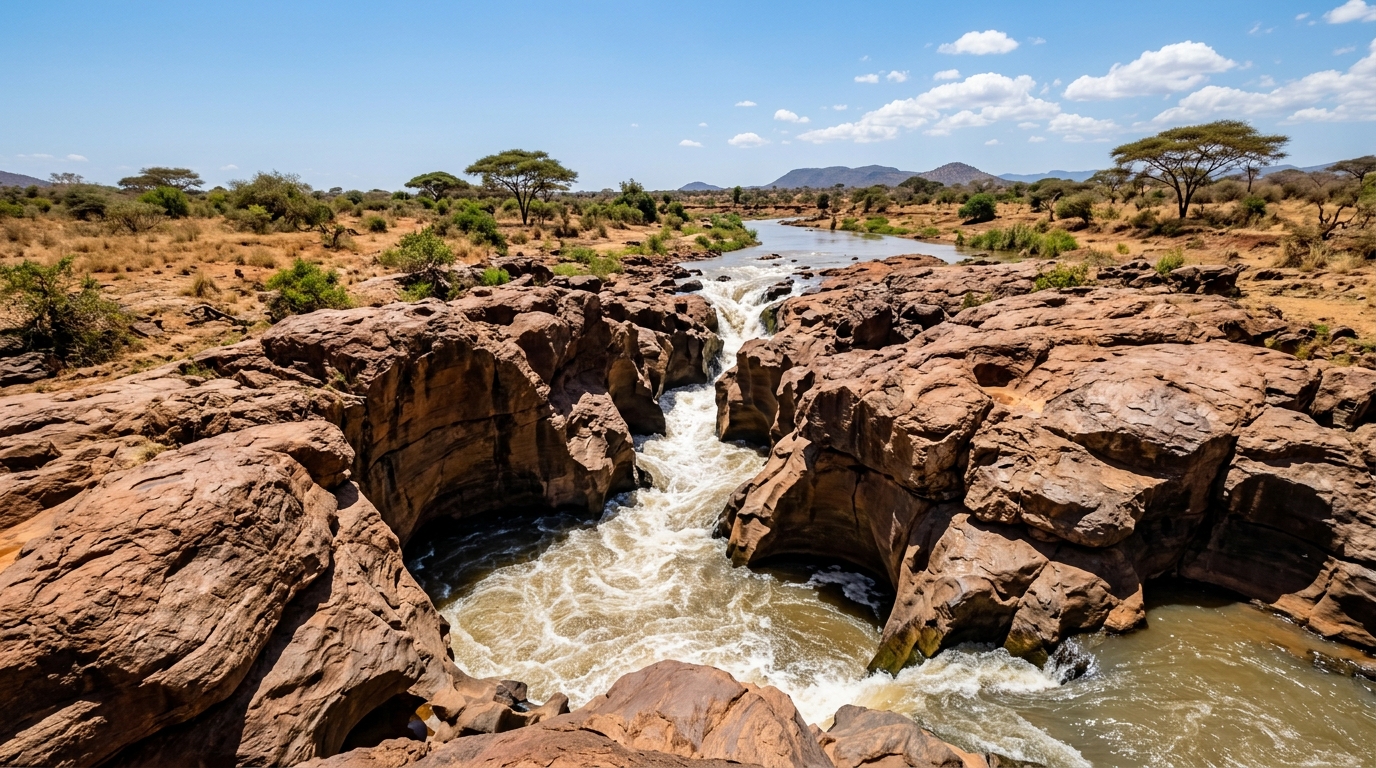
On the northern boundary of Tsavo East, the Galana River — which flows 400 km from its origins near Nairobi as the Athi River — encounters a band of particularly hard volcanic rock and forces itself through a series of narrow gorges and rapids known collectively as Lugard Falls, after Frederick Lugard, the colonial administrator who documented them in 1890.
The falls are not high,Tsavo East is flat, but they are dramatically beautiful. The river, which widens to a calm brown stream in its lower reaches, here compresses into a gorge barely 5 metres wide in places, the water moving with a speed and energy that the open savanna landscape does nothing to prepare you for. The gorge walls are smoothed basalt, carved into swirls and pot-holes by millions of years of water, and the colour — warm red-brown volcanic rock — matches the elephants and the soil above.
Crocodiles bask on the rocks above the rapids. In the calmer pools below the narrowest sections, hippos rest. The falls are one of Tsavo East’s most visited sites and deserve more time than most itineraries give them.
Wildlife Across Both Parks
Tsavo’s scale means wildlife is more dispersed than in smaller, more intensively managed parks. The trade-off is that when you find animals in Tsavo, you are typically the only vehicle — an experience increasingly rare anywhere on the Kenya safari circuit.
| Species | East | West | Notes |
|---|---|---|---|
| African elephant (red) | ★★★★★ | ★★★★ | Kenya’s largest population |
| Lion | ★★★☆ | ★★★★ | Maneless type; good in both |
| Leopard | ★★☆ | ★★★ | Present but elusive in open country |
| Cheetah | ★★★ | ★★☆ | Open terrain East better |
| Cape buffalo | ★★★★ | ★★★★ | Large herds near water sources |
| Black rhino | ★☆ | ★★★ | Ngulia Sanctuary in West |
| Hippopotamus | ★★★ | ★★★★ | Mzima Springs and rivers |
| Crocodile | ★★★★ | ★★★★ | Galana and Tsavo rivers |
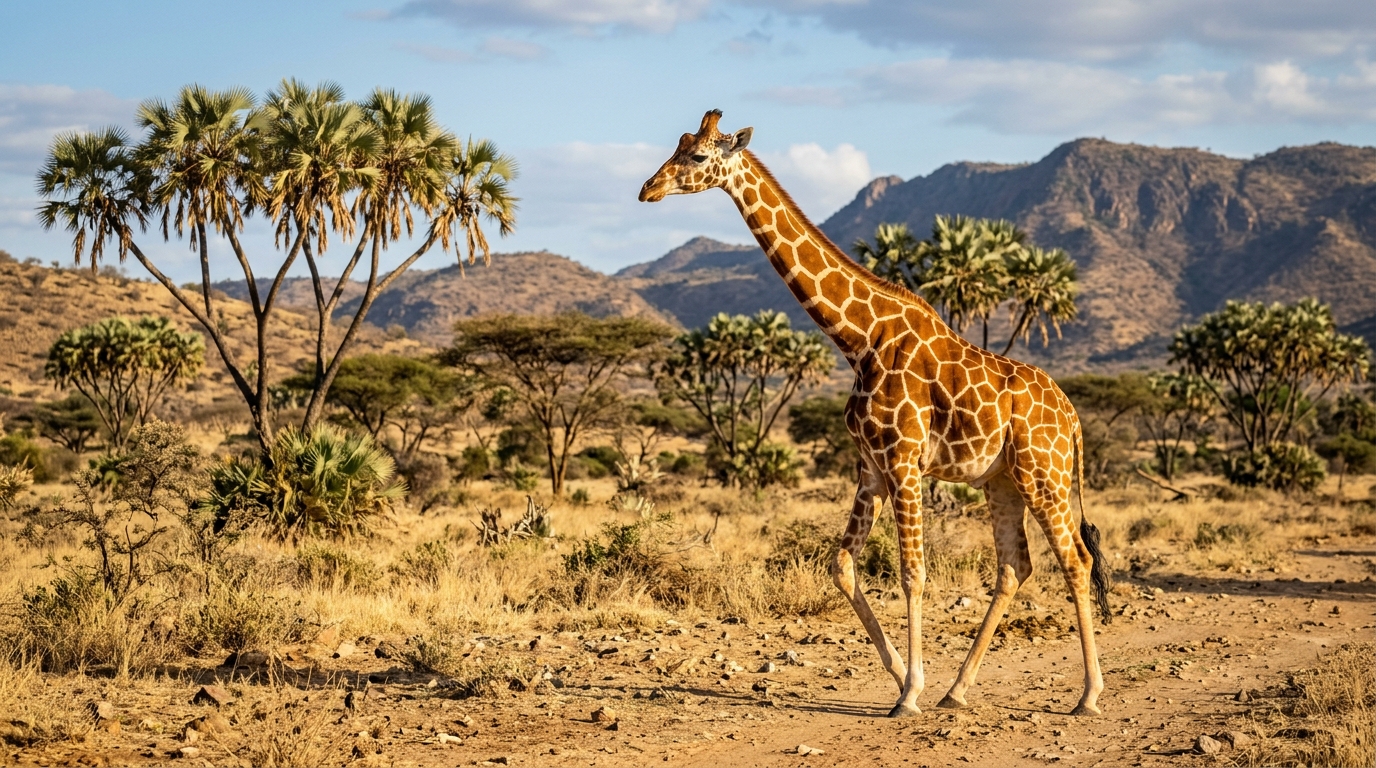
| Giraffe (reticulated) | ★★★ | ★★ | Reticulated species in East |
| Wild dog | ★★ | ★★ | Occasional; one of few Kenya populations |
| Bird life (600+) | ★★★★★ | ★★★★★ | One of Kenya’s highest bird counts |
Note on the Ngulia Rhino Sanctuary: A fenced sanctuary within Tsavo West holds a population of black rhino in a protected enclosure — one of the few reliable places in Kenya to see black rhino. Access requires special arrangement and is not part of a standard game drive. Ask us about including rhino tracking in your Tsavo West visit.
Why Tsavo Is Kenya’s Best Value Safari
The USD $52 per person per day entry fee for both Tsavo East and Tsavo West is the lowest of any major Kenya national park — less than two-thirds of Amboseli’s fee and less than one-quarter of the Maasai Mara’s peak-season fee. For a couple doing three nights each in both Tsavo parks, the park fee saving compared to three nights each in the Mara and Amboseli is approximately USD $1,500.
The wildlife is not proportionally inferior. Tsavo’s elephant population is the largest in Kenya. The lion, cheetah, leopard, and buffalo populations are substantial. The Mzima Springs experience has no equivalent in any other Kenyan park. What Tsavo lacks compared to the Mara is migration-season concentrations (July–October) and the density of vehicle presence that produces reliable sightings through sheer probability. What it gains is scale, solitude, and one of Africa’s most distinctive elephants.
For budget-conscious travellers, for repeat Kenya visitors wanting something different from the Mara, and for the Nairobi–Tsavo–coast itinerary that is one of the most logical Kenya travel routes, Tsavo is the answer.
Best Time to Visit Tsavo
| Period | Months | Conditions | Recommendation |
|---|---|---|---|
| Main dry season | Jun–Oct | Firm tracks, game at water | Excellent — best general game viewing |
| Short dry season | Jan–Feb | Warm, clear, good visibility | Excellent — less crowded than main dry |
| Short rains | Oct–Dec | Some afternoon rain, lush | Good — green landscapes, fewer tourists |
| Long rains | Mar–May | Muddy tracks, some closures | Challenging — some parks areas inaccessible |
Getting to Tsavo from Nairobi
Tsavo West (Mtito Andei Gate): 220 km from Nairobi via the A109 Mombasa Highway. Drive time: approximately 2.5 to 3 hours in normal traffic. The gate is directly off the main highway — one of Kenya’s most accessible major parks.
Tsavo East (Voi Gate): 330 km from Nairobi via the same Mombasa Highway, continuing through Tsavo West. Drive time: approximately 3.5 to 4 hours.
The Nairobi–Tsavo–coast route: The most natural Tsavo itinerary continues south from Tsavo East to the coast — either Diani Beach or Mombasa — adding 2 to 3 nights of Indian Ocean to a Tsavo safari. This route works perfectly as an end-of-Kenya trip sequence and is among the most popular Kenya travel structures for UK visitors combining safari with beach. Crescent Shores coordinates the complete Nairobi-to-coast route.
Plan Your Tsavo Safari with Crescent Shores Retreats
Tsavo is a natural addition to any Kenya itinerary — either standalone from Nairobi or as part of a wider circuit including Naivasha, Amboseli, and the coast. We build Tsavo packages and combined itineraries with full accommodation, transfers, park fees, and guide services included.
📞 WhatsApp or call: +254 790 292 838 📧 Email: welcome@crescentshoresretreats.com 🌐 Kenya Safari Packages: All Kenya Safari Packages 2026 → 🌐 Kenya Safari Costs: How Much Does a Kenya Safari Cost? → 🌐 Build your itinerary: Contact Our Team →
Frequently Asked Questions — Tsavo National Park
What are the red elephants of Tsavo National Park?
Tsavo’s elephants are not a different species ,they are African savanna elephants whose skin appears deep orange-red because they live on and regularly dust-bathe in Tsavo’s iron-rich volcanic red laterite soil. Elephants dust-bathe by throwing soil over their bodies for cooling and sun protection. In Tsavo, this produces a coating that accumulates and persists, turning the skin of every Tsavo elephant various shades of orange-red. The effect is most striking on large old bulls with decades of dust-bathing and on calves in fresh coat. No other elephant population in the world has this colouration.
Is Tsavo East or Tsavo West better for a safari?
Both are excellent and genuinely different. Tsavo East is larger, more open, more arid, and better for the red elephant experience and Lugard Falls. Tsavo West is more varied in terrain, has Mzima Springs (unique in Kenya), the Ngulia Rhino Sanctuary for black rhino viewing, and the Shetani Lava Flow. For first-time Tsavo visitors, we recommend at least two nights in each. For a single choice: West for Mzima Springs and rhino; East for elephants and wilderness scale.
What is the entry fee for Tsavo National Park in 2026?
Both Tsavo East and Tsavo West charge USD $52 per person per day for international (non-resident) visitors the lowest fee of any major Kenya national park. EAC residents pay KES 745 per person per day. This fee is included in Crescent Shores’ all-inclusive Tsavo package pricing with no hidden additions.
How do I get to Tsavo National Park from Nairobi?
Drive south from Nairobi on the A109 Mombasa Highway. Tsavo West’s Mtito Andei Gate is 220 km from Nairobi (approximately 2.5 to 3 hours). Tsavo East’s Voi Gate is 330 km (approximately 3.5 to 4 hours), accessed by continuing south through Tsavo West. There are no scheduled daily flights to Tsavo — road access is the standard approach. The route naturally continues to the Kenya coast (Mombasa or Diani Beach) making Tsavo an ideal mid-route safari stop.
Is Tsavo as good as the Maasai Mara for a safari?
Different rather than inferior. The Mara has higher wildlife concentrations, the wildebeest migration, and greater certainty of Big Five sightings particularly in July to October. Tsavo has Kenya’s largest elephant population (with unique red colouration), much lower park fees (USD $52 vs up to USD $200 per day), far fewer vehicles, a genuine wilderness scale, and unique features (Mzima Springs, Shetani Lava Flow, Lugard Falls) unavailable elsewhere. For first-time Kenya visitors who want the Mara migration, choose the Mara. For a second or repeat Kenya trip, Tsavo offers something the Mara cannot match.
What is Mzima Springs in Tsavo West?
Mzima Springs is a set of natural volcanic springs in Tsavo West National Park that produces approximately 250 million litres of pure, crystal-clear water per day filtered through porous volcanic rock from rainfall on the Chyulu Hills 50 km away. The springs are home to hippos, Nile crocodiles, fish, and diverse birdlife. An underwater viewing chamber allows visitors to watch hippos swimming from below the water surface — unique in Kenya. A boardwalk through the surrounding lush forest completes one of Kenya’s most unusual safari experiences.
— Crescent Shores Retreats, Naivasha, Kenya Naivasha-based safari tour operator · Kenya · Tanzania · Uganda · Rwanda +254 790 292 838 · welcome@crescentshoresretreats.com

Leave A Comment