
By Crescent Shores Retreats · Naivasha, Kenya · Published May 2026 · 10 min read
At 6:10 AM on a flat-calm Lake Naivasha morning, a malachite kingfisher — a bird the size of a large hummingbird, coloured in electric turquoise and deep orange lands on a papyrus stem three metres from the boat. It sits there for eleven seconds, rotates its head twice, then drops vertically into the water and resurfaces with a fish smaller than a thumbnail, which it swallows whole while still hovering, before returning to the stem. Eleven seconds, start to finish.
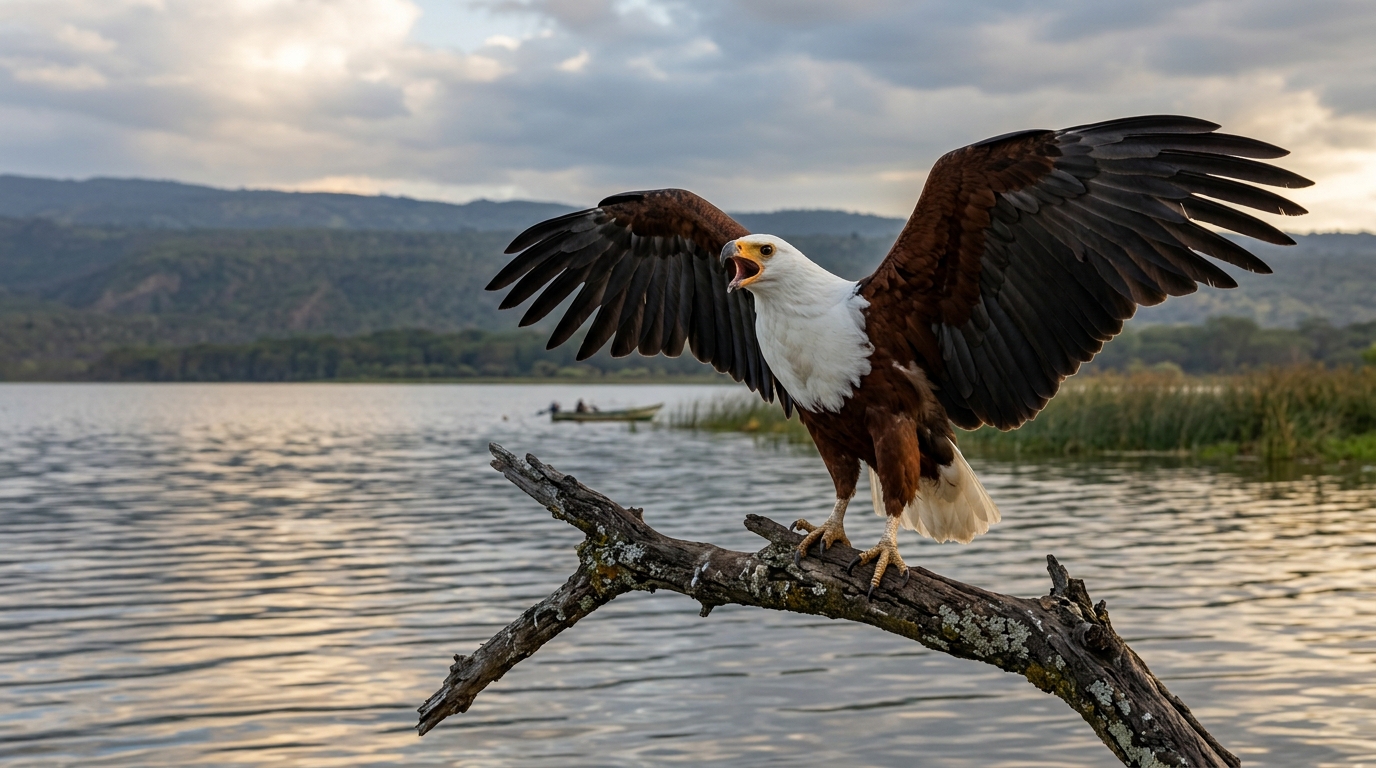
A few minutes later, somewhere in the papyrus to the left, an African fish eagle begins its call. The sound carries across the lake before the bird is visible ,the signature sound of Lake Naivasha, of Kenya, of East African freshwater wherever it still survives in the morning.
Both of these species will be seen on a single morning at Lake Naivasha by almost every visitor. And they represent two of more than 400 bird species recorded here.
Why Lake Naivasha Is Kenya’s Premier Birding Destination
Lake Naivasha is designated an Important Bird Area (IBA) by BirdLife International ,one of Kenya’s most significant freshwater IBAs, and one of the most accessible from Nairobi. The designation acknowledges both the species diversity (400+ recorded) and the ecological significance of the lake system as a habitat for resident, migrant, and seasonally present species.
What makes Naivasha exceptional for birds is habitat diversity in a compact area:
- Open water: Provides feeding habitat for pelicans, cormorants, darters, herons, and eagles
- Papyrus beds: Fringing the lake shore in dense stands, housing specialist species found nowhere outside this habitat type
- Yellow fever acacia woodland: Along the southern shore and on Crescent Island, hosting woodland and canopy species entirely different from the waterbirds
- Open grassland: On Crescent Island and surrounding the lake, supporting ground-nesting species and open-country raptors
Altitude matters. At 1,884 metres above sea level, Naivasha sits in a temperature band that mixes highland and lowland species in ways that lower Rift Valley lakes do not. You will see species here that require altitude and the cool mornings and warm afternoons create an active, dynamic bird day from dawn to dusk.
The Signature Birds — The Species Every Visitor Sees
African Fish Eagle
The African fish eagle (Haliaeetus vocifer) is Kenya’s national bird, and Lake Naivasha is one of the most reliable locations in the country to see and hear it. The call — a long, wild, liquid note that rises and falls is the sonic signature of the lake and is heard on virtually every boat safari from the moment the engine is cut.
The fish eagle hunts by dropping from its perch and striking the water surface with its talons at speed, lifting a tilapia clear in a single fluid motion without landing. A hunt observed at close range from a boat which happens regularly on the Naivasha boat safari is one of the most dramatic single moments in Kenya birding.
African Jacana
The African jacana (Actophilornis africanus) has feet that appear disproportionate to its body — enormously long toes that spread its weight across floating vegetation and lily pads, allowing it to walk on surfaces that appear to be water. At Lake Naivasha, it is abundant in the papyrus and lily zones and visible on almost every boat safari. Chestnut body, iridescent blue frontal shield, white neck — it is unmistakable.
Malachite Kingfisher
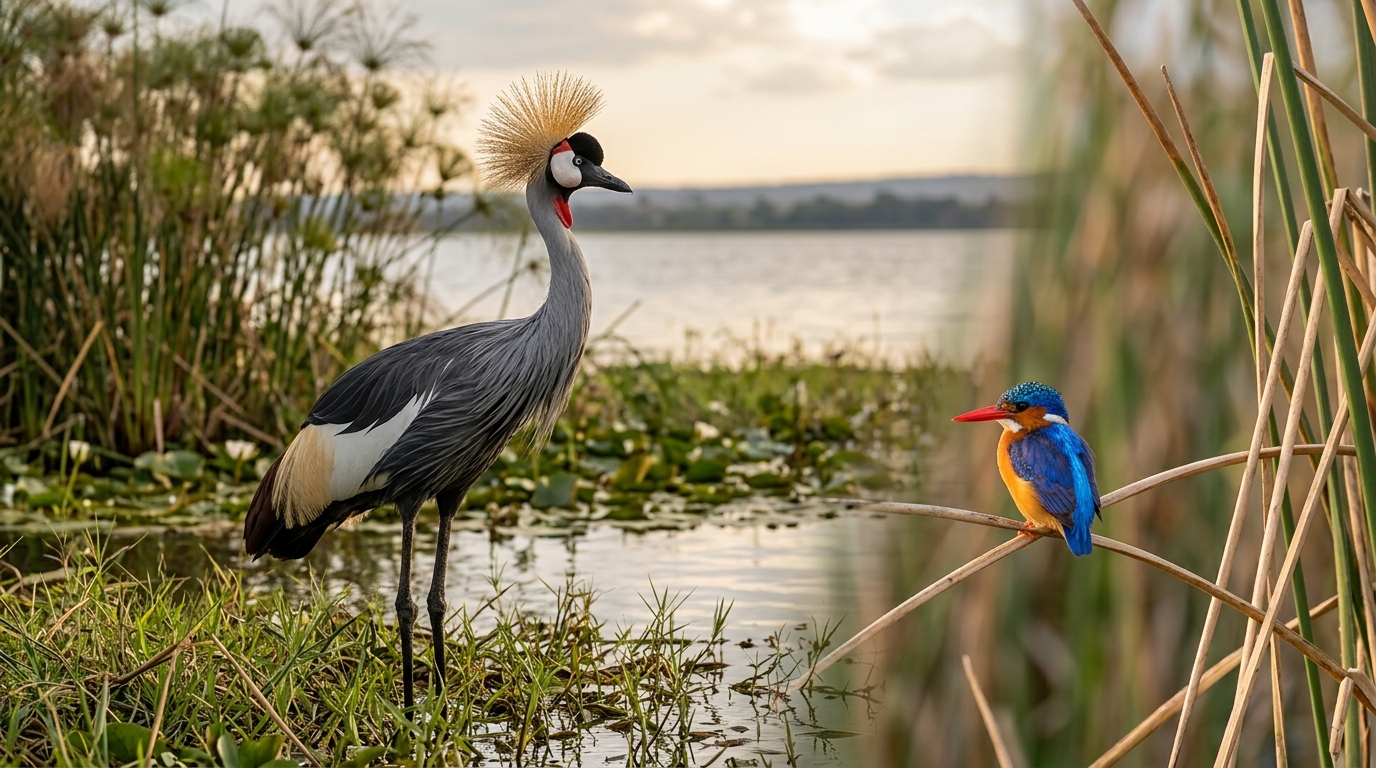
The malachite kingfisher (Corythornis cristatus) is one of Africa’s smallest and most visually intense birds — electric turquoise crown and back, deep rufous underparts, and a willingness to sit motionless on a papyrus stem at close range for extended periods. It is the most frequently photographed species on the Lake Naivasha boat safari.
Goliath Heron
The goliath heron (Ardea goliath) is Africa’s tallest bird, standing up to 1.5 metres. It wades in the shallows with a prehistoric stillness, waiting for fish with a patience that makes even hippos seem impatient by comparison. Single birds are visible on most boat safaris, standing on exposed banks or root tangles in the papyrus.
Grey Crowned Crane
The grey crowned crane (Balearica regulorum) — Kenya’s other national bird has an appearance that makes it seem designed for theatrical purposes: a golden fan of feathers emerging from the crown, red and white facial patches, dark grey plumage. It walks the lake shore and open grassland areas with an elegance that stops most visitors who see it for the first time. Pairs are seen on Crescent Island regularly.
African Fish Eagle (sound note)
The sound of the fish eagle at close range, unlike the recorded version you may have heard in documentaries — is physically present in a way that the malachite’s dive is not. It has resonance. It carries. It is the sound people remember from Lake Naivasha for years afterwards.
Lake Naivasha Birds by Habitat
Open Water — Best Observed from the Boat
The open lake surface, viewed from the boat safari, hosts the highest density of waterfowl species. Species seen regularly include:
| Species | Notes |
|---|---|
| Long-tailed cormorant | Abundant; perches with wings spread to dry |
| African darter | “Snake-bird” — swims with body submerged, long neck visible |
| Great white pelican | Occasional visitor; spectacular when present in groups |
| Pink-backed pelican | Smaller than great white; more regular Naivasha visitor |
| African spoonbill | Sweeps shallows in small flocks; white, distinctive bill |
| Yellow-billed stork | Wades in shallows; timed bill snap for fish |
| Great egret | Common; pure white, yellow bill |
| Little egret | Smaller; black bill, yellow feet |
| Purple heron | Less common than grey heron; streaked neck |
| Black-crowned night heron | Stocky; hunts at dusk; roosts in papyrus |
| Hadada ibis | Loud, distinctive call; often heard before seen |
| Sacred ibis | Common in small flocks; white body, black head |
| African open-billed stork | Distinctive open bill shape; feeds on freshwater snails |
| Osprey | Seasonal; dramatic dive-fishing technique |
| African fish eagle | See above — the lake’s signature bird |
Papyrus Beds — Specialist Habitat Species
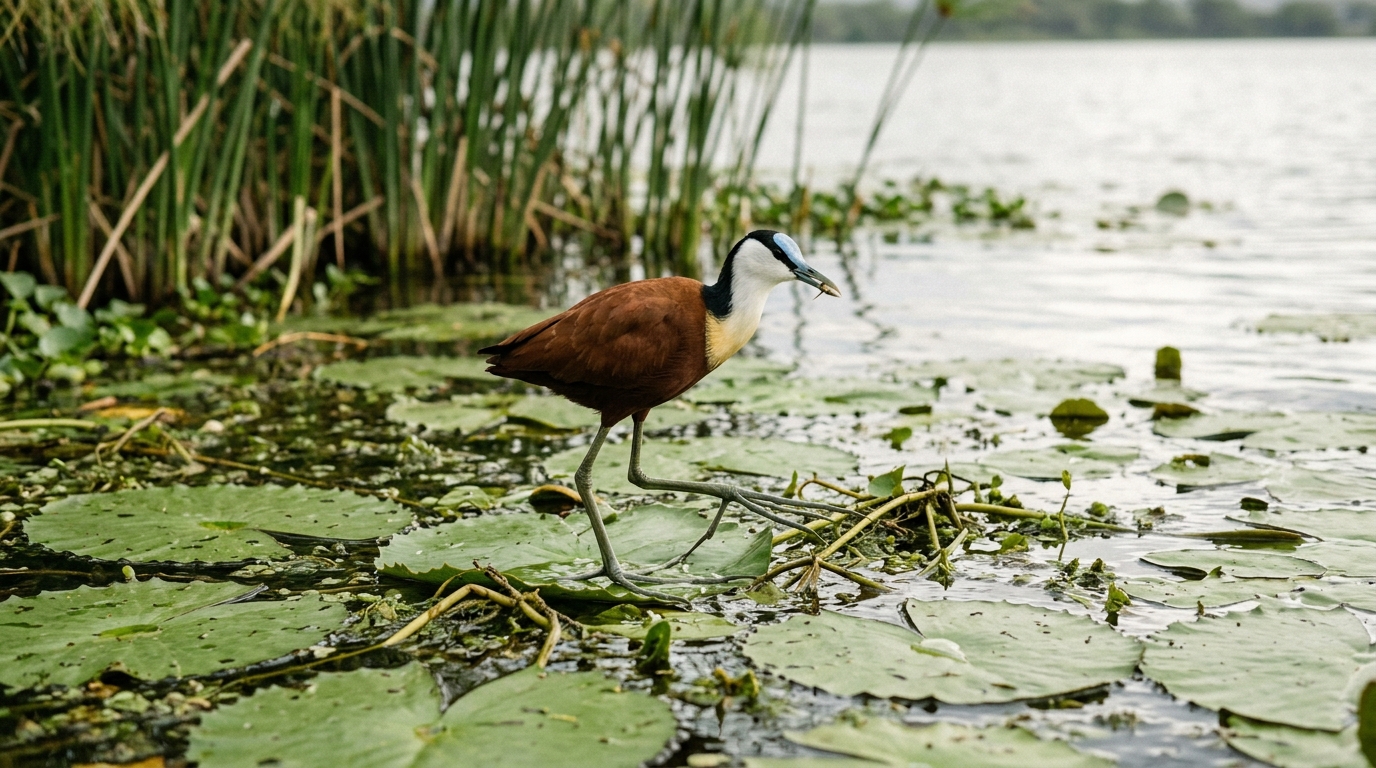
The papyrus beds fringing Lake Naivasha hold species that are not found in open water or woodland. This habitat is best accessed from the boat, the stems form dense, impenetrable stands that cannot be entered on foot. The boat glides alongside the papyrus edge while your guide identifies the calls from within.
Specialist papyrus species at Naivasha include:
- African jacana (described above)
- Papyrus yellow warbler (Chloropeta gracilirostris) — a globally threatened species with one of its key Kenya populations at Naivasha
- Red-faced cisticola — active at the papyrus edge
- Lesser swamp warbler — heard more than seen; persistent call from deep in the stems
- Black crake — small, dark, walks the papyrus edge with a jerky gait
- Malachite kingfisher — uses papyrus stems as hunting perches
The papyrus yellow warbler’s presence at Naivasha is significant. It is a globally threatened species, and Lake Naivasha’s papyrus beds are one of its key habitats in Kenya. Seeing it is a mark of a good boat safari guide who knows where to look.
Yellow Fever Acacia Woodland — Crescent Island and Shoreline
The yellow fever acacias (Vachellia xanthophloea) that line the lake shore and cover Crescent Island support an entirely different community of woodland species. Walking Crescent Island while also looking up adds a second birding layer to the walk-among-wildlife experience that the island is famous for.
Species regularly seen in the acacia woodland:
- Lilac-breasted roller — Kenya’s most colourful bird; perches prominently on tree tops
- Superb starling — iridescent blue-green back, white chest band; almost absurdly colourful
- White-bellied go-away-bird — named for its call; grey, elegant, crested
- Spectacled weaver — vivid yellow with black facial “spectacles”; nests in the acacias
- Grosbeak weaver — large, robust weaver; less common than spectacled
- White-browed robin-chat — musical song from deep in thickets
- Common bulbul — ubiquitous; cheerful, repetitive call
- Fiscal shrike — black-and-white; perches openly to hunt from
- Augur buzzard — open country raptor; bold black-and-white plumage; soars over the lake shore
Open Grassland — Raptors and Ground Birds
The open grassland areas of Crescent Island and the lake periphery host:
- Grey crowned crane (described above)
- Blacksmith lapwing — black, white, and grey; very vocal near nesting territory
- Long-tailed widowbird (breeding males) — extraordinary elongated tail feathers in breeding season
- African marsh harrier — low, slow quartering flight over grassland and papyrus edges
- Long-crested eagle — prominent crest; perches on fence posts and dead trees
Seasonal Highlights
White Stork Migration (October to April)
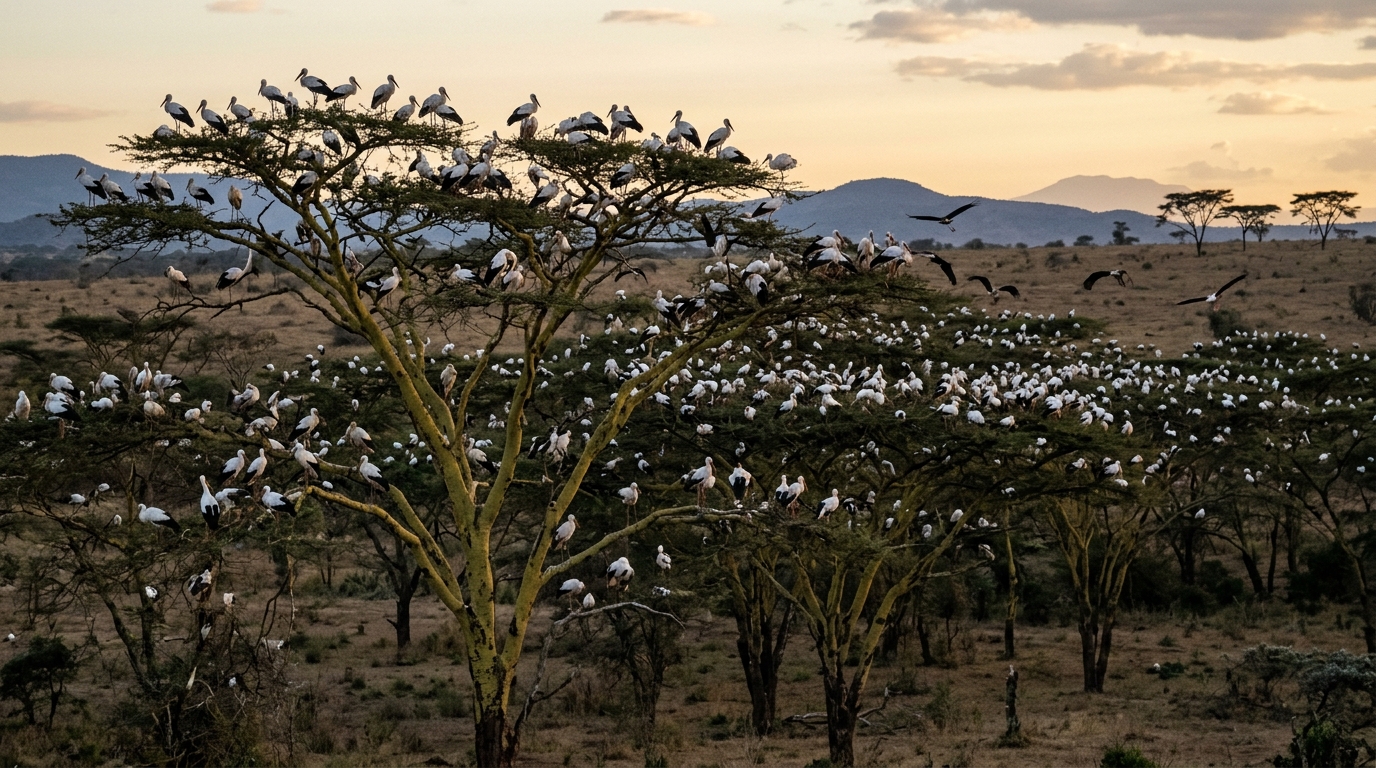
Kenya is a major wintering and passage ground for white storks (Ciconia ciconia) migrating from breeding grounds in Europe. At peak passage in October–November and again in March–April, Lake Naivasha roosts can number in the hundreds — sometimes thousands — of birds gathered in the yellow fever acacias at dusk. A large white stork roost as the sun sets over the Rift Valley is one of the most underrated spectacles in Kenya birding.
Flamingo (Seasonal, Variable)
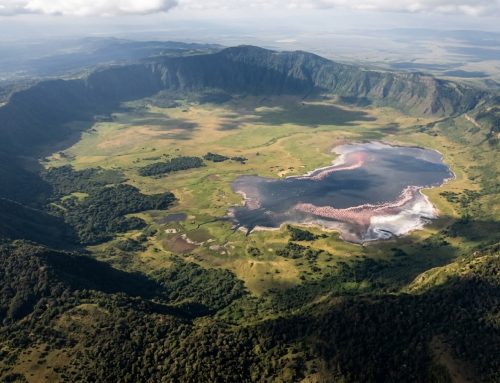
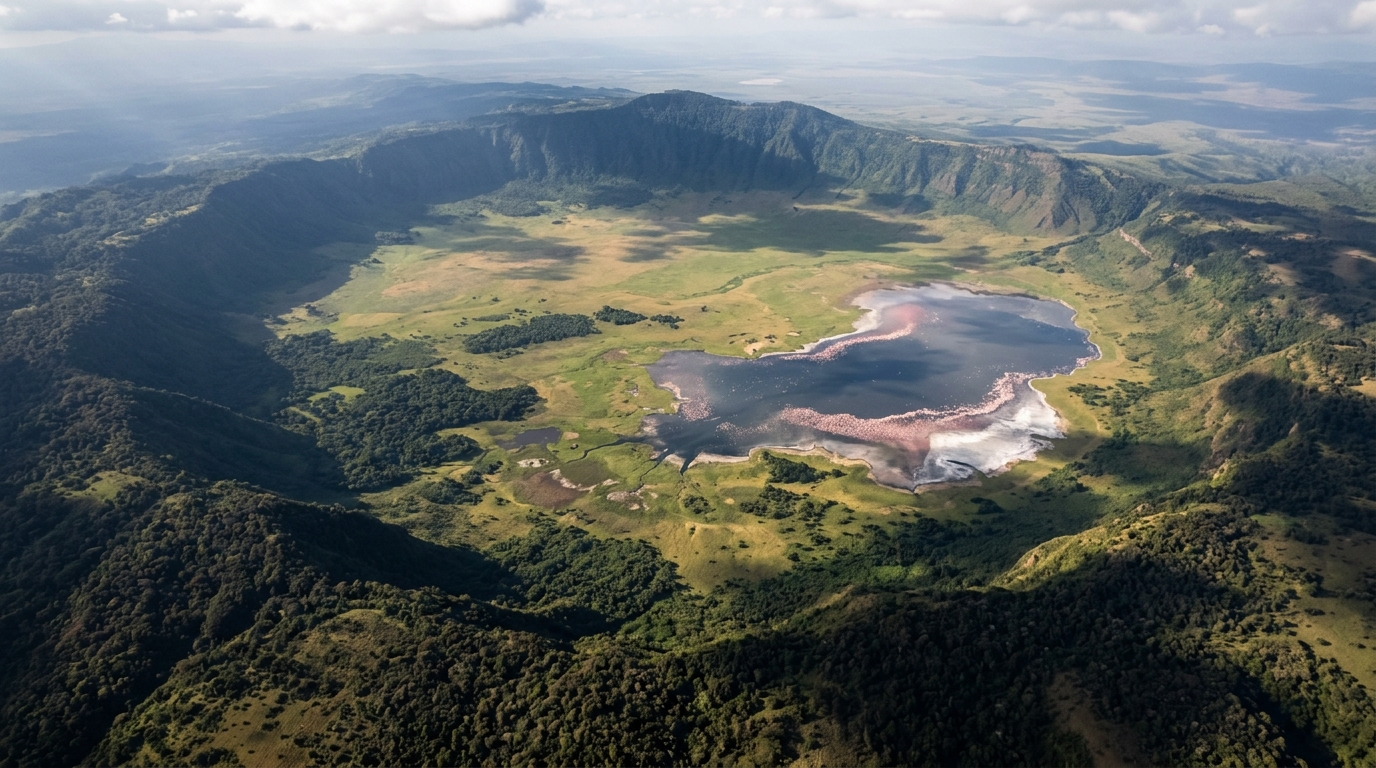
Lake Naivasha occasionally receives lesser flamingo (Phoeniconaias minor), however the last time they were recorded was late 2016 at Lake Naivasha sub lake called Lake Oloiden and Crater Lake. They come from the alkaline soda lakes of the central Rift Valley, particularly Lakes Bogoria, Elementaita and Nakuru. Their appearances at Naivasha are irregular and linked to water chemistry changes on their usual lakes. When present, they turn sections of the bay pink and are visible from the boat safari. Their presence cannot be predicted, ask us before your visit about current flamingo status.
European Migrants (October to April)
The October to April period brings Palearctic migrants passing through or wintering at Naivasha: European swallows (Hirundo rustica) in large flocks at dusk, various wagtails, wheatears, and warblers in the acacia margins, and occasional rare visitors that generate excitement among birding circles. If you are visiting in this window with a specific interest in migrants, let us know ,we can adjust the boat safari route to maximise habitat coverage.
The Best Locations for Lake Naivasha Bird Watching
| Location | Best For | Access |
|---|---|---|
| Sunrise boat safari | Waterbirds, fish eagle, jacana, herons, papyrus species | Boat — arranged with us |
| Crescent Island walk | Woodland species, crowned crane, raptors | Guided walk — arranged with us |
| Elsamere Gardens | Colobus monkeys + black-and-white colobus + woodland birds in the same session | Entry fee KES 1,200 |
| Kongoni Conservancy | Lake edge + acacia edge combination with quieter, less-visited access | Game drive vehicle |
| Hell’s Gate National Park | Raptors especially; the rare lammergeier (bearded vulture) is occasionally sighted here | Park entry KES 2,500 |
Practical Guide for Birders at Lake Naivasha
Binoculars: 8×42 is the optimal specification for lake birding — adequate magnification for distance work, excellent light-gathering for the low light of dawn when the boat safari runs. Compact 8×25 binoculars are insufficient for identifying birds at the distances the lake requires.
Field guide: Birds of East Africa by Terry Stevenson and John Fanshawe (Helm, revised editions) is the standard reference for the region and covers all Naivasha species. The more recent Illustrated Checklist of the Birds of the World (del Hoyo et al.) is the scientific standard. For digital resources, eBird has a dedicated Naivasha hotspot with extensive community checklists — search “Lake Naivasha” on ebird.org for current sightings data from other visiting birders.
Best time of day: Dawn to 9:00 AM is the most productive period — the boat safari window. Birds are most active, light conditions are best for photography, and the lake is calmest. A second session from 4:00 to 6:00 PM captures late afternoon activity and the start of the heron and cormorant roost movements. Midday birding is significantly less productive.
Best season: Lake Naivasha offers good birding year-round. The October to April period is richest in species due to Palearctic migrants arriving. The breeding season (March to June) produces the most behavioural interest — weaving, displaying, nest-building visible across multiple species. The July to September dry season is excellent for waterbirds concentrated on the lake surface.
Photography: A telephoto of at least 400mm is required for serious bird photography from the boat. The most accessible species for photography at shorter focal lengths are hippos and herons at close range. Malachite kingfisher photography , the most sought-after shot on the lake requires patience, a 400mm minimum, and a guide who knows the birds’ favoured perch locations.
Book a Naivasha Birding Safari
We offer dedicated birding-focused boat safaris extended from the standard 1.5 hours to 2.5 to 3 hours, with a guide specifically briefed on your target species and familiar with the current status of specialist species including the papyrus yellow warbler. We also arrange combined birding days combining the boat with a Crescent Island birding walk and an afternoon session in the Hell’s Gate acacia margins.
If you are travelling with a specific list or lifers in mind, tell us in advance. We will brief our guide accordingly.
📞 WhatsApp or call: +254 790 292 838 📧 Email: welcome@crescentshoresretreats.com 🌐 Boat safari details: Lake Naivasha Boat Safari Guide → 🌐 All Naivasha activities: 30 Things to Do in Naivasha → 🌐 Book a birding safari: Contact Our Team →
Frequently Asked Questions — Bird Watching at Lake Naivasha
How many bird species have been recorded at Lake Naivasha?
Over 400 bird species have been recorded at Lake Naivasha and its immediate environs, giving it Important Bird Area (IBA) status as designated by BirdLife International. The lake’s combination of habitats — open water, papyrus beds, yellow fever acacia woodland, and open grassland — produces a species diversity rarely found in a single compact location. A single morning boat safari typically produces 20 to 40 species without dedicated birding effort; a full-day session with specialist guidance can reach 80 to 100.
What is the best bird to see at Lake Naivasha?
The African fish eagle (Haliaeetus vocifer) is the signature species — Kenya’s national bird and one of Africa’s most iconic raptors. It is seen and heard on virtually every Lake Naivasha boat safari. Among the most sought-after by birders is the papyrus yellow warbler (Chloropeta gracilirostris) — a globally threatened specialist of papyrus beds that has one of its key Kenya populations at Naivasha. The grey crowned crane, African jacana, and malachite kingfisher are among the most visually striking species encountered.
What is the best time of year for bird watching at Lake Naivasha?
Lake Naivasha offers excellent birding year-round. The October to April period is richest in total species due to Palearctic migrants including white storks, European swallows, and various warblers and wagtails. The March to June breeding season produces the most behavioural interest — displaying, nest-building, and territorial behaviour across multiple species. Flamingos appear seasonally and unpredictably, most commonly when alkalinity levels shift on their usual lakes.
Do I need a guide for bird watching at Lake Naivasha?
For the boat safari which is the most productive single birding activity at Naivasha ,a boat guide is standard and included. For specialist birding, a guide with specific ornithological knowledge significantly improves the experience: they know the current locations of nesting species, the favoured perch positions of specific individuals, and the call patterns that distinguish similar species. We brief our guides on birder clients in advance and can arrange extended 2.5 to 3-hour boat safaris for dedicated birding groups.
What birds can I see on the Lake Naivasha sunrise boat safari?
A typical sunrise boat safari (6:00 to 8:00 AM) produces: African fish eagle (virtually guaranteed), African jacana, malachite kingfisher, pied kingfisher, long-tailed cormorant, goliath heron, little egret, great egret, purple heron, yellow-billed stork, African spoonbill, sacred ibis, African open-billed stork, grey crowned crane (if along the shore), and papyrus edge species including lesser swamp warbler and black crake. Total species on a productive morning: 25 to 45. Flamingos add dramatically to this total when present.
— Crescent Shores Retreats, Naivasha, Kenya Your Naivasha-based birding and excursion operator +254 790 292 838 · welcome@crescentshoresretreats.com

Leave A Comment