
By Crescent Shores Retreats · Naivasha, Kenya · Published May 2026 · 9 min read
You have seen the label. On Valentine’s Day roses in Tesco, on the carnations at Albert Heijn in Amsterdam, on the gypsophila bundled in a German supermarket near the checkout. Product of Kenya. You probably noticed it for a moment and moved on.
The roses in that Tesco bunch were cut this time last week. In a greenhouse four kilometres from Lake Naivasha. By a worker who starts at 6:00 AM, who grades stems by hand to millimetre-specific length standards, and who will cut 1,200 roses before the morning shift ends. That same stem flew out of Nairobi on a cargo flight Monday night, passed through the Royal FloraHolland auction in Aalsmeer on Wednesday morning, and reached a distribution warehouse in the East Midlands by Wednesday afternoon. It was in the supermarket fridge by Thursday. You bought it Friday.
This is the story a Naivasha flower farm tour tells. And it is more extraordinary than any of us expected.
Kenya’s Flower Industry — The Numbers First
Kenya is the third-largest exporter of cut flowers in the world, behind only the Netherlands and Colombia. Approximately 38% of all cut flowers sold in the European Union originate in Kenya. The country earns approximately USD $800 million annually from flower exports, making floriculture one of Kenya’s most significant agricultural industries by export revenue — larger than tea in some years.
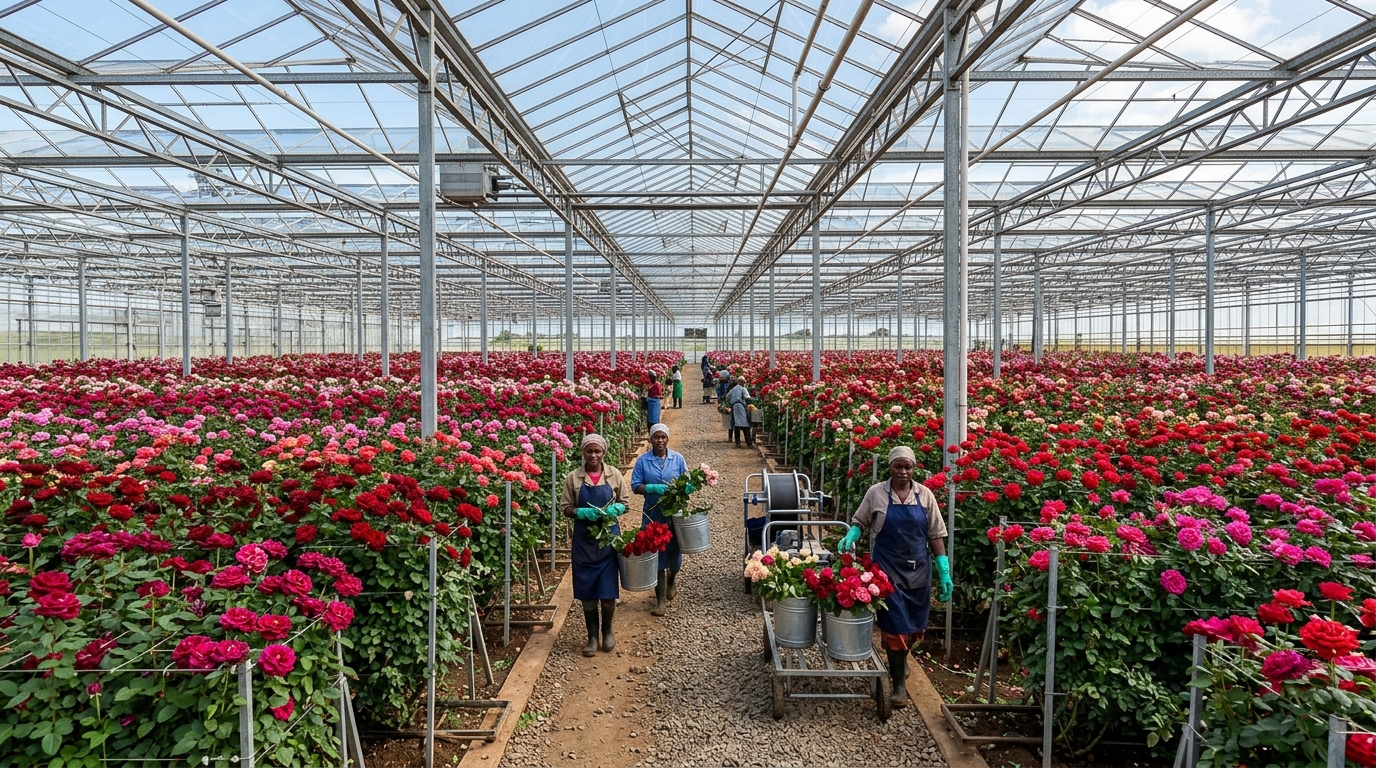
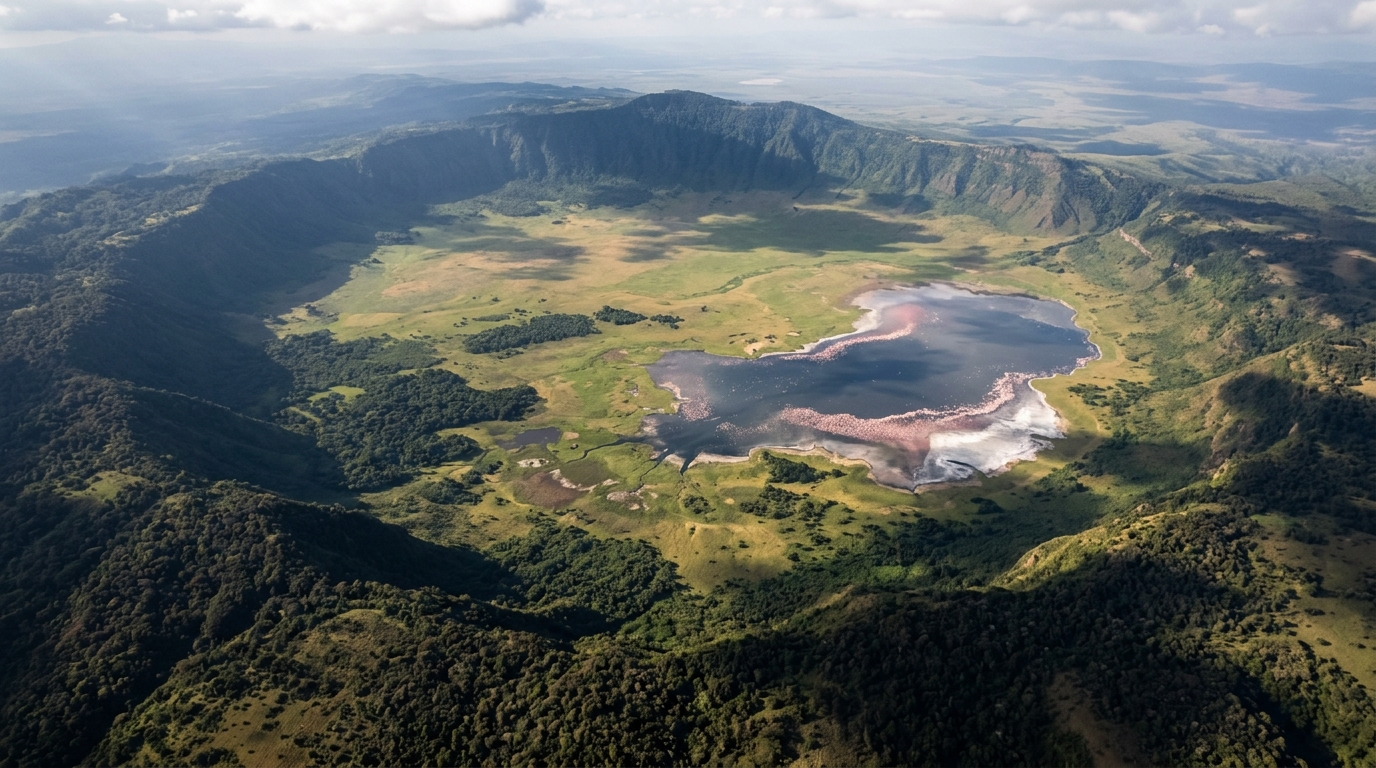
Of Kenya’s flower production, the overwhelming majority comes from farms clustered around Lake Naivasha in the Great Rift Valley. The lake shore and the surrounding land host dozens of large commercial farms, some covering several hundred hectares, employing tens of thousands of workers, and operating greenhouses that stretch to the horizon.
The industry directly employs an estimated 500,000 Kenyans, with indirect employment — transport, packaging, chemicals, maintenance — significantly higher. For the Naivasha economy specifically, the flower industry is the single largest employer in the region.
Why Naivasha? The Geography of the World’s Rose Bowl
The concentration of Kenya’s flower industry around Lake Naivasha is not accidental. The site has four specific advantages that no other location in Kenya combines:
Altitude: At 1,884 metres above sea level, Naivasha sits high enough that temperatures remain moderate year-round — cool nights (10–15°C) that slow rose development and produce the tight, firm buds that hold their form during air freight, and warm days (22–28°C) that drive growth. The Dutch and Colombian flower industries use energy-intensive climate control to replicate conditions that Naivasha has naturally.
Water: Lake Naivasha provides irrigation water for the farms. This is also the industry’s most contested environmental characteristic — water extraction from the lake for irrigation has been the subject of research and regulation for decades. Reputable farms operate within licensed extraction limits and use water recycling systems. It is a genuine tension in the industry’s story and worth acknowledging honestly.
Consistent daylength: At the equator, Naivasha receives approximately 12 hours of daylight year-round. This consistency allows year-round growing without the artificial light supplementation required in temperate regions — a significant operational cost advantage.
Air freight proximity: Naivasha is two hours by road from Jomo Kenyatta International Airport (JKIA) in Nairobi — one of Africa’s largest cargo hubs, with direct cargo connections to Amsterdam, London, Frankfurt, and Dubai. The cut flower industry requires the fastest possible connection from farm to auction. Two hours from field to plane is achievable.
What Happens on a Naivasha Flower Farm Tour
A guided flower farm tour typically runs 2 to 3 hours and covers the complete production cycle from greenhouse to packing house. Here is what happens:
The Greenhouse Walk
You enter the growing houses ,long, glass or plastic-film structures that stretch for 200 metres or more, with roses planted in raised beds running the full length. The scale is immediately disorienting. A single greenhouse block might contain 50,000 rose plants. The smell — a warm, humid, greenish rose scent — is distinctive and unlike any florist shop.
Your guide explains the variety system: why certain rose varieties (named cultivars like ‘Red Naomi’, ‘Explorer’, ‘Vendela’) are grown for specific markets, why the Dutch buyers prefer certain bud shapes and stem lengths, and how the farms manage pests using Integrated Pest Management (IPM) rather than blanket pesticide application a requirement for Fairtrade and Rainforest Alliance certification.
You will also see the propagation zones where cuttings are rooted, and the irrigation system that delivers water and fertiliser directly to each plant’s root zone.
The Harvesting Demonstration
A farm worker demonstrates the cutting technique: a specific cut angle, a specific stem length, executed with a speed and consistency that comes from years of daily practice. Roses are not pulled or snipped — they are cut cleanly to preserve the plant for future blooms. Each stem is immediately placed in water in a harvest trolley, which moves continuously through the greenhouse rows as the harvesting team works.
The timing of harvest is calibrated precisely. Roses are cut at a specific bud development stage — too open and they won’t last the journey; too closed and they won’t open attractively in the consumer’s home. A skilled harvester reads this development stage instantaneously.
The Grading and Packing Area
This is the most impressive section of the tour and the one that most profoundly changes how visitors see a supermarket rose.
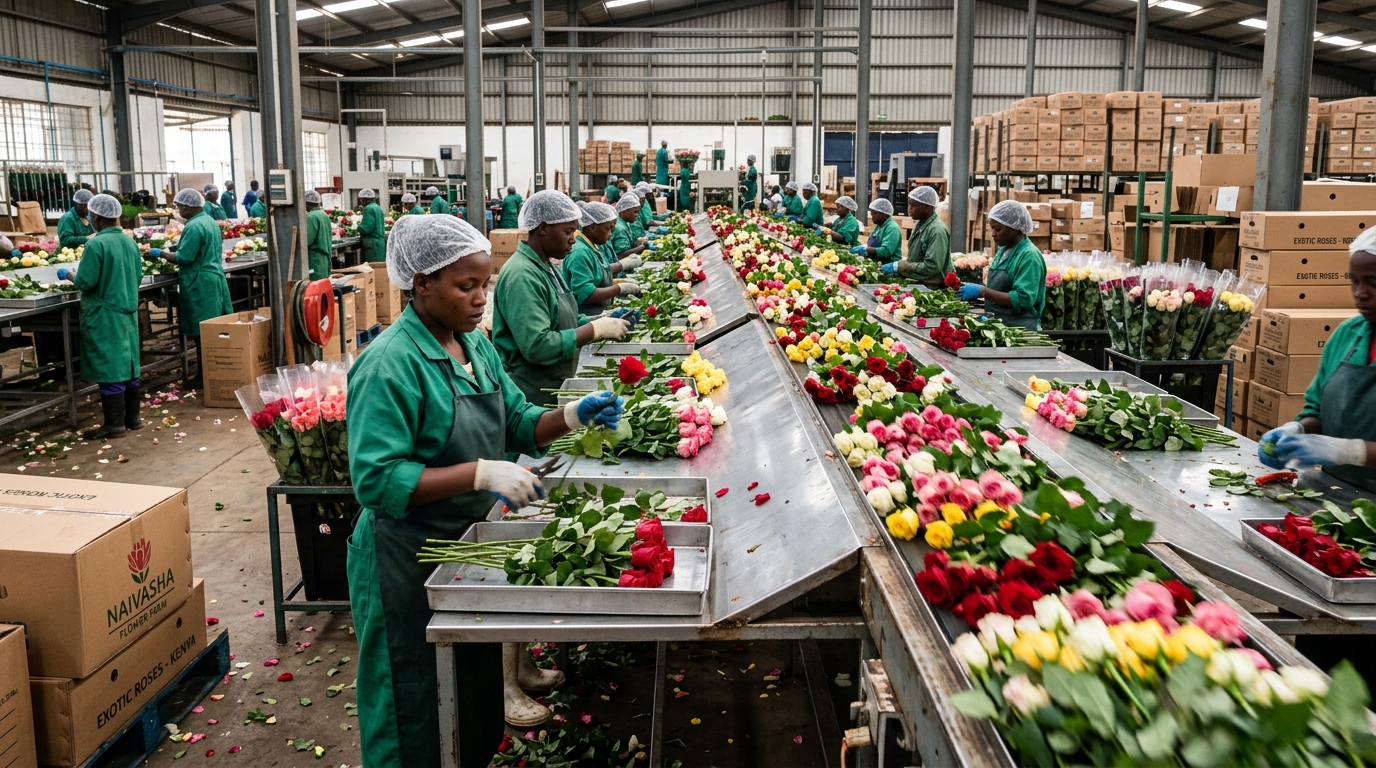
Harvested stems arrive at the grading tables still in water, having been transported from the greenhouse in temperature-controlled conditions. Workers grade each stem individually:
- Stem length (measured in centimetres to Dutch auction standard requirements — typically 40, 50, 60, or 70 cm grades)
- Bud size (diameter at specific stage of development)
- Stem diameter and straightness
- Leaf quality (damage, colour, presence of pest marks)
- Overall grade (top, standard, or below-standard)
Stems failing the grade are rejected from export and sold locally. Those meeting specification are bunched typically 20 stems per bunch banded, sleeved in the buyer’s branded packaging (often a UK supermarket’s own brand sleeve is applied here, in Naivasha), and placed immediately into a cold room.
The Cold Room
The flower cold room operates at approximately 2–4°C — cold enough to dramatically slow biological processes and extend vase life. Roses entering the cold room at this temperature can maintain quality for 10 to 14 days under proper handling, which is the time window needed for farm to consumer.
The cold chain is never broken from this moment forward. Refrigerated trucks transport the boxed flowers to JKIA. Cargo holds on the overnight flight to Amsterdam are held at regulated temperatures. The auction facility at Aalsmeer has its own cold infrastructure. The distribution warehouse and the supermarket cold chain complete the journey.
The 72-Hour Journey — From Naivasha to Your Vase
This is the part of the story that consistently produces audible surprise in tour groups.
| Step | Time | Location |
|---|---|---|
| Harvest | Monday 6:00 AM | Naivasha greenhouse |
| Grading and packing | Monday 10:00 AM | Farm packing house |
| Cold storage | Monday 12:00 PM | Farm cold room |
| Road to airport | Monday 3:00 PM | Naivasha → JKIA Nairobi |
| Cargo flight departs | Monday 11:00 PM | JKIA → Amsterdam Schiphol |
| Arrives Amsterdam | Tuesday 6:00 AM | Schiphol Airport cargo terminal |
| Royal FloraHolland auction | Wednesday 7:00 AM | Aalsmeer, Netherlands |
| Distribution warehouse | Wednesday 2:00 PM | Netherlands or UK |
| Supermarket | Thursday morning | UK, Germany, Netherlands |
| Your kitchen | Friday | Home |
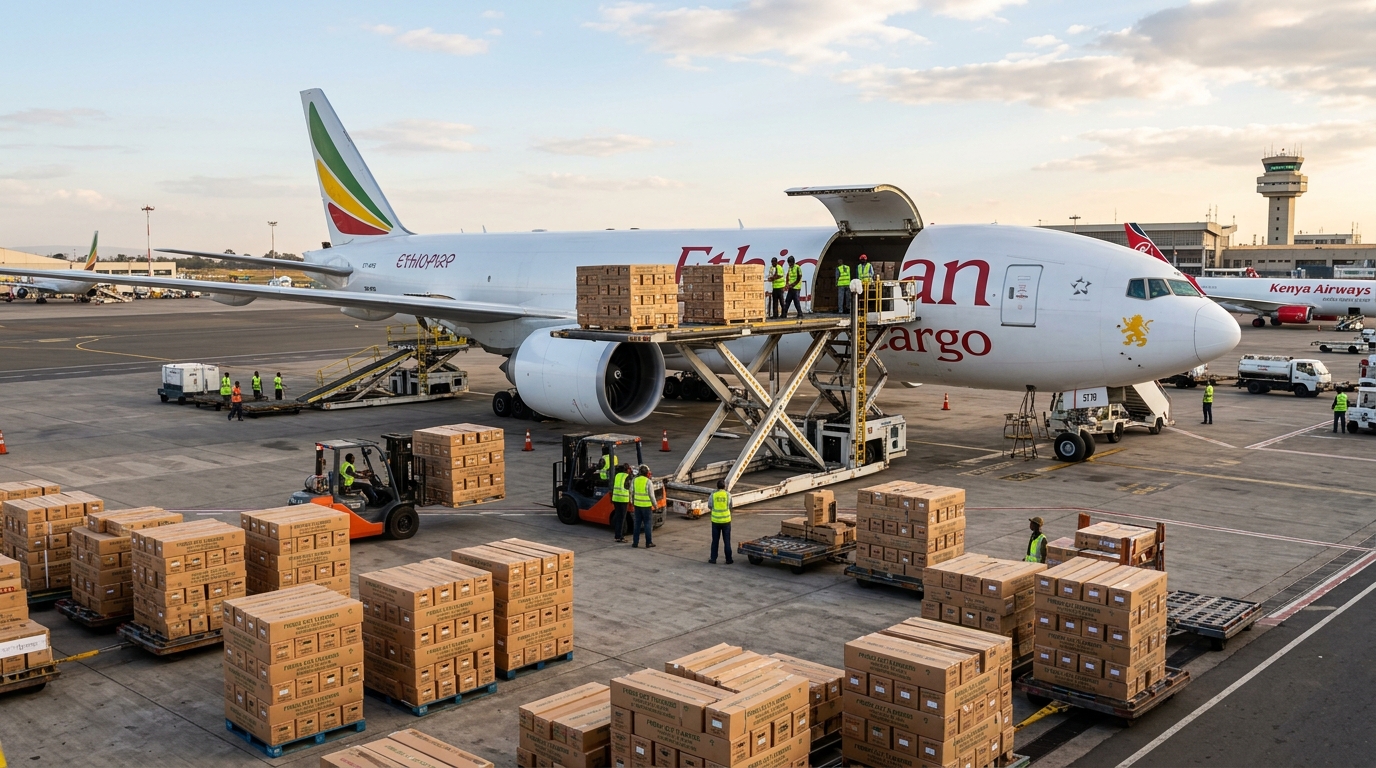
The Royal FloraHolland auction in Aalsmeer — outside Amsterdam — is the world’s largest flower auction and the largest commercial building on earth by footprint, covering 99 hectares under one roof. Every morning from 4:00 AM, it processes approximately 40 million flowers from dozens of countries. Kenya’s contribution arrives via overnight cargo, is assessed by buyers’ agents, and sold within hours to wholesalers across Europe.
Fairtrade, Ethics, and the Industry’s Complexities
The Kenya flower industry has attracted both celebration and scrutiny. On the positive side: many farms hold Fairtrade, Rainforest Alliance, or MPS (Milieu Programma Sierteelt) certification — which require specific standards on worker pay, community investment, healthcare, and environmental management. When you buy a Fairtrade-certified rose in a UK supermarket, the premium paid goes partly to a community development fund at the farm level in Naivasha.
On the more contested side: the water extraction question and the labour conditions in smaller, uncertified operations are ongoing subjects of research and regulation. A good flower farm tour will acknowledge both sides of this story honestly. The farms we partner with for tours hold recognised certifications and are open about their practices.
Who This Tour Is For
European and UK visitors who have seen “Product of Kenya” on supermarket flowers for years find the tour deeply satisfying the label they have glanced past a hundred times suddenly has faces, geography, and a specific Rift Valley morning attached to it.
Students of geography, economics, or business find the flower industry an outstanding case study in global supply chains, comparative advantage, ethical trade, and the economics of perishable goods logistics.
Business travellers in Kenya who have a day at the lake find the tour educational in a way that a game drive is not — it is a window into a Kenya that most visitors never see.
Anyone wanting a non-wildlife Naivasha activity — the flower farm tour pairs perfectly with a sunrise boat safari as a two-activity morning that covers both the lake’s wildlife and its industry.
Practical Information
- Duration: 2 to 3 hours
- Best time: Morning (7:00 AM to 12:00 PM — farms most active)
- Cost: From KES 2,000 per person (approximately USD $15)
- What to wear: Closed shoes (no sandals or open-toe footwear in greenhouses). A light sweater for cold rooms.
- What to bring: Camera. The greenhouses and grading area are extraordinarily photogenic.
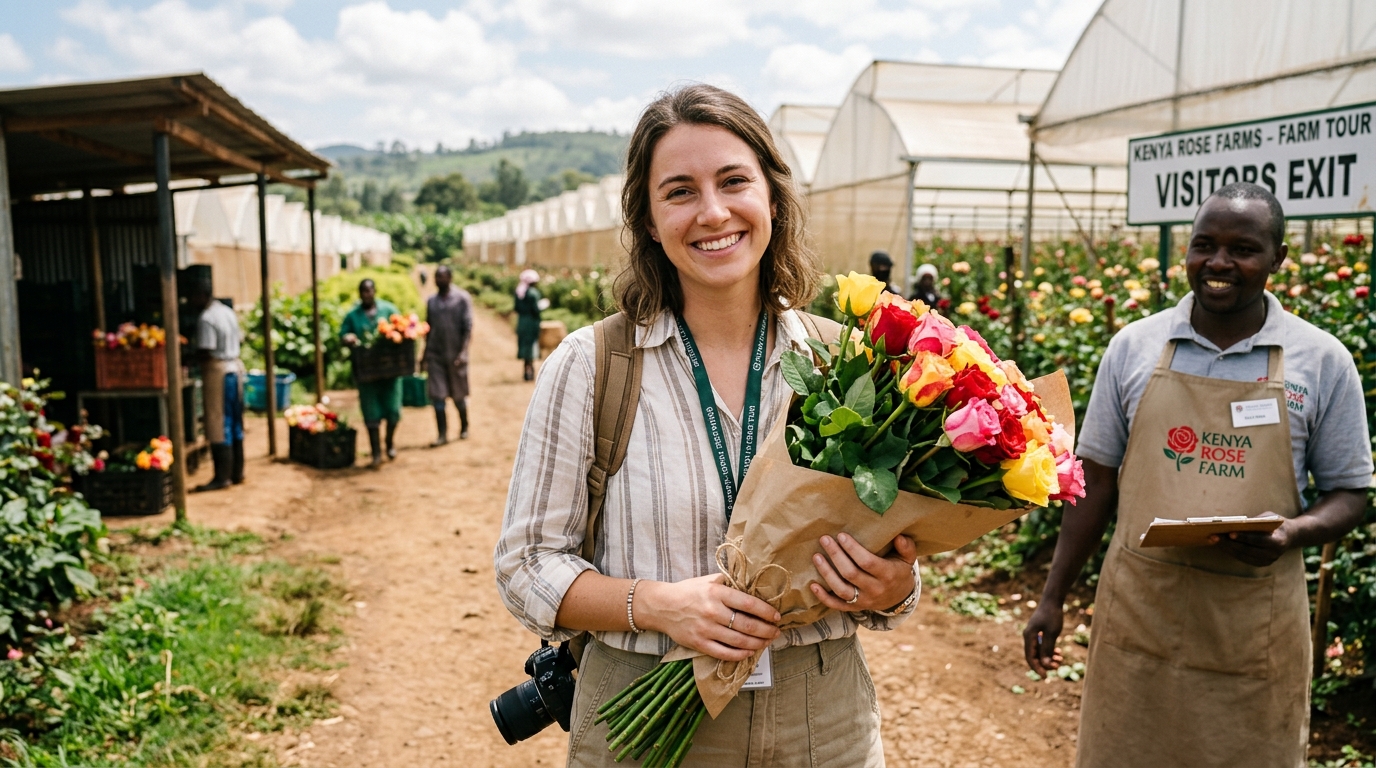
- What you take home: Most tours conclude with a fresh bunch of flowers usually the variety you saw being harvested. Freshly cut Kenyan roses that have never been through air freight are noticeably more fragrant than the supermarket version.
- Age suitability: Excellent for children aged 8 and above. The grading area is particularly engaging for young people who respond to industrial precision. Not recommended for toddlers (slippery floors, chemical storage near pathways).
- Group sizes: We arrange individual and family tours, and can accommodate corporate groups of up to 50 people with advance notice.
Book Your Naivasha Flower Farm Tour
📞 WhatsApp or call: +254 790 292 838 📧 Email: welcome@crescentshoresretreats.com 🌐 All Naivasha activities: 30 Things to Do in Naivasha → 🌐 Plan your Naivasha day: Lake Naivasha Day Trip from Nairobi → 🌐 Book a tour: Contact Our Team →
Frequently Asked Questions — Kenya Flower Farm Tour
Can I visit a flower farm in Kenya as a tourist?
Yes. Several farms around Lake Naivasha welcome visitor tours, though access is generally arranged through local tour operators rather than walk-in. Crescent Shores Retreats organises guided flower farm tours at partner farms that hold recognised sustainability certifications (Fairtrade, Rainforest Alliance, or MPS). Tours run most weekday mornings and can be combined with Lake Naivasha boat safaris or other Naivasha activities in a single day.
What flowers are grown on Naivasha’s flower farms?
Roses are the most important crop — Kenya is the world’s leading exporter of rose stems to Europe. Other significant crops grown around Lake Naivasha include carnations, alstroemeria, statice, gypsophila, hypericum berries, and various filler flowers. Named rose cultivars commonly grown include varieties bred specifically for the export market: ‘Red Naomi’, ‘Explorer’, ‘Vendela’, ‘Avalanche’, and dozens of others, each suited to specific market preferences and seasonal demand.
How do Kenya’s flowers reach European supermarkets?
The journey takes approximately 72 hours from cutting to supermarket shelf. Flowers are harvested in the morning, graded and packed the same day, cold-stored, then transported to Nairobi airport for overnight cargo flights to Amsterdam Schiphol. From Schiphol, they go directly to the Royal FloraHolland auction in Aalsmeer — the world’s largest flower market where they are sold to wholesalers and distributed to supermarkets across Europe, arriving on shelves within 3 to 4 days of being cut in Naivasha.
Is the flower farm tour suitable for children?
Yes, for children aged 8 and above. The tour is educational and visually engaging — the scale of the greenhouses, the precision of the grading process, and the story of how a flower travels from Kenya to a European supermarket in 72 hours are genuinely interesting for older children. Cold rooms (2–4°C) require warm layers. The floor surfaces in the packing area can be slippery, and chemical storage areas are near some pathways, so young children need supervision.
How do I book a flower farm tour in Naivasha?
Through Crescent Shores Retreats. We organise guided tours at certified partner farms on most weekday mornings. Tours can be booked individually (for couples or families), in small groups, or as part of a combined Naivasha day that includes the sunrise boat safari, Hell’s Gate cycling, or Crescent Island walk. Contact us on WhatsApp (+254 790 292 838) or email (welcome@crescentshoresretreats.com) to check availability and book.
— Crescent Shores Retreats, Naivasha, Kenya Your Naivasha-based activity and excursion operator +254 790 292 838 · welcome@crescentshoresretreats.com

Leave A Comment