
By Crescent Shores Retreats · Naivasha, Kenya · Published May 2026 · 13 min read
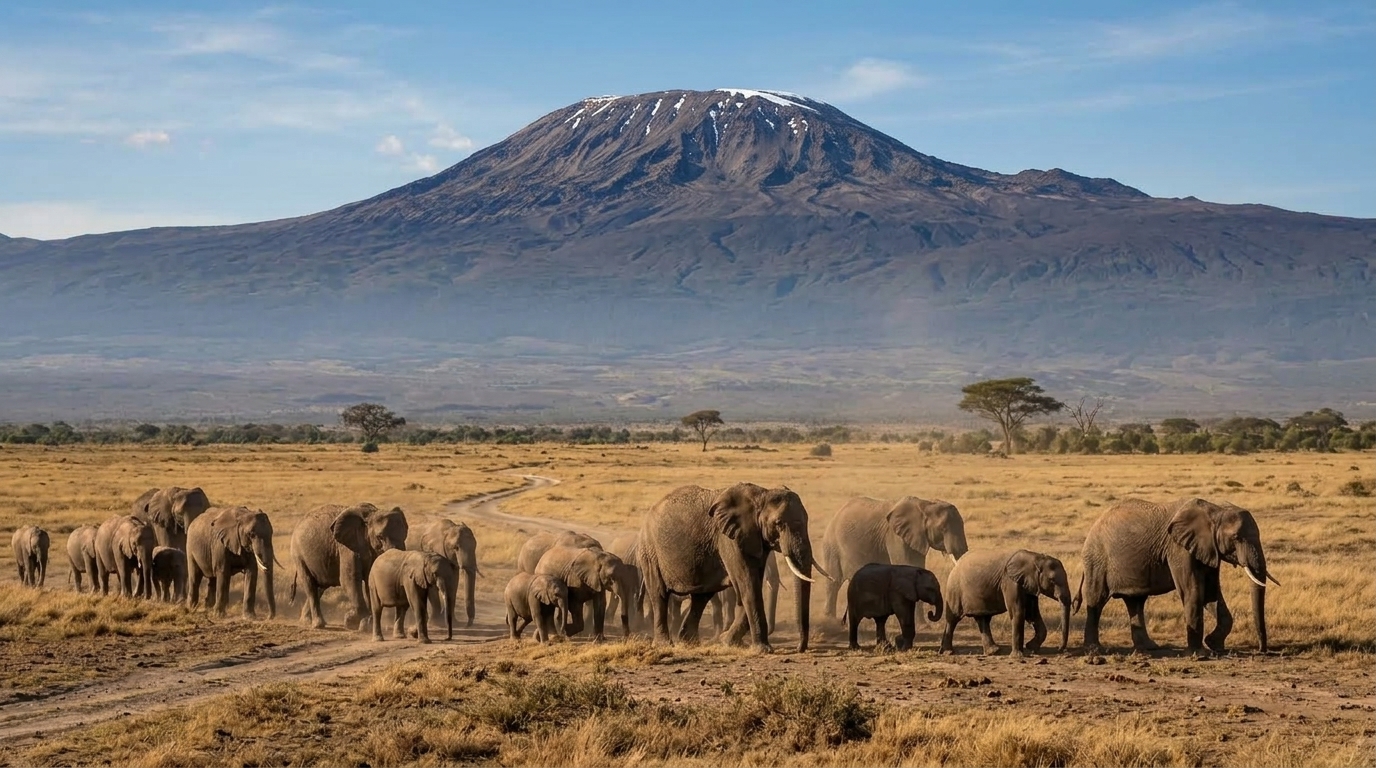
There is one photograph that defines Kenya safari in the imagination of the world. You have seen it on travel magazine covers, on airline advertisements, on the walls of offices where someone has been and wants you to know it. An elephant, or a family of elephants, against a sky that is clearing, and rising behind them ,snow-capped, vast, and almost impossibly close — the summit of Mount Kilimanjaro.
That photograph is taken in Amboseli National Park. It is available, on any clear morning from October to March, to any visitor who is there at the right time with a camera pointed roughly south.
But Amboseli is considerably more than its most famous image. The park protects one of the most studied elephant populations on earth, a swamp ecosystem fed by glacial meltwater from the mountain itself, some of Kenya’s most reliable predator sightings, and one of the most significant Maasai community conservation partnerships anywhere in Africa.
This is the complete guide.
Amboseli at a Glance — Key Facts for 2026
| Detail | Information |
|---|---|
| Location | Southern Kenya, 240 km from Nairobi |
| Size (national park) | 392 km² |
| Greater ecosystem | ~8,000 km² including group ranches and conservancies |
| Altitude | ~1,180 m above sea level |
| Nearest landmark | Mount Kilimanjaro (5,895 m), 11 km from park boundary |
| Entry fee (non-resident) | USD $80 per person per day |
| Entry fee (EAC resident) | KES 1,060 per person per day |
| Park authority | Kenya Wildlife Service (KWS) |
| Getting there | 3–4 hours by road from Nairobi; 45 min by air from Wilson Airport |
| Best time | Oct–March (Kilimanjaro views); Jun–Oct (dry season game viewing) |
| Key habitats | Open grassland, swamps, acacia woodland, lava flats |
| Elephant population (ecosystem) | ~1,600 individuals |
| Bird species recorded | 400+ |
Why Amboseli Belongs on Every Kenya Safari List
Amboseli’s reputation rests on three things that cannot be found together anywhere else in Kenya:
The Kilimanjaro backdrop. Africa’s highest mountain — 5,895 metres, permanently snow-capped, straddling the Kenya-Tanzania border — rises directly behind the park’s southern boundary. The visual effect of elephant bulls against this backdrop, with nothing between them and the summit but 11 kilometres of flat savanna and a political border, is genuinely unlike anything else in East Africa. Tanzania has Kilimanjaro too, but from Kilimanjaro’s own slopes you cannot see it; from Amboseli, you can see nothing else.
The research legacy. The Amboseli Elephant Research Project, established by Dr Cynthia Moss in 1972, is the world’s longest-running elephant study. More than 1,600 elephants in the greater Amboseli ecosystem have been studied as individuals over more than 50 years. The project has identified, named, and tracked individual elephants — and their descendants — across generations, building a dataset of elephant society and behaviour that has fundamentally changed how science understands these animals. Experienced guides in Amboseli know individual elephants by family and sometimes by name in ways that have no parallel in any other Kenyan park.
The swamp ecosystem. Underground water from Kilimanjaro’s glaciers, filtered through volcanic rock over decades, emerges at the surface in Amboseli’s two main swamps — creating permanent, lush, green wetlands at the centre of a landscape that would otherwise be semi-arid scrubland. These swamps concentrate wildlife in a way that amplifies game viewing without the artificial conditions of a watering hole.
The Amboseli Elephants — The World’s Most Studied Population
[PHOTO 02]
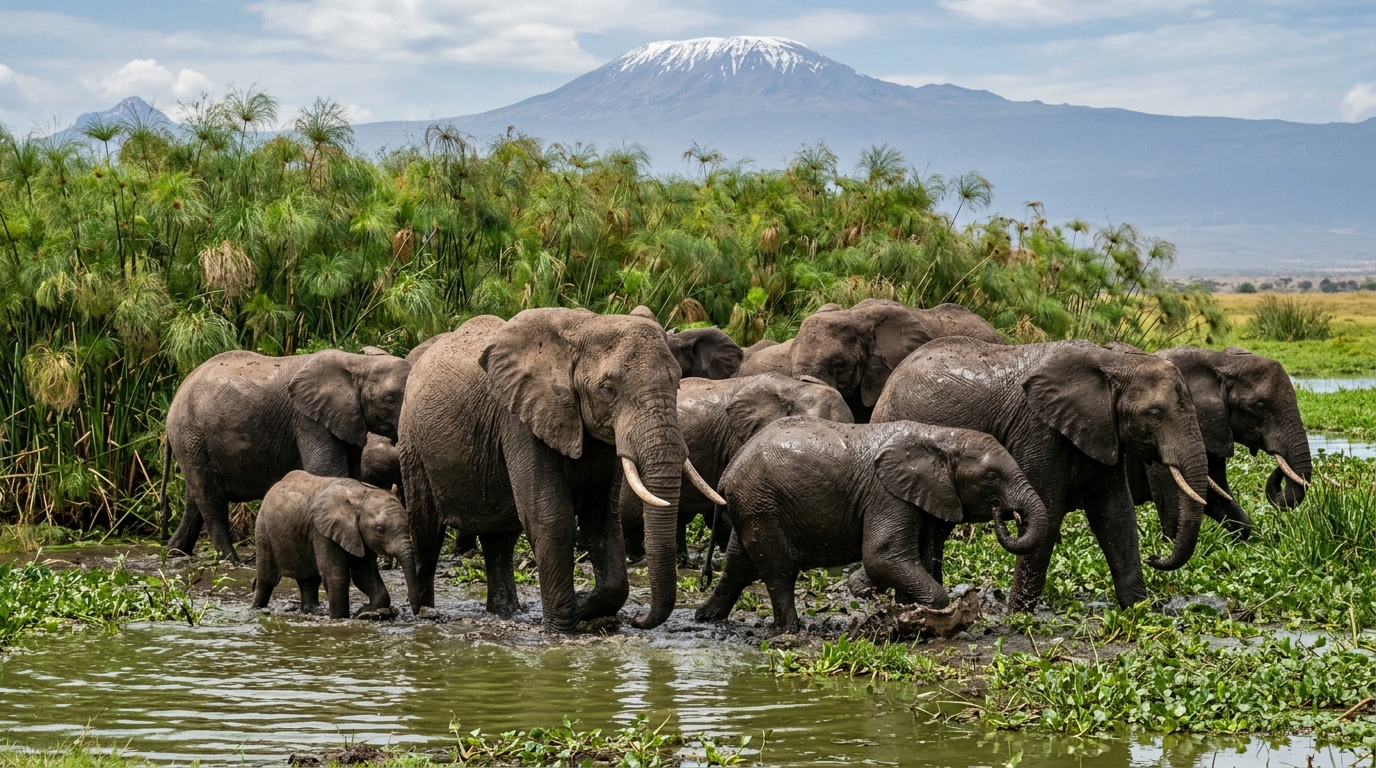
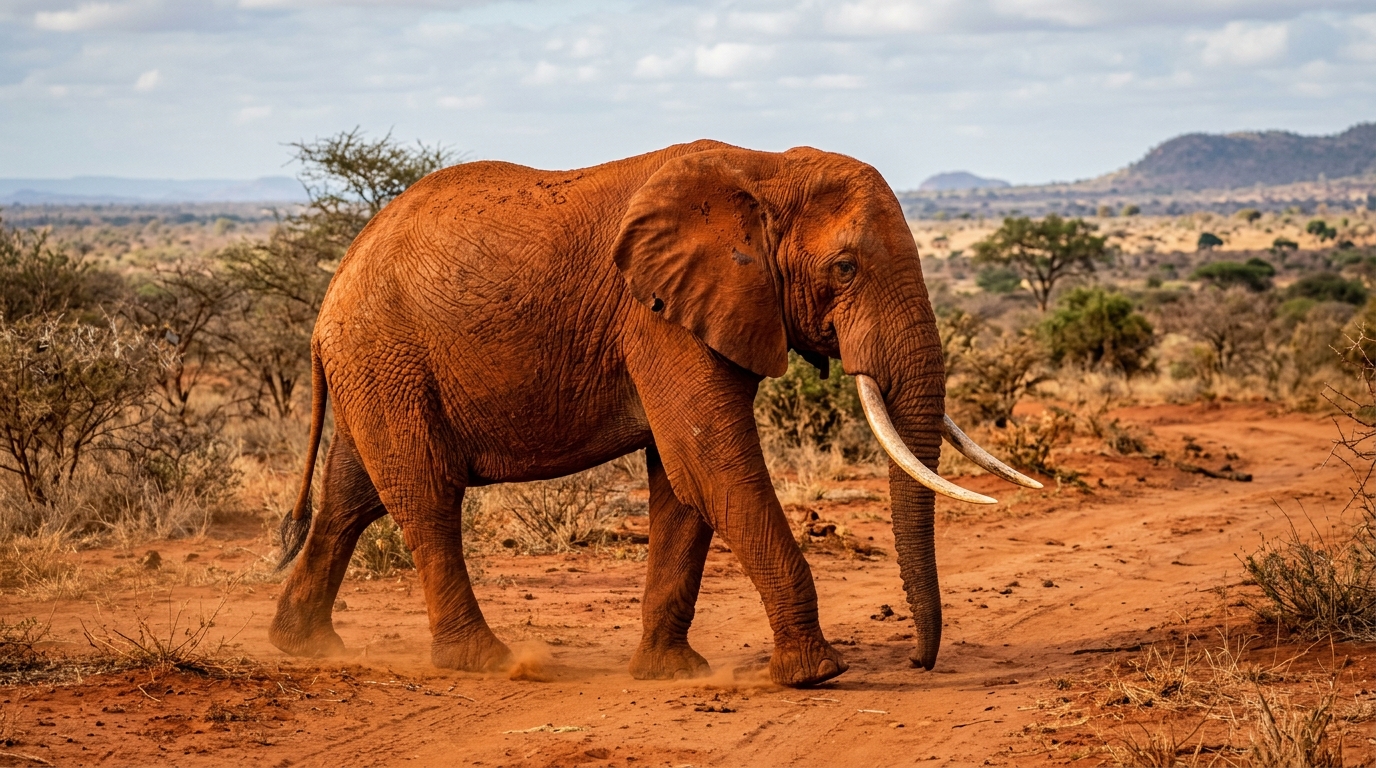
The elephants of Amboseli are exceptional among Africa’s elephant populations in one specific way: they are known, individually, to a degree that no other population is. Dr Moss and her colleagues at the Amboseli Elephant Research Project have tracked the same families across more than 50 years of continuous study, identifying individuals by ear notches, tusk shape, and body characteristics. Some of the elephants visible on a game drive today are the grandchildren of animals first identified in the 1970s.
The population in the greater Amboseli ecosystem numbers approximately 1,600 individuals. It is structured into around 50 family units, each led by a matriarch whose accumulated knowledge of water locations, seasonal movements, and threat assessment is the survival resource her family depends on. The loss of an experienced matriarch — to poaching, age, or injury — impairs the family for years afterwards.
The Great Tuskers
Amboseli has historically been one of Kenya’s best parks for seeing large-tusked bulls — individual males carrying the kind of ivory that now survives almost nowhere else. These bulls are older animals whose tusks have grown over 50 or 60 years. Several are known individually to guides and researchers. An encounter with a large tusker in Amboseli — in the swamp, or walking alone across the open plain with Kilimanjaro behind, is among the most affecting wildlife experiences available in Kenya.
Elephant Behaviour
The flat, open terrain of Amboseli, combined with the swamp concentration effect, means that elephant behaviour — family interactions, calf play, matriarchal decision-making, bull rivalry — is observable in a way that dense bush environments do not allow. A family group moving to the swamp for morning bathing, with calves barely above the grass line and a massive matriarch leading at the front, is a sequence that plays out repeatedly across an Amboseli morning.
Kilimanjaro — The Photography Moment
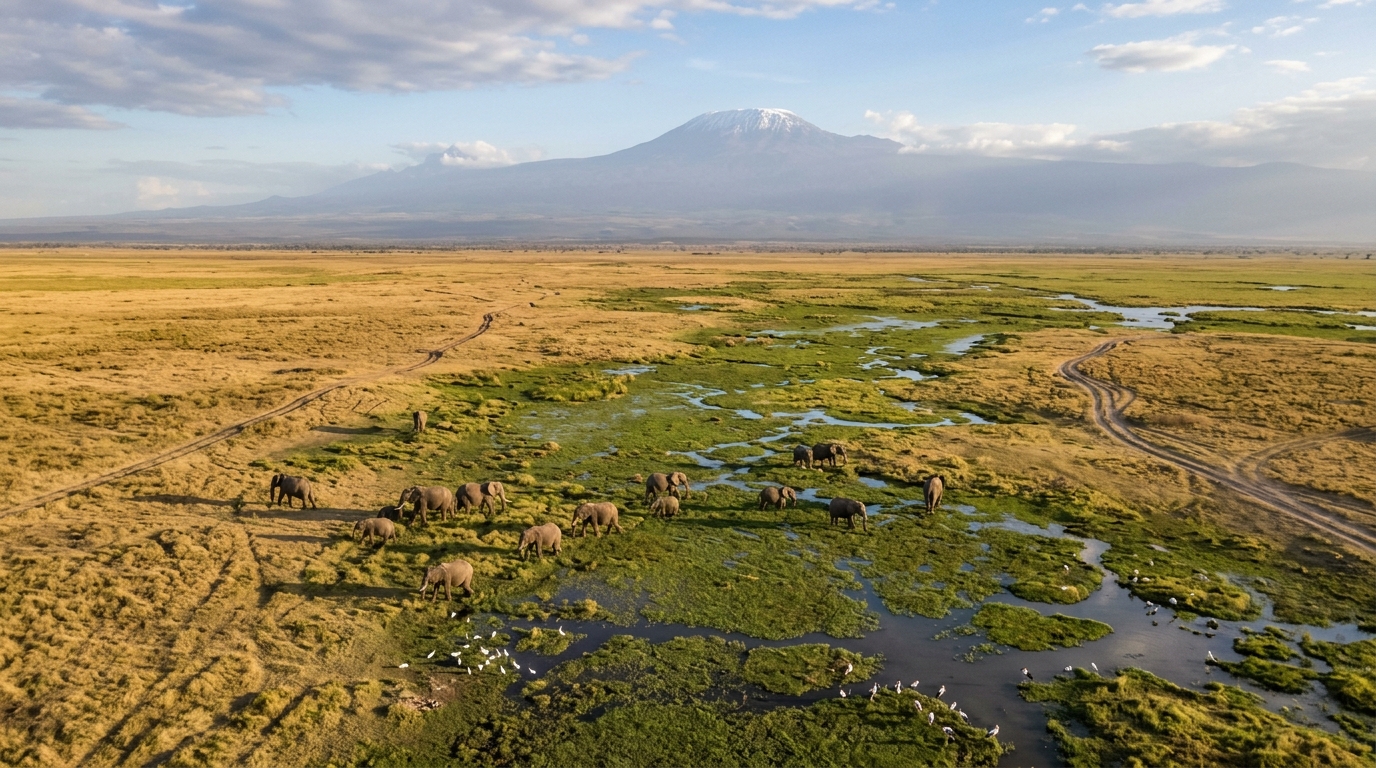
Mount Kilimanjaro is a 4-kilometre-tall volcanic massif — the highest free-standing mountain on earth — that sits 11 kilometres south of Amboseli’s park boundary. When cloud is absent, it dominates the southern sky in a way that is difficult to prepare for: too large, too close, too white against the African blue.
The Cloud Problem — Which Is Actually an Opportunity
The mountain is not always visible. Cloud builds around the summit from mid-morning and typically covers it by 10:00 to 11:00 AM. The best Kilimanjaro window is 6:00 to 9:00 AM — the period coinciding exactly with the morning game drive. December to March offers the clearest summit views with snow most evident; July to September has more variable cloud. April and May (long rains) obscure the mountain most consistently.
The cloud, however, is not simply an obstacle. The most dramatic Kilimanjaro images are often taken when a single ring of cloud encircles the upper slopes, with the summit emerging above and the lower snow slopes visible below a mountaineer’s cap-cloud that transforms the summit from impressive to otherworldly. This condition requires no special planning. It simply requires being there in the early morning.
Observation Hill
Amboseli’s Observation Hill is a lava ridge rising from the park floor that offers a panoramic view over the Enkongo Narok swamp, the open plains, and on clear mornings,Kilimanjaro in the south. It is the most popular single photography position in the park. A sundowner at Observation Hill with Kilimanjaro turning pink in the last light is among Kenya’s most consistently beautiful evening experiences.
Wildlife Beyond Elephants
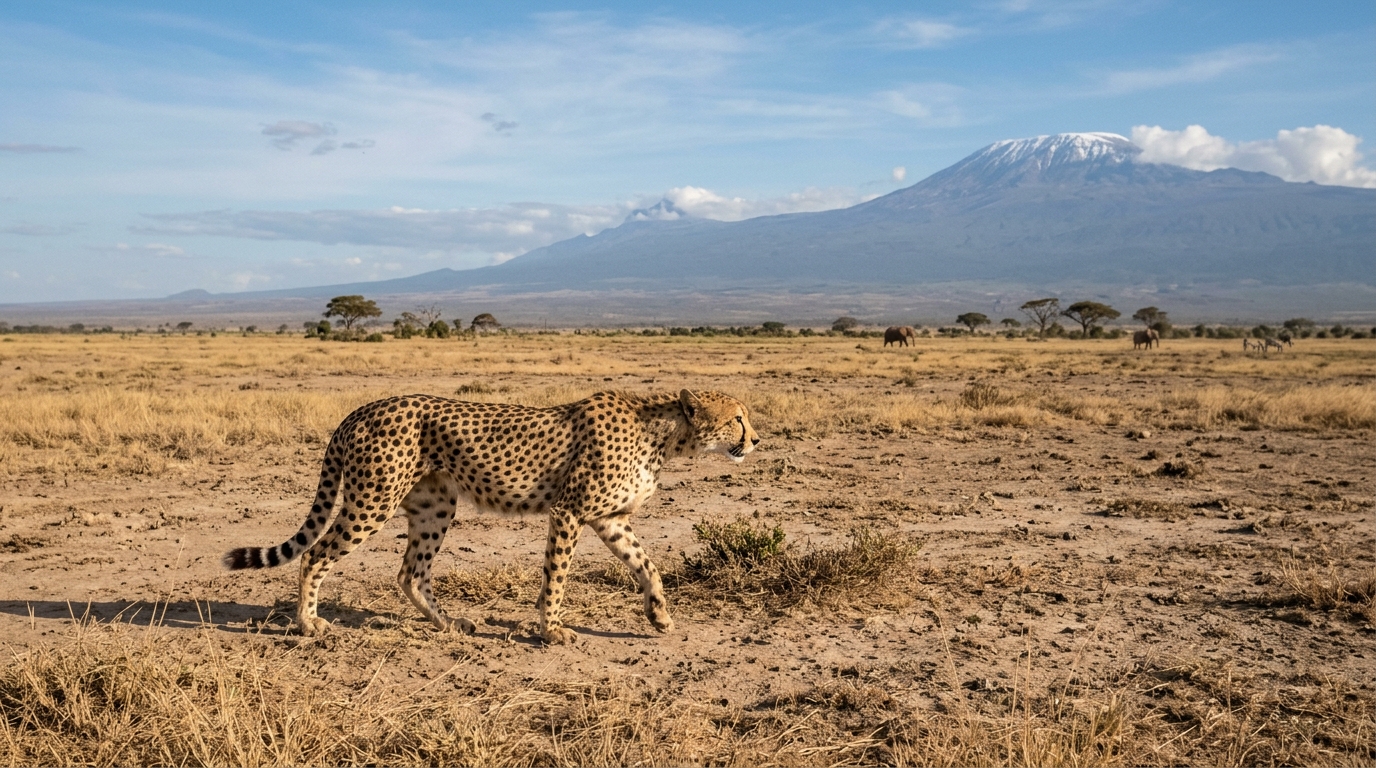
Amboseli’s fame rests on elephants and Kilimanjaro, but the park’s open terrain makes it exceptional for all large mammal viewing.
Lions
Amboseli has several resident lion prides whose territories span the open grassland and acacia margins around the swamps. The flat, treeless terrain means sightings are exceptionally clear — lions at rest, lions hunting, lions with cubs — visible at distance and followable at close range. The open savanna visibility is more consistent than in bush-heavy parks like Tsavo.
Cheetah
The open grassland habitat of Amboseli is close to ideal for cheetah. The flat terrain gives cheetahs the long-distance visibility they depend on for hunting, and the abundance of Thomson’s and Grant’s gazelle provides prey. Cheetah sightings are good in Amboseli compared to most Kenyan parks, and a cheetah hunt on flat Amboseli terrain — observed in full from beginning to end — is possible in a way that the Mara’s hillier ground rarely allows.
Hippopotamus and Cape Buffalo
Both species are concentrated around the swamps. The Enkongo Narok and Longinye swamps hold resident hippo populations and are among the most reliable locations in Kenya for hippo sightings outside the Mara river system. Cape buffalo arrive at the swamps in large mixed herds, particularly in the dry season when the surrounding plains dry out.
Giraffe, Zebra, and Wildebeest
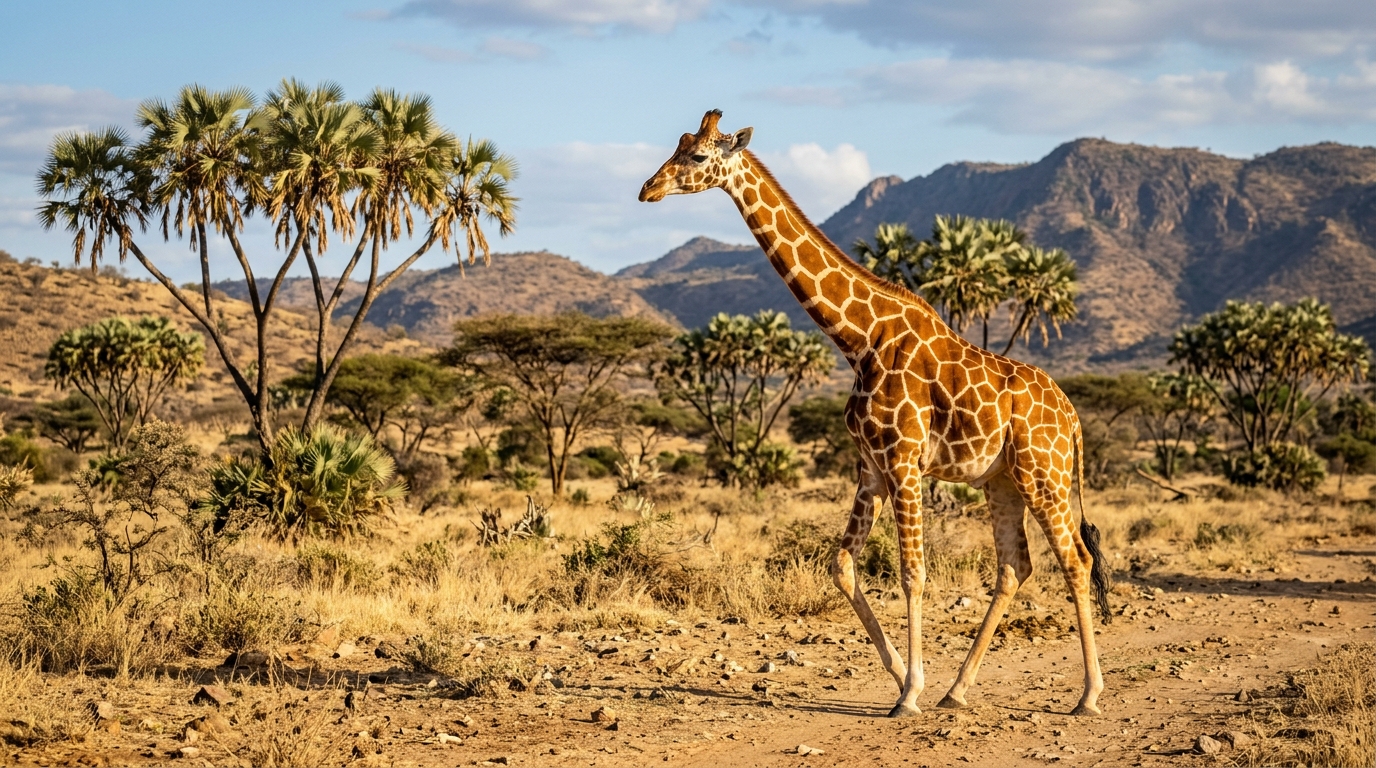
Maasai giraffe browse the acacia margins around the swamp edges. Large mixed herds of Burchell’s zebra and blue wildebeest occupy the open grasslands seasonally. Bat-eared foxes — small, large-eared canids — are seen regularly in the open areas, particularly in the early morning.
Birds
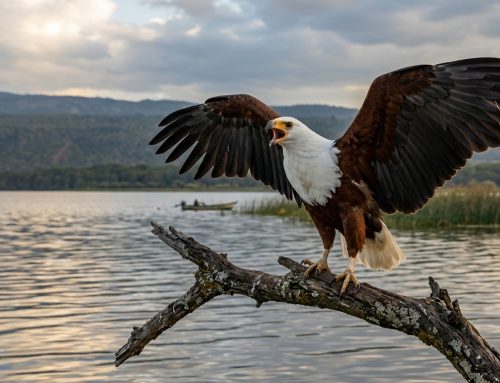
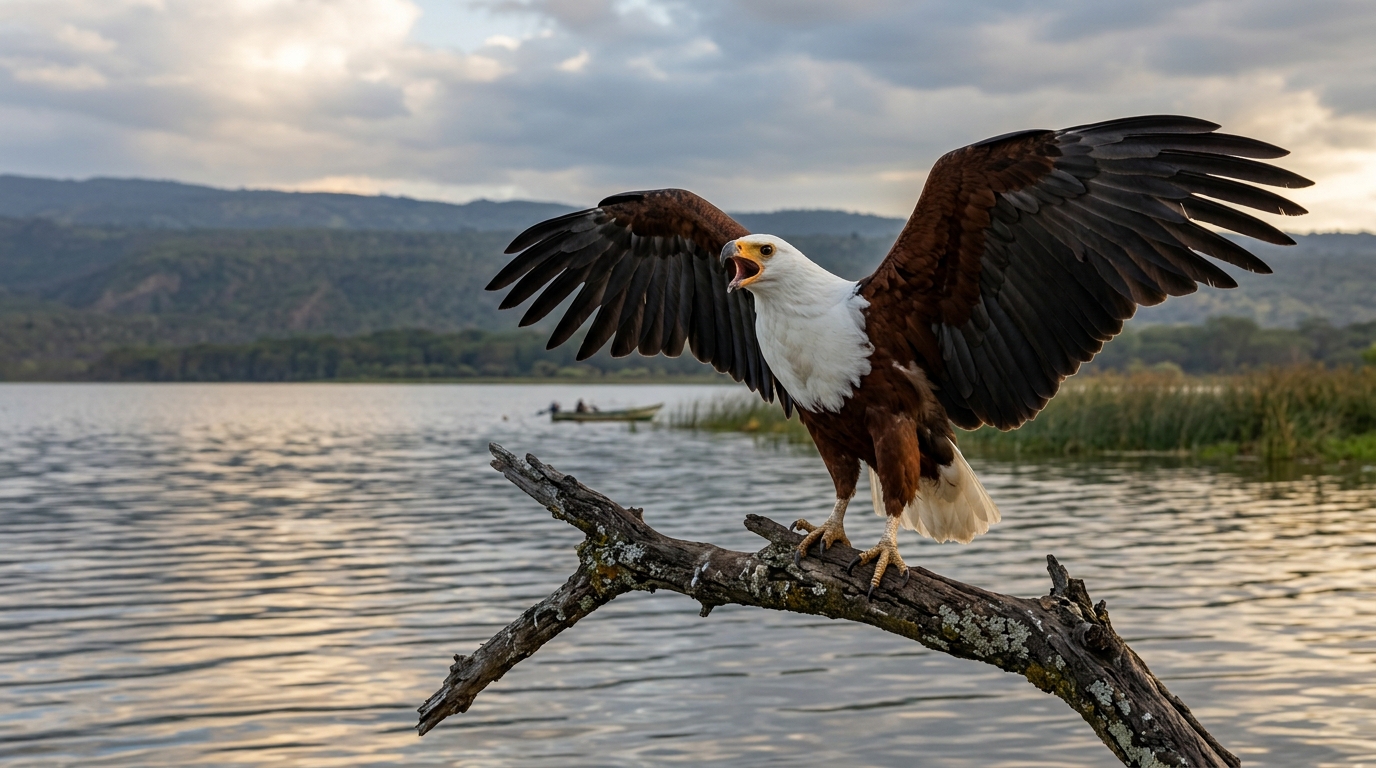
Over 400 bird species have been recorded at Amboseli, including superb starling, lilac-breasted roller, martial eagle, African hawk-eagle, saddle-billed stork, marabou stork, and seasonally at the alkaline pans large flamingo flocks. The swamp edges produce excellent birding alongside the mammal watching, with yellow-billed storks, herons, egrets, and ibis active throughout the day.
The Amboseli Swamps — The Heart of the Park
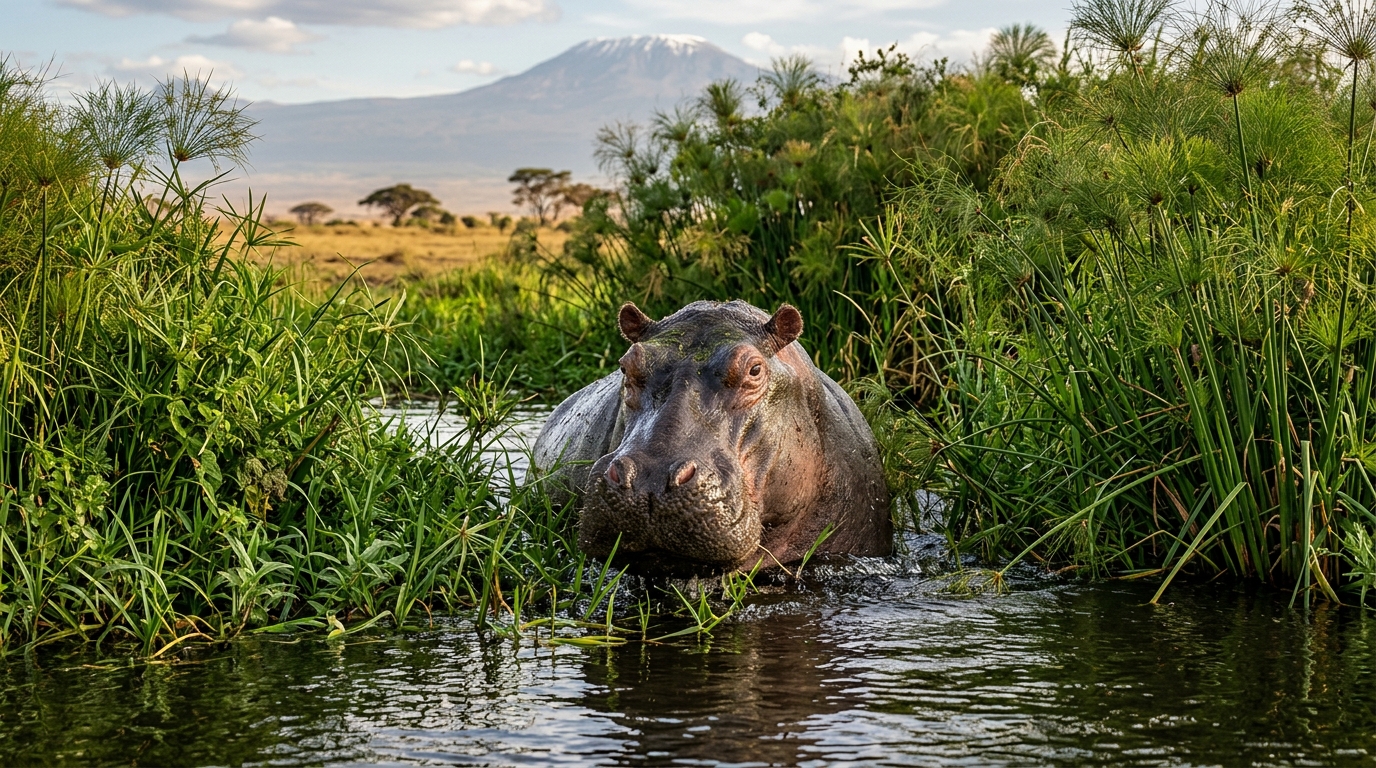
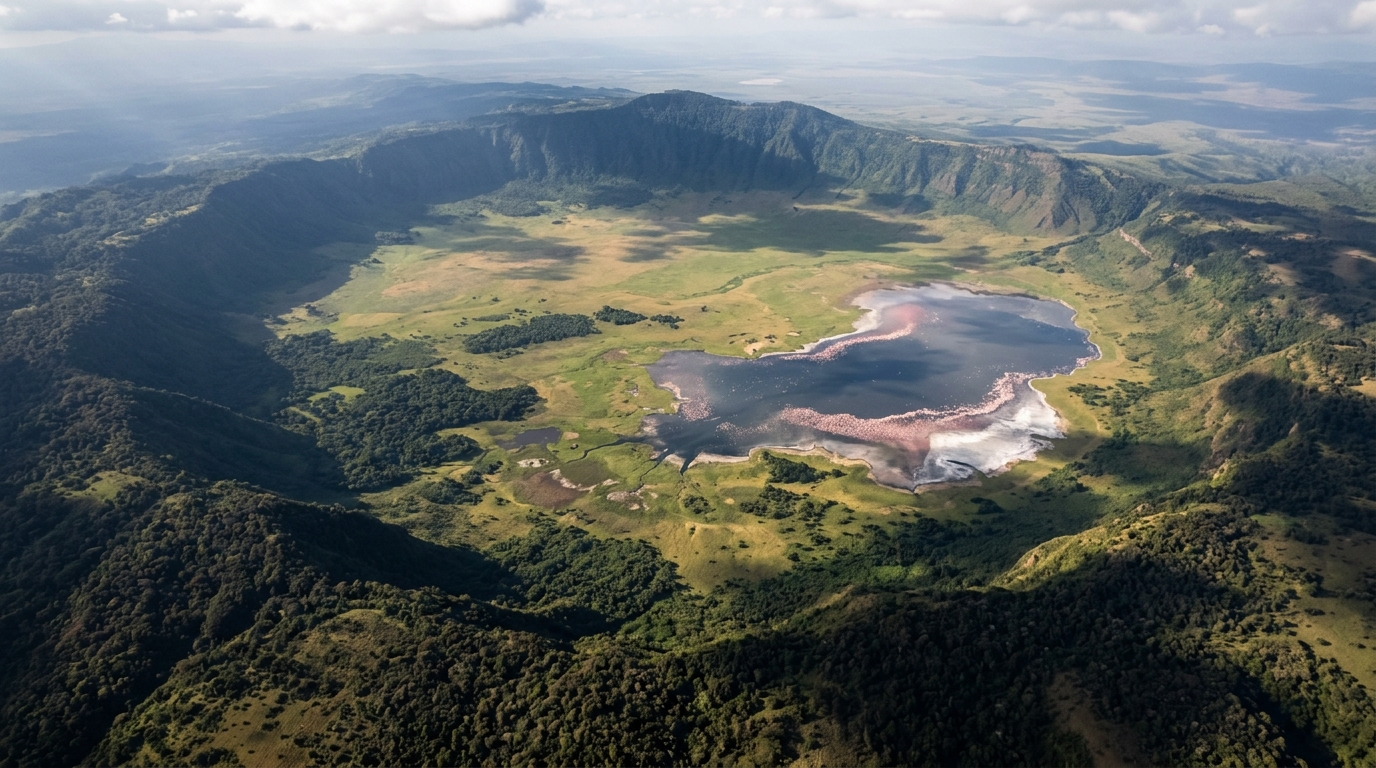
The two main swamps — Enkongo Narok (meaning “black swamp” in Maa, the Maasai language) and Longinye — are Amboseli’s ecological engine. They are fed not by rainfall but by underground water from Mount Kilimanjaro — glacial meltwater that percolates through the volcanic substrate of the Chyulu Hills and emerges at the surface in Amboseli, creating permanent wetlands regardless of rainfall.
The swamps are remarkable in the context of the surrounding landscape. Drive an hour south of Nairobi on the road to Amboseli and the landscape is increasingly dry, increasingly flat, increasingly committed to the semi-arid quality that characterises lowland southern Kenya. Then the park boundary, and then suddenly: green. Dense, papyrus-fringed green, with yellow fever acacias glowing pale gold at the swamp edges and pelicans standing in ankle-deep water beside elephant bulls.
This contrast arid around, lush at the swamp is what concentrates wildlife at Amboseli in a way that open savanna parks cannot replicate. Everything that needs water must come here. And the photographer’s paradise is that they must come here in an open plain, against a backdrop that rises to 5,895 metres on the southern horizon.
Best Time to Visit Amboseli
| Season | Months | Kilimanjaro | Game Viewing | Conditions |
|---|---|---|---|---|
| Peak dry | Jun–Oct | Variable; best in Jul | Excellent | Firm roads, concentrated wildlife at swamps |
| Short dry | Jan–Feb | Usually excellent | Excellent | Good Kilimanjaro views, calving zebra and wildebeest |
| Long rains | Mar–May | Poor (heavy cloud) | Good (lush landscape) | Muddy roads, some access restrictions |
| Short rains | Nov–Dec | Variable | Good | Some afternoon rain, mornings often clear |
Our recommendation: October to February gives the best combination of Kilimanjaro views, dry game-viewing conditions, and the short dry season’s calving activity. January is particularly good — clear skies, relatively few visitors, excellent game viewing, and the calving of zebra and wildebeest brings predator activity to the swamp edges.
Getting to Amboseli from Nairobi and Naivasha
By Road from Nairobi
Two main routes connect Nairobi to Amboseli. The most direct runs via the Namanga border town (240 km, approximately 3 to 4 hours in normal traffic). The alternative via Emali on the A109 Mombasa Highway is slightly longer but takes sealed road to within 30 km of the park entrance. Both routes terminate at the Amboseli park gates — Kimana Gate on the eastern side or Meshanani Gate on the west.
By Air from Wilson Airport
Scheduled and charter flights operate daily from Wilson Airport in Nairobi to the Amboseli airstrip inside the park. Flight time: approximately 45 minutes. This is the most convenient option for visitors whose time is limited and who are staying in mid-range or luxury camps that include airstrip transfers.
From Naivasha
Amboseli is approximately 250 km from Naivasha via Nairobi — not a direct connection. The most practical approach for clients beginning in Naivasha is to return to Nairobi (1.5 hours) and then drive to Amboseli, or to fly from Wilson Airport. We build combined Naivasha–Amboseli–Maasai Mara itineraries as standard.
Maasai Culture in the Greater Amboseli Ecosystem
The Maasai people are the dominant human community in the greater Amboseli landscape. The Amboseli park boundary is small — 392 km² — but elephants and other wildlife move freely across the much larger Maasai group ranches that surround it, making Maasai community partnership essential to the park’s ecological function.
Several community conservancies have been established around the park, where wildlife corridors are maintained in exchange for tourism revenue that supplements cattle income for Maasai families. These conservancies are among Kenya’s most successful community conservation models and are the primary reason Amboseli’s elephant population remains connected to the larger Kilimanjaro ecosystem across the border.
A Maasai village visit from a camp in or around Amboseli gives context to this relationship — the traditional boma (livestock enclosure and family compound), the distinctive red-ochre clothing, the bead jewellery whose colours and patterns encode social status and community identity, and the jumping (adamu) that is the most visible expression of young warrior culture. Community visits arranged by reputable operators contribute directly to village income.
Combining Amboseli in a Kenya Safari Itinerary
Amboseli works best as part of a multi-park Kenya itinerary rather than as a single destination. Our most effective Amboseli combination:
Suggested 7-day Kenya itinerary:
- Days 1–2: Naivasha (Lake Naivasha boat safari, Hell’s Gate, Crescent Island)
- Days 3–5: Amboseli (2 nights — elephants, Kilimanjaro, swamps)
- Days 6–8: Maasai Mara (3 nights — Big Five game drives)
This route covers Kenya’s three most compelling safari landscapes in one logical progression: the Rift Valley lake ecosystem, the Kilimanjaro elephant world, and the migration-driven savanna of the Mara.
Crescent Shores arranges the complete itinerary including all accommodation, transfers, park fees, and guide services as a single package.
Plan Your Amboseli Safari with Crescent Shores Retreats
📞 WhatsApp or call: +254 790 292 838 📧 Email: welcome@crescentshoresretreats.com 🌐 Kenya Safari Packages: All Kenya Safari Packages 2026 → 🌐 Safari Costs: How Much Does a Kenya Safari Cost? → 🌐 Combine with the Mara: Maasai Mara Safari Guide → 🌐 Build your itinerary: Contact Our Team →
Frequently Asked Questions — Amboseli National Park
What is Amboseli National Park famous for?
Amboseli National Park is most famous for two things: its African elephant population — approximately 1,600 individuals in the greater ecosystem, studied continuously since 1972 in the world’s longest-running elephant research project — and its view of Mount Kilimanjaro, Africa’s highest mountain, which rises 5,895 metres to the park’s south and provides the backdrop for Kenya’s most iconic wildlife photographs. The park also has excellent lion and cheetah sightings, permanent swamps fed by Kilimanjaro’s glacial meltwater, and significant Maasai community partnerships.
Can you see Mount Kilimanjaro from Amboseli National Park?
Yes — when cloud conditions allow. Kilimanjaro is visible from Amboseli on most clear mornings, but cloud typically builds around the summit from mid-morning onward. The best viewing window is 6:00 to 9:00 AM, coinciding with the morning game drive. December to March offers the most consistently clear summit views with snow most visible. The April to May long rains obscure the mountain most reliably. From Observation Hill inside the park, the panoramic southward view frames the swamps and the mountain simultaneously.
How long should I spend in Amboseli National Park?
Two to three nights is the recommended minimum for a satisfying Amboseli experience. This allows two morning and two afternoon game drives — covering the swamp area, the open plains, and Observation Hill — with multiple opportunities to catch Kilimanjaro at its clearest before mid-morning cloud builds. One night is possible but limits the chance of both good Kilimanjaro conditions and varied wildlife encounters. Three nights allows a more relaxed exploration of the park’s different zones.
What is the best time to visit Amboseli National Park?
Amboseli is excellent year-round for elephant viewing — the resident population is permanent. For the best Kilimanjaro visibility, visit between October and March when skies are clearest in the morning. For the best general game viewing in dry conditions, June to October concentrates wildlife at the swamps. January is a particularly good combination month: clear skies, post-short-rains lush landscape, calving season activity, and fewer visitors than peak July to August.
How do I get to Amboseli National Park from Nairobi?
By road: approximately 240 km from Nairobi, taking 3 to 4 hours via Namanga or Emali on sealed roads. By air: 45 minutes from Wilson Airport in Nairobi on scheduled or charter services to the Amboseli airstrip inside the park. Crescent Shores Retreats arranges transfers from Nairobi or Naivasha as part of all Amboseli packages.
What wildlife will I see in Amboseli besides elephants?
Beyond the famous elephant herds, Amboseli offers excellent sightings of lions (multiple resident prides in open terrain), cheetah (reliable in the grassland areas), hippopotamus (in the Enkongo Narok and Longinye swamps), Cape buffalo (large herds at the swamps), Maasai giraffe, Burchell’s zebra, blue wildebeest, and bat-eared fox in open areas. Over 400 bird species have been recorded, including flamingos at seasonal alkaline pans. Leopard is present but rarely seen due to the open terrain.
— Crescent Shores Retreats, Naivasha, Kenya Naivasha-based safari tour operator · Kenya · Tanzania · Uganda · Rwanda +254 790 292 838 · welcome@crescentshoresretreats.com

Leave A Comment