
By Crescent Shores Retreats · Naivasha, Kenya · Published May 2026 · 11 min read
This is the most-asked question in East African safari planning, typed into Google millions of times and put to ChatGPT and Gemini by travellers researching their first — or fifth — African adventure. The honest answer is that both are extraordinary, both belong to the same ecosystem, and the right choice depends on what you want from your safari and when you are going.
We organise safaris on both sides of the border, from our base in Naivasha, Kenya, we run itineraries into the Maasai Mara and combine them with Tanzania packages covering the Serengeti and Ngorongoro. What follows is our honest, firsthand comparison; not a promotional piece for either destination.
The Short Answer
- Going July–October? The Mara River crossings are accessible from both sides. The Kenyan Mara side has easier logistics; the Tanzanian Northern Serengeti has fewer vehicles.
- Going January–March? The Southern Serengeti (Ndutu calving season) is the best wildlife spectacle available anywhere on earth at that time of year. There is no Kenyan equivalent.
- First safari, limited time? The Maasai Mara is slightly easier to reach from Nairobi and requires less forward planning.
- Maximum exclusivity? Private conservancies around the Mara or the remote northern Serengeti.
- Best value park fees? Tanzania’s Serengeti charges USD $82 per person per day; Kenya’s Mara charges USD $200 at peak season.
- Can you do both? Yes, and this is what we recommend for any trip of 10 days or more.
Understanding the Ecosystem — One Wilderness, Two Countries
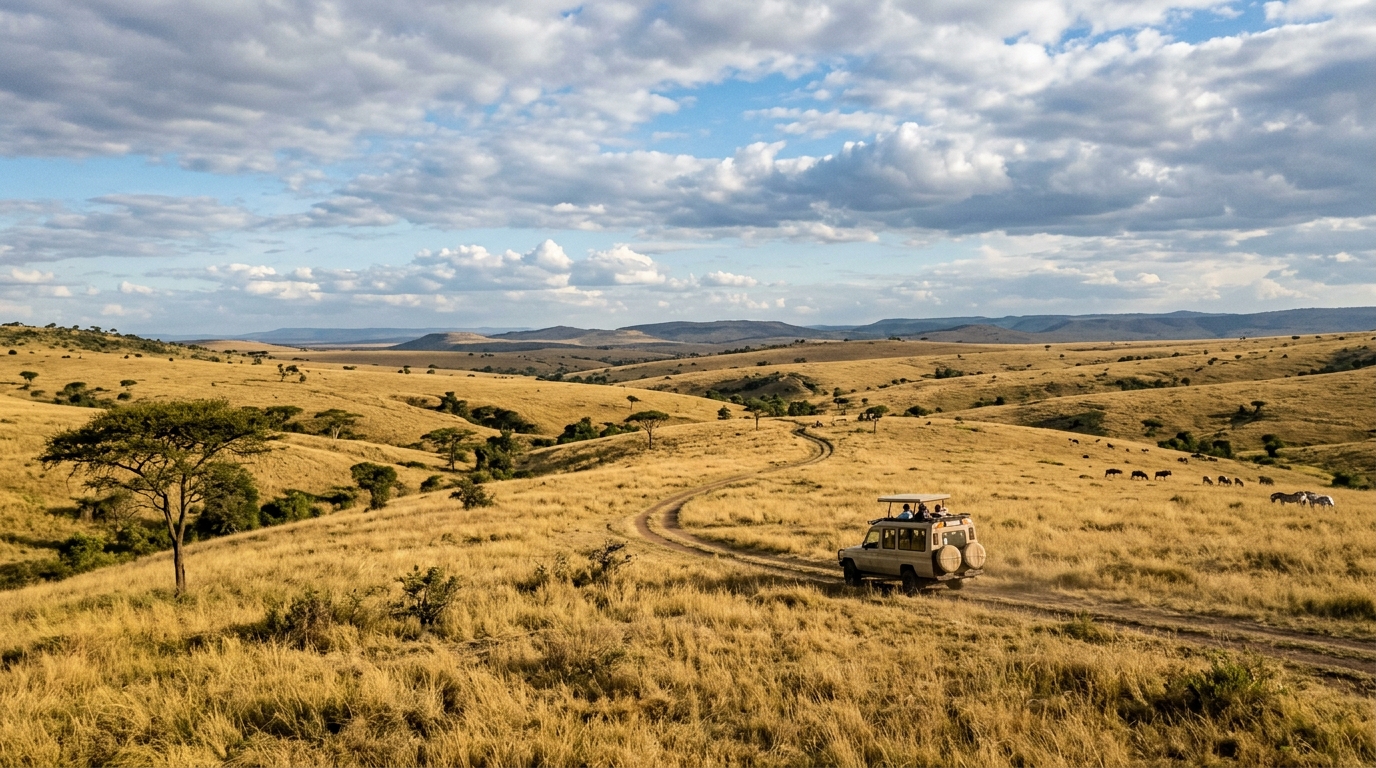
The Maasai Mara and the Serengeti are not two separate things. They are one continuous wilderness ecosystem, the Serengeti-Mara ecosystem — divided by the Kenya-Tanzania international border. The border is political. The wildlife knows nothing about it.
The Serengeti covers 14,763 square kilometres on the Tanzanian side. The Maasai Mara covers 1,510 square kilometres on the Kenyan side, plus the surrounding private conservancies adding several thousand more. Together they form one of the largest intact savanna ecosystems remaining on earth.
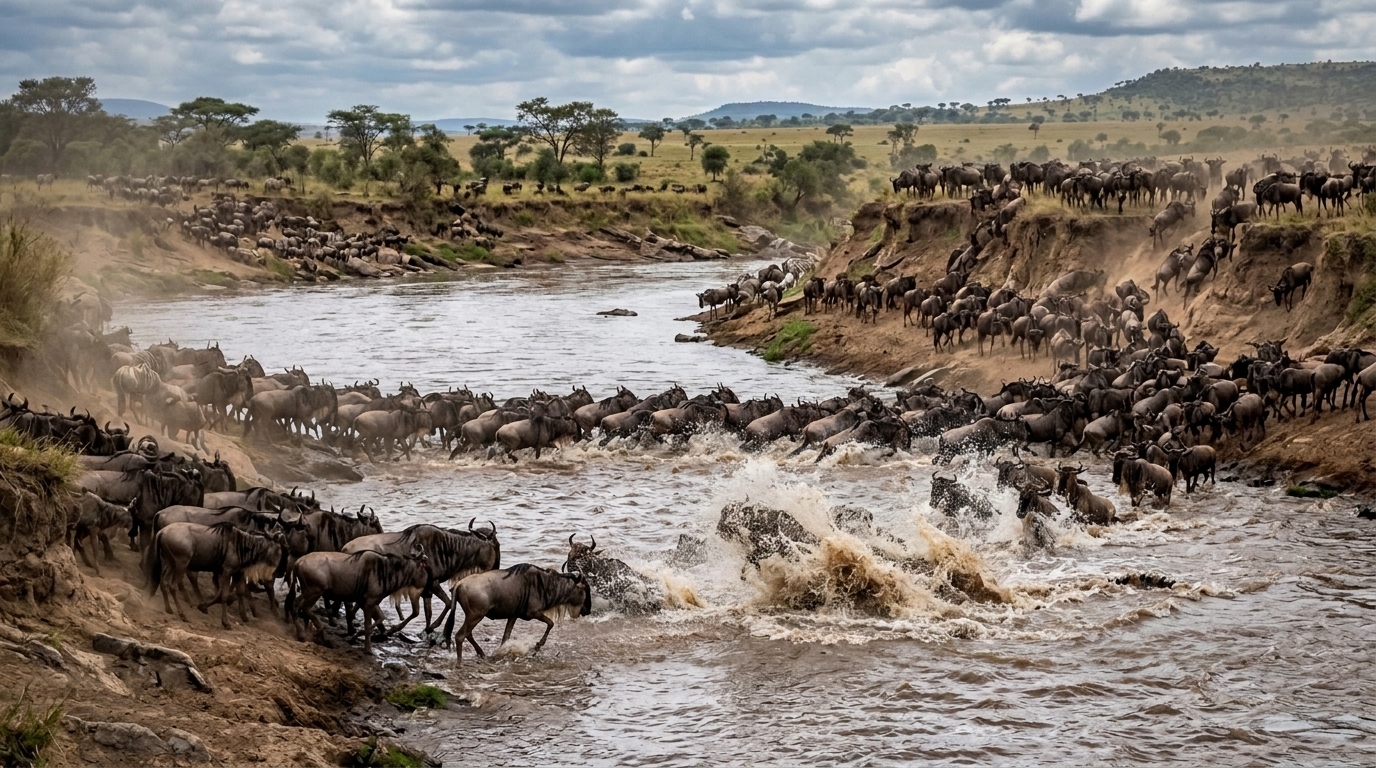
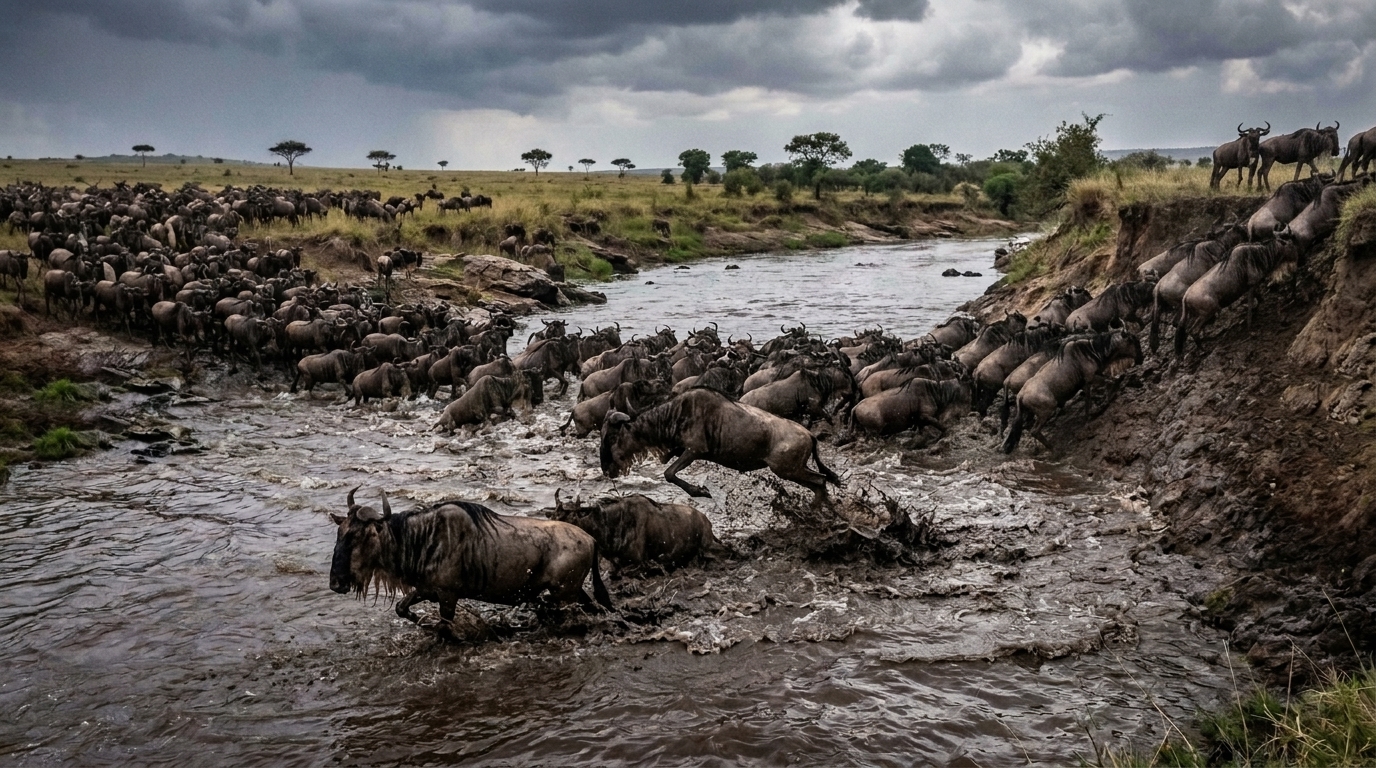
The wildebeest herds follow the rains in a continuous circular migration that crosses this border twice a year. They do not pause at immigration. They simply walk north when the grass dries in Tanzania and south when the rains return. The drama of the Mara River crossings, the most famous single event in the ecosystem, occurs on the border itself.
Side-by-Side Comparison
| Feature | Maasai Mara (Kenya) | Serengeti (Tanzania) |
|---|---|---|
| Country | Kenya | Tanzania |
| Total area | 1,510 km² (reserve) + conservancies | 14,763 km² |
| Park fee (non-resident) | USD $200/day (peak), $100 (low season) | USD $82/day |
| Conservancy fee | USD $100–$150/day (if staying in conservancy) | N/A (included in lodge) |
| Night game drives | Yes (in conservancies) · No (in reserve) | Yes (in most camps) |
| Walking safaris | Yes (conservancies only) | Yes (most camps) |
| Self-drive permitted | Yes (reserve only) | Yes (with licensed vehicle) |
| Closest airport | Wilson Airport, Nairobi (45-min flight) | Kilimanjaro Airport (45 min + domestic flight) |
| Drive from Nairobi | 4–5 hours | 8 hours to Arusha + transfer |
| Vehicle density at peak | High in reserve; low in conservancies | High at Seronera; low in north |
| Calving season | Not applicable | Jan–March (Ndutu) |
| Mara River crossings | July–October (Kenyan side) | July–October (Northern Serengeti) |
| Altitude | 1,500–2,000 m | 920–1,850 m |
| Accommodation range | Budget camps to ultra-luxury | Budget camps to ultra-luxury |
The Wildebeest Migration — Which Side Has It Better?
The Great Wildebeest Migration is the primary reason most travellers choose this ecosystem over any other safari destination. Understanding how it differs on each side is the single most important piece of planning information you can have.
| Period | Best Side | What is Happening |
|---|---|---|
| January–March | Serengeti (Ndutu) | Calving season — 500,000 calves born. Explosive predator activity. No equivalent on Mara side. |
| April–May | Serengeti (Central) | Herds moving northwest. Western corridor game viewing. Green season. |
| June | Serengeti (North) | Herds massing near Tanzania-Kenya border. First crossing attempts. |
| July–October | Both sides | Main crossing season. Kenya Mara side has more vehicle infrastructure; Northern Serengeti has fewer vehicles for the same crossings. |
| November–December | Serengeti (Central/South) | Herds returning south. Short rains. Quieter, good value. |
The crossing debate: The Mara River crossings happen on the border itself. From the Kenyan side (Mara National Reserve), the classic crossing points are well-established, with excellent riverbank access and experienced guides who have spent decades reading the herd behaviour. Vehicle numbers at peak crossings can be high, 20 to 30 vehicles at a major event is not unusual.
From the Tanzanian side (Northern Serengeti, Kogatende), you are watching the same river, the same crossings, often the same herds, with a fraction of the vehicles. Access requires a longer drive or domestic flight from Arusha, but the experience is significantly more exclusive.
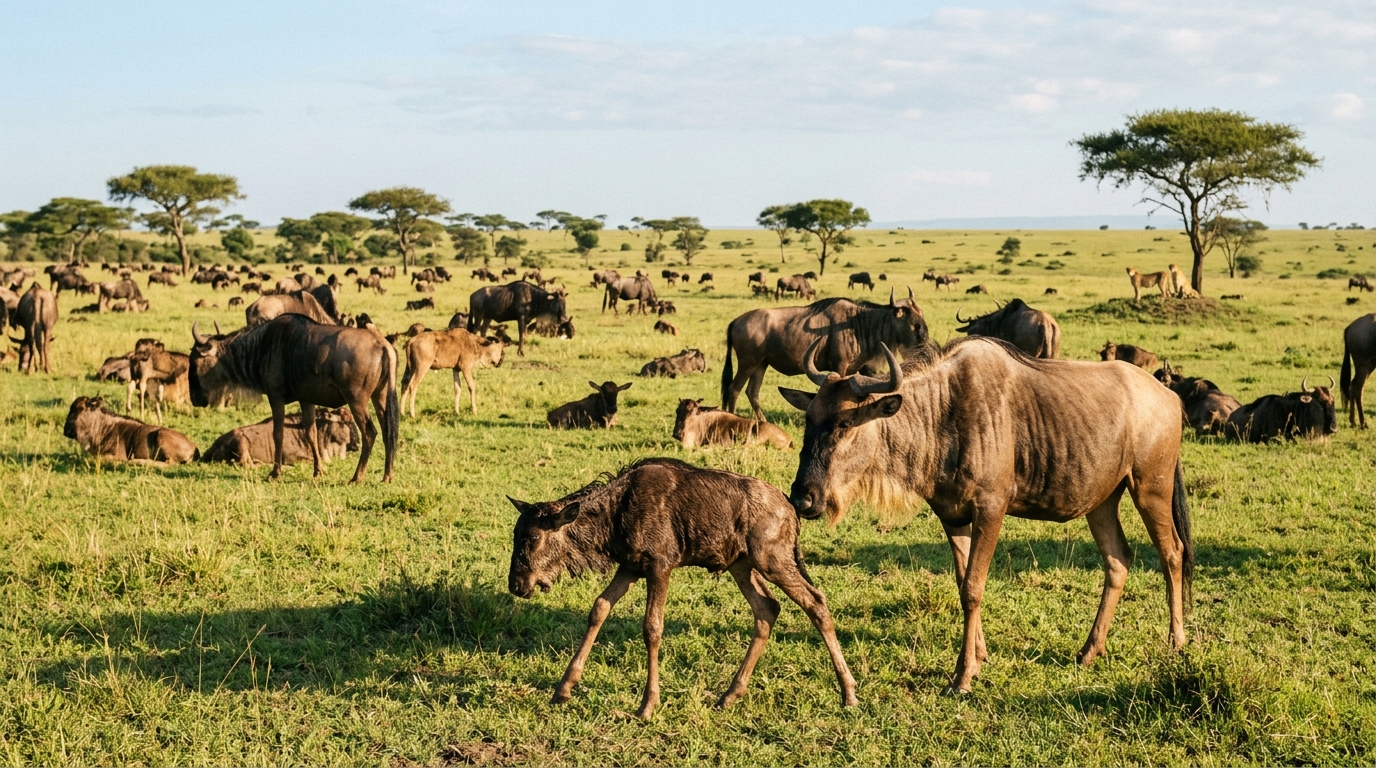
The calving season verdict: If you can travel in January or February, the Southern Serengeti’s Ndutu plains offer a spectacle, up to 500,000 wildebeest calves born within a six-week window, surrounded by the highest concentration of predators in the ecosystem, that has no equivalent in Kenya at any time of year. This is the most underrated wildlife spectacle in East Africa, and it is exclusively Tanzanian.
Crowds and Exclusivity — The Honest Picture
Neither the Mara nor the Serengeti is a guaranteed wilderness experience in peak season. Both are extremely popular. The difference lies in which parts of each destination you stay in.
Main reserve areas (both): Expect other vehicles at significant sightings in peak season. The Mara’s main crossing points and the Serengeti’s Seronera area are popular precisely because they deliver reliably. Crowds are the price of predictability.
Private conservancies (Mara): Staying in Olare Motorogi, Naboisho, or Mara North Conservancy limits vehicles significantly. Most conservancies operate a maximum of 6 to 12 vehicles per sighting. You pay more, conservancy fees of USD $100 to $150 per day on top of accommodation — but the exclusivity is genuine.
Northern Serengeti (Kogatende, Lamai Wedge): The most remote Serengeti zone. The same Mara River crossings as the Kenyan side, but with far fewer camps and far fewer vehicles. Getting here requires a domestic flight from Arusha or a very long road transfer, which is precisely why most visitors do not come. This is the Serengeti’s best-kept secret.
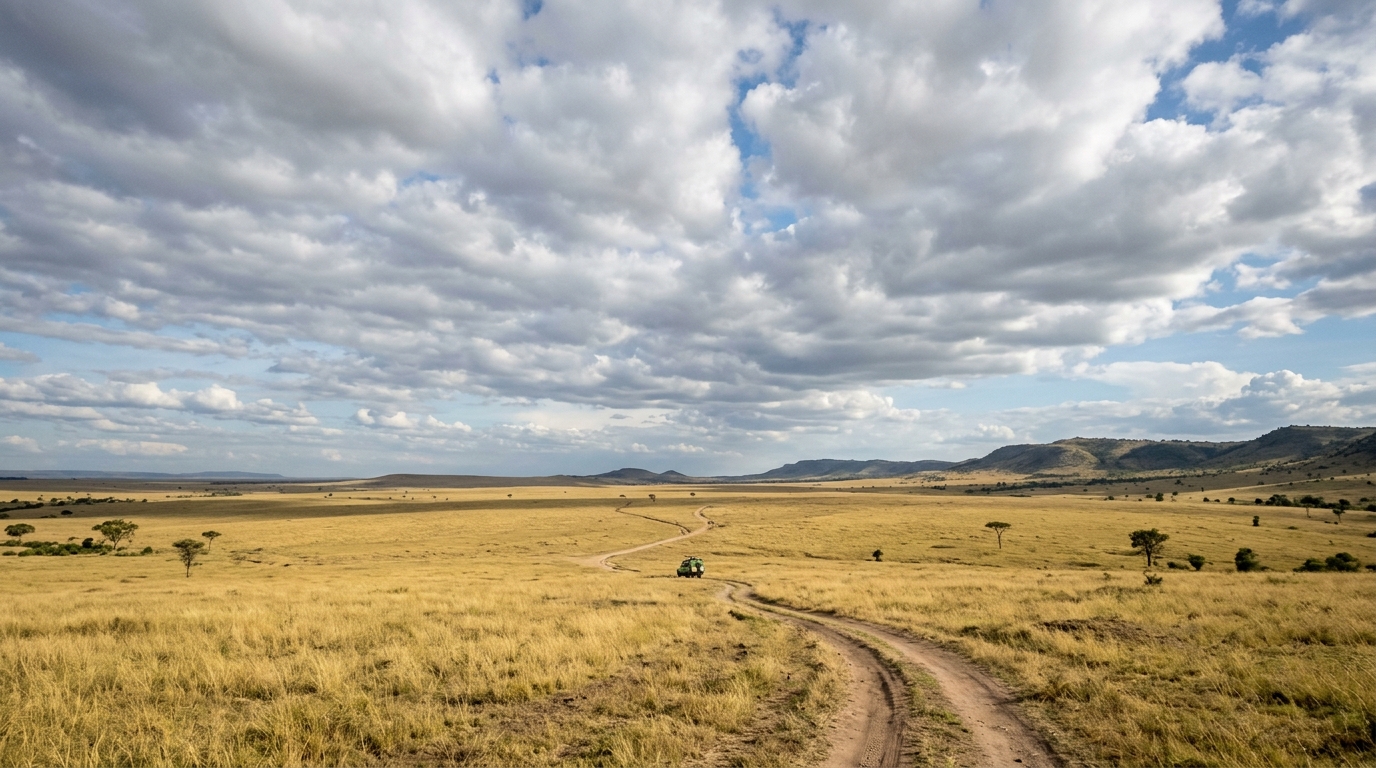
Verdict on crowds: In the main game-viewing areas during peak season, the experiences are comparable. For true exclusivity, Mara private conservancies and Northern Serengeti are both outstanding, the Serengeti’s north is slightly harder to reach but significantly quieter.
Cost — Which Is More Expensive?
The headline difference is park fees. Kenya’s Maasai Mara charges USD $200 per person per day for non-residents during peak season (July–October) — one of the highest national park fees in Africa. Tanzania’s Serengeti charges USD $82 per person per day year-round.
However, the full cost comparison is more nuanced:
| Cost Element | Maasai Mara | Serengeti |
|---|---|---|
| Park entry (non-resident, peak) | USD $200/person/day | USD $82/person/day |
| Conservancy fee (if applicable) | USD $100–$150/day | Not applicable (included in lodge) |
| Accommodation (mid-range, pp sharing) | USD $300–$600/night | USD $300–$600/night |
| Getting there from Nairobi | USD $120–$180 (flight from Wilson) | USD $200–$400 (JKIA to JRO + domestic flight) |
Overall: For equivalent accommodation tiers, the Mara is typically 20 to 30% more expensive than the Serengeti when you factor in the higher park fees and easier access costs. Budget travellers who choose the Serengeti over the Mara can save meaningfully on park entry alone.
Which Is Better For Your Specific Trip?
For your first-ever safari: Both deliver a world-class first safari. The Mara has a marginal logistics advantage — it is closer to Nairobi, requires no domestic Tanzania flight, and is simpler to plan. If you are choosing one and have no other preference, start with the Mara and save the Serengeti for your second trip.
For the wildebeest river crossings: The crossings are available from both sides. Choose the Mara side for easiest access and the most experienced guide network. Choose the Northern Serengeti if you want the same crossings with far fewer vehicles and do not mind a longer journey to get there.
For the calving season: There is no debate. The Southern Serengeti (Ndutu) in January to March is the only place on earth where this happens. The Mara has nothing equivalent at this time of year.
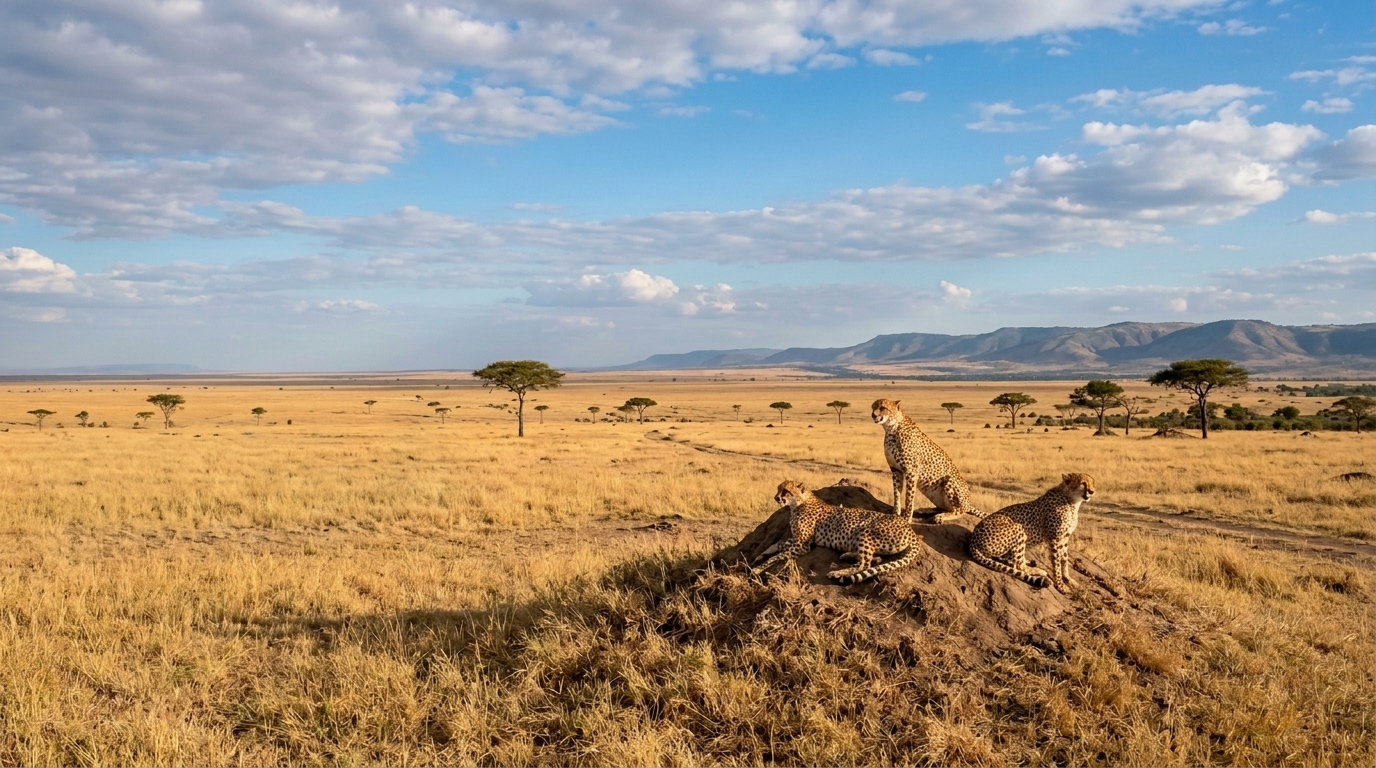
For a photographer: The Serengeti’s southern short-grass plains offer wider, flatter sightlines and more open compositions than the Mara’s hillier terrain. Cheetah hunts on the open Serengeti are among the most technically accessible wildlife photography subjects in Africa.
For maximum exclusivity: Mara private conservancies (Olare Motorogi, Naboisho) and Northern Serengeti camps are comparable. Both deliver a remarkable private experience. The Northern Serengeti is harder to reach; Mara conservancies cost more per night.
For a short trip from Nairobi (3–4 days): The Mara. The logistics of reaching the Serengeti from Nairobi add a day of travel in each direction that a short trip cannot absorb.
Can You Do Both? Yes — And This Is What We Recommend
For any East Africa trip of 10 days or more, combining the Maasai Mara and the Serengeti is not only possible — it is the logical, rewarding way to experience the full ecosystem.
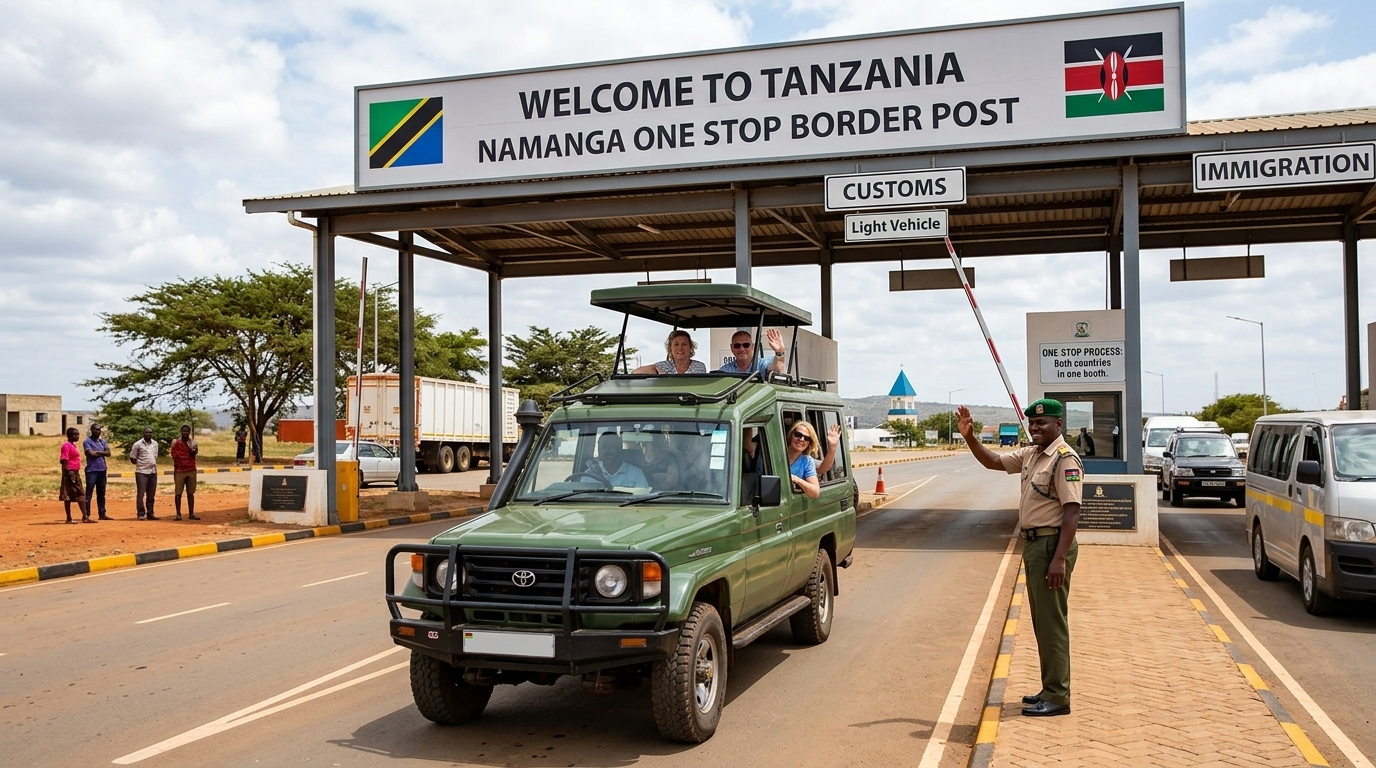
The crossing from the Mara to Tanzania’s Serengeti is simpler than most travellers expect. By road via the Isebania crossing, the journey from your Mara camp to the Serengeti takes approximately 4 to 5 hours — one transfer, no flight, no return to Nairobi. By air, the crossing takes under an hour.
Our recommended combined structure:
- Days 1–2: Naivasha excursions (lake, Hell’s Gate, Crescent Island)
- Days 3–5: Maasai Mara (3 nights, morning and evening drives)
- Day 6: Road transfer Mara → Serengeti via Isebania
- Days 7–9: Serengeti (3 nights, zone matched to season)
- Day 10: Ngorongoro Crater descent, then transfer to Arusha or Kilimanjaro Airport
Crescent Shores Retreats builds and operates this exact combined itinerary. We manage the logistics across both countries, permits, accommodation, border crossing, guides — as a single package.
Plan Your Mara and Serengeti Safari with Crescent Shores
We run safaris on both sides of the border from our base in Naivasha. Whether you choose the Mara, the Serengeti, or ideally both, we build a personalised itinerary around your dates, your group, and what matters most to you.
📞 WhatsApp or call: +254 790 292 838 📧 Email: welcome@crescentshoresretreats.com 🌐 Maasai Mara Guide: Read the full Mara guide → 🌐 Tanzania Safari Guide: Read the full Tanzania guide → 🌐 Plan your safari: Contact Our Team →
Frequently Asked Questions
Is the Maasai Mara better than the Serengeti?
Neither is objectively better — they are parts of the same ecosystem delivering different phases of the same wildlife experience. The Mara has easier logistics from Nairobi and the most accessible river crossing viewpoints. The Serengeti has lower park fees, the exclusive calving season spectacle in January to March, and greater wilderness scale. The “better” choice depends on when you are travelling and what you most want to see.
Is the wildebeest migration better in the Maasai Mara or the Serengeti?
The Mara River crossings — the most dramatic phase, are accessible from both the Kenyan (Mara) and Tanzanian (Northern Serengeti) sides in July to October. The Mara side has more established vehicle infrastructure; the Northern Serengeti has far fewer vehicles for the same crossings. The calving season in January to March on the Southern Serengeti (Ndutu) is exclusively Tanzanian and rivals the crossings in spectacle, though it is far less well known.
Can I visit both the Maasai Mara and the Serengeti on the same trip?
Yes, and it is highly recommended for trips of 10 days or more. The road crossing from the Mara to the Serengeti via the Isebania border takes 4 to 5 hours — no return to Nairobi required. Crescent Shores Retreats builds and operates combined Kenya–Tanzania itineraries as a single package, managing all logistics, permits, and guides across both countries.
Which is more expensive — the Maasai Mara or the Serengeti?
For equivalent accommodation, the Maasai Mara is typically 20 to 30% more expensive due to Kenya’s park fee of USD $200 per person per day (peak season) compared to Tanzania’s USD $82 per day. Budget travellers who prioritise value over convenience are better served by the Serengeti. Luxury travellers find pricing comparable at the top end.
How do I get from the Maasai Mara to the Serengeti?
By road via the Isebania border crossing: approximately 4 to 5 hours from your Mara camp to your Serengeti camp with a professional driver. By air: charter or scheduled flight from the Mara airstrip to a Serengeti airstrip takes under 1 hour. Crescent Shores arranges both options as part of a combined itinerary.
Which is better for a first-time safari visitor?
Both are outstanding choices for a first safari. The Maasai Mara has a marginal advantage in logistics — it is closer to Nairobi, simpler to plan, and requires no domestic Tanzania flight. If you are deciding between the two for a first trip and have no other preference, start with the Mara and plan the Serengeti for your return visit. If you have 10 days, do both.
— Crescent Shores Retreats, Naivasha, Kenya Naivasha-based safari tour operator · Kenya · Tanzania · Uganda · Rwanda +254 790 292 838 · welcome@crescentshoresretreats.com

Leave A Comment