
By Crescent Shores Retreats · Naivasha, Kenya · Published May 2026 · 11 min read
Your packing list matters more on a safari than on almost any other type of holiday. The wrong clothing colors can affect wildlife behavior. The wrong footwear can make a gorilla trek genuinely painful. And on a light aircraft between camps, the wrong bag type hard case instead of soft duffel, means your luggage does not fit on the plane at all.
This is the complete, practical packing guide for an East Africa safari in 2026 — built from the experience of running safaris across Kenya, Tanzania, Uganda and Rwanda. It covers what to wear, what gear to bring, what to leave at home, and the specific additions you need for gorilla trekking.
The Five Golden Rules of Safari Packing
Before the list, the principles. If you understand these, you can make good packing decisions even for things we have not listed.
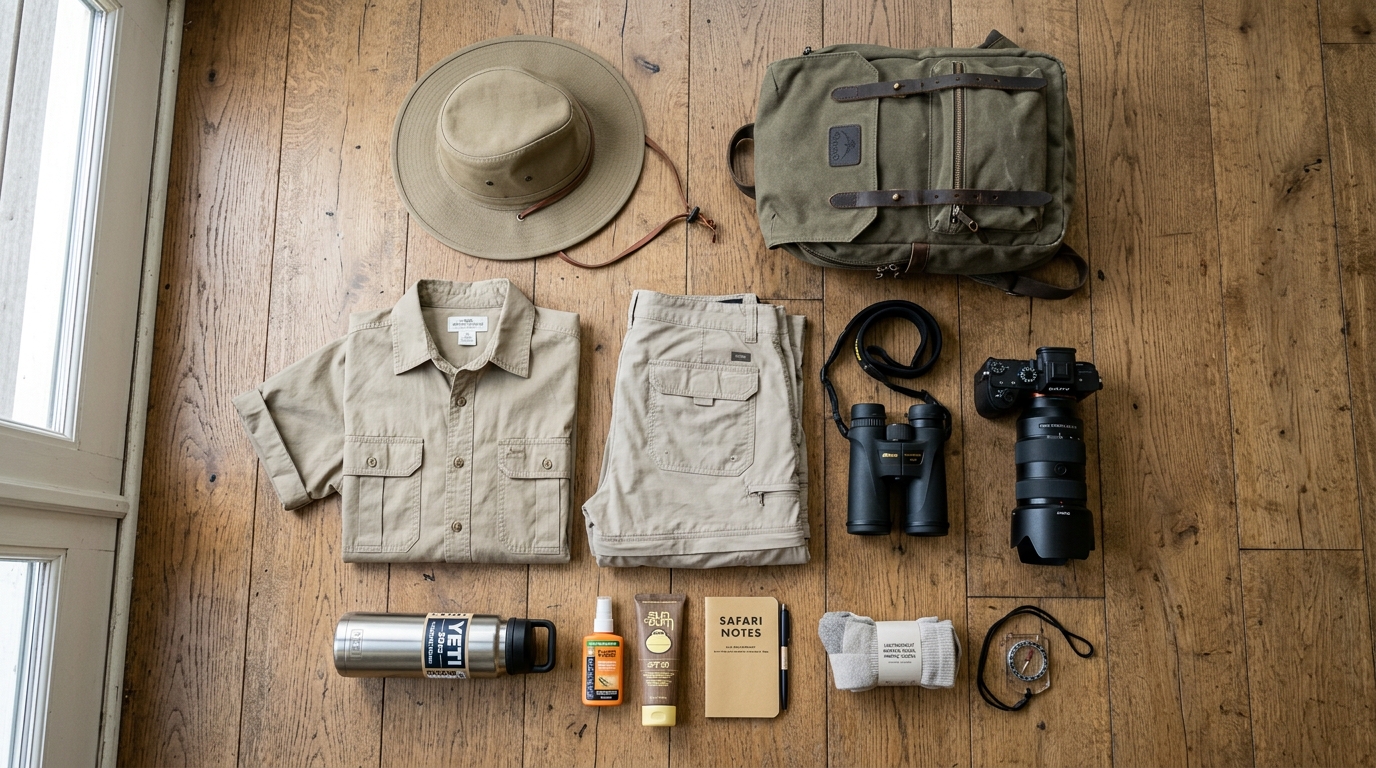
1. Wear neutral colors. Khaki, olive, sand, brown, grey, and cream. This matters because bright colors are more visible to wildlife, affecting how naturally animals behave near your vehicle or on a walking safari. It is not a strict rule that governs life or death but experienced guides ask clients to wear neutrals for good reason.
2. Pack layers, not bulk. A Maasai Mara morning at 6:00 AM can be 10°C with wind chill. By 10:00 AM it is 28°C and sunny. A fleece and a light shirt beat a heavy jacket every time. Layers let you adapt without overpacking.
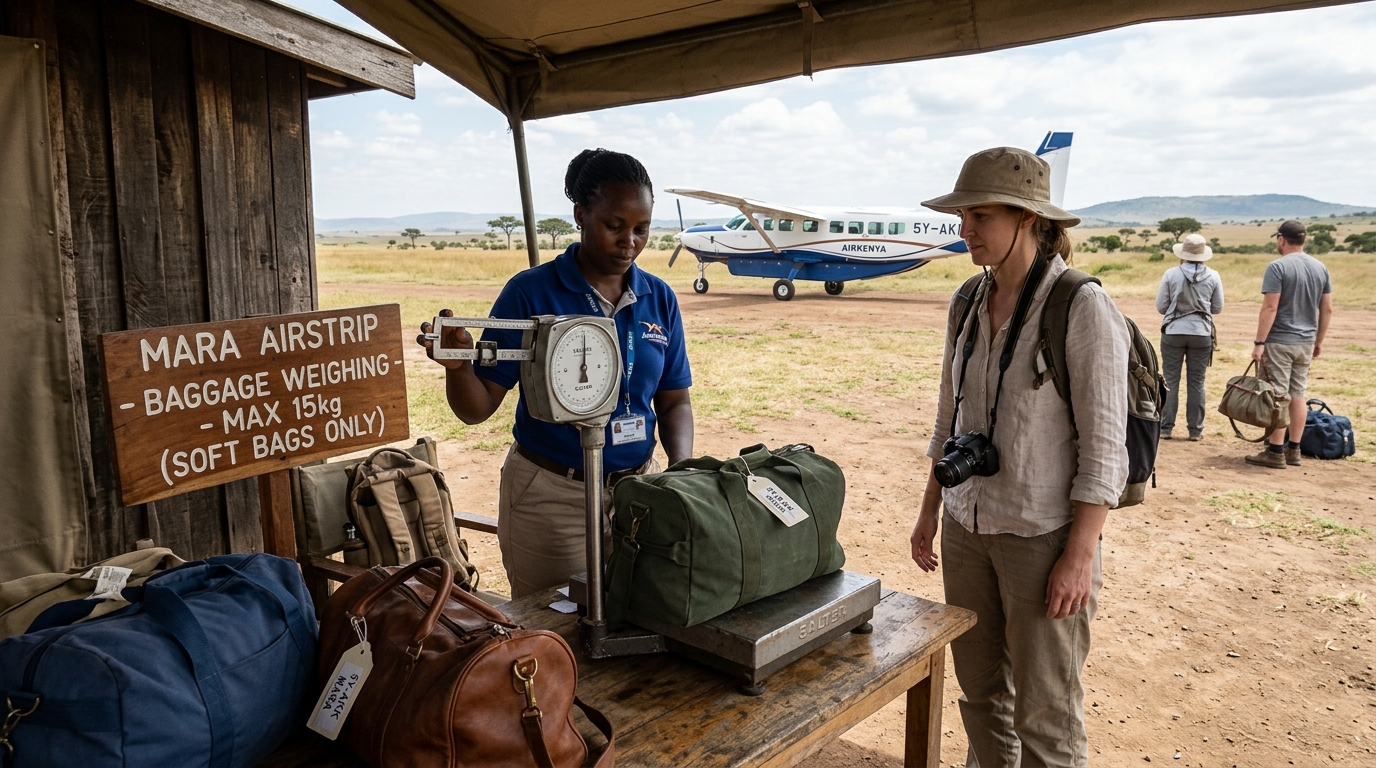
3. Soft bags only. Light aircraft safaris have a standard 15kg checked plus 5kg carry-on allowance, and the luggage holds are shaped for soft bags, not rigid suitcase shells. This applies to the Mara, the Serengeti, and every domestic safari flight in Kenya and Tanzania.
4. Less than you think. You spend the majority of your time in one of three places: the vehicle, the camp, and your tent or room. You do not need five outfit options.
5. No perfume or cologne. Strong scents disturb wildlife on walking safaris, attract insects, and can affect gorilla behavior at close range. Use unscented toiletries and deodorant for the duration of the safari.
What to Wear on Safari — The Core Clothing List
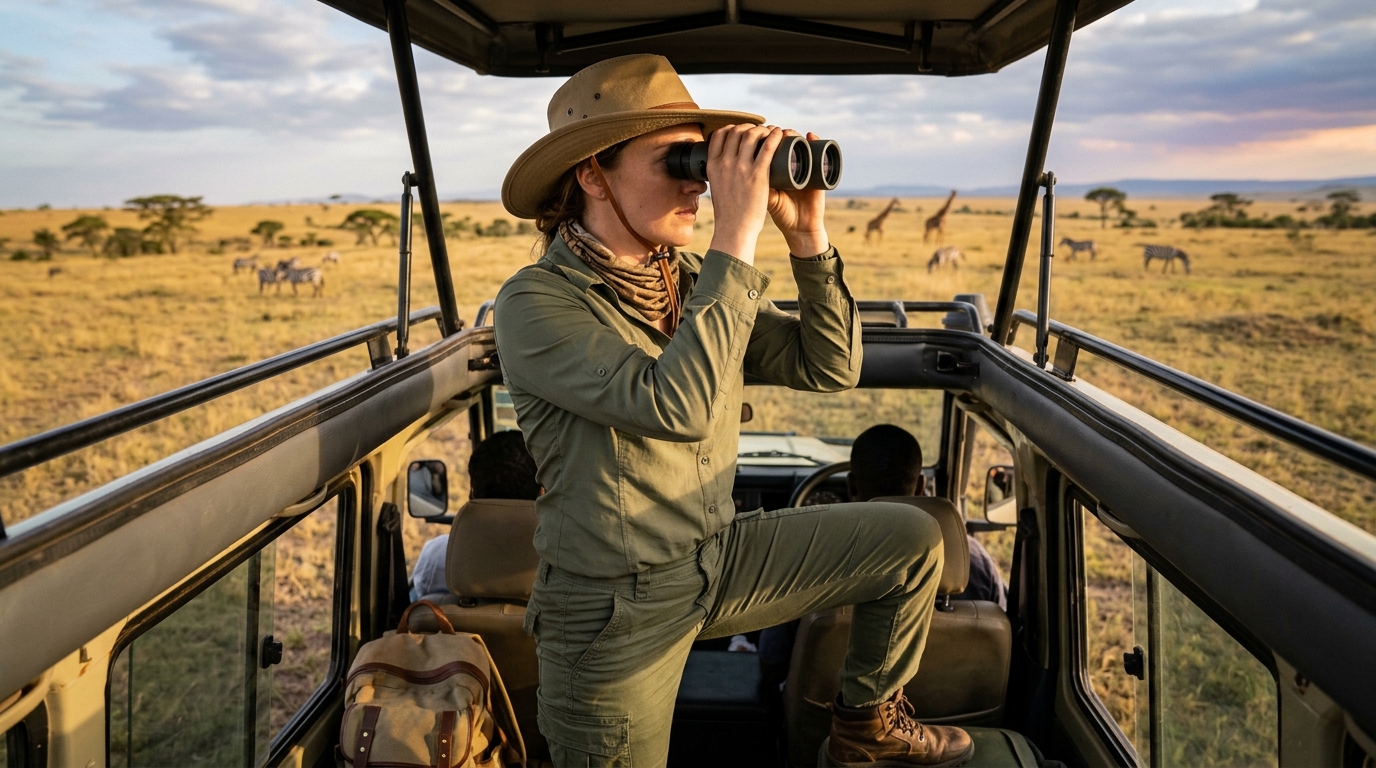
Pack for two roles: game drives (outdoor, active, possibly cold in the morning) and camp evenings (relaxed, comfortable, cooler after dark).
For Game Drives
Long-sleeve shirts (×3 minimum) Light, breathable, neutral coloured. Merino wool or synthetic moisture-wicking fabrics are ideal, they dry fast, insulate when damp, and resist odour. Avoid cotton for primary layers in Tanzania or Uganda where humidity is higher.
Safari trousers or convertibles (×2) Zip-off convertibles (trousers that unzip to shorts) are the most versatile item in a safari wardrobe. Lightweight, neutral, fast-drying. Avoid jeans, they are heavy, slow to dry, and uncomfortable in a warm vehicle for six hours.
Warm fleece or mid-layer Mandatory. Early morning game drives in the Mara or Serengeti, and gorilla treks at altitude, can be surprisingly cold. A 200-weight fleece fits in a daypack and weighs almost nothing.
Waterproof and windproof jacket One lightweight waterproof layer. Also functions as a wind layer in open vehicle conditions. Essential for gorilla trekking, useful for early Mara mornings.
Wide-brimmed hat Not a baseball cap, a wide brim with full 360° coverage. You are in a pop-up roof vehicle with no shade overhead for hours at a time. SPF 50 clothing helps, but a hat is the most important single sun-protection item.
Buff or lightweight neck gaiter Dual function: sun protection on your neck during game drives, and dust filter on dry-season Mara or Serengeti tracks. Takes up no space at all.
Swimwear Most mid-range and luxury camps have pools. Pack one set.
For Camp Evenings
Light trousers or a dress in neutral or earth tones, a warmer top, sandals or closed shoes. Camp evenings in the Mara can be cool, a light down jacket or second fleece earns its place in the bag.
What NOT to Wear or Pack
Bright colors: Red, orange, yellow, royal blue, bright white. These flag your presence to wildlife, to tsetse flies (which are attracted to dark blue and black in certain areas), and to everyone in camp who will gently suggest you change.
New footwear: New hiking boots on a gorilla trek are one of the most common mistakes we see. Break boots in at home for at least three or four long walks before travel. Blisters on Day 2 of a 5-day trek are miserable.
Jeans: Heavy, slow to dry after the inevitable afternoon shower, and uncomfortable in warm vehicles. Leave them at the Nairobi hotel.
Heavy perfume or cologne: One of the few firm rules. Replace with unscented toiletries for the safari portion of your trip.
Too many shoes: Hiking boots or trail shoes, camp sandals, and one pair of walking shoes. Three pairs maximum.
Safari Gear — What to Bring
Binoculars — The Most Important Piece of Equipment
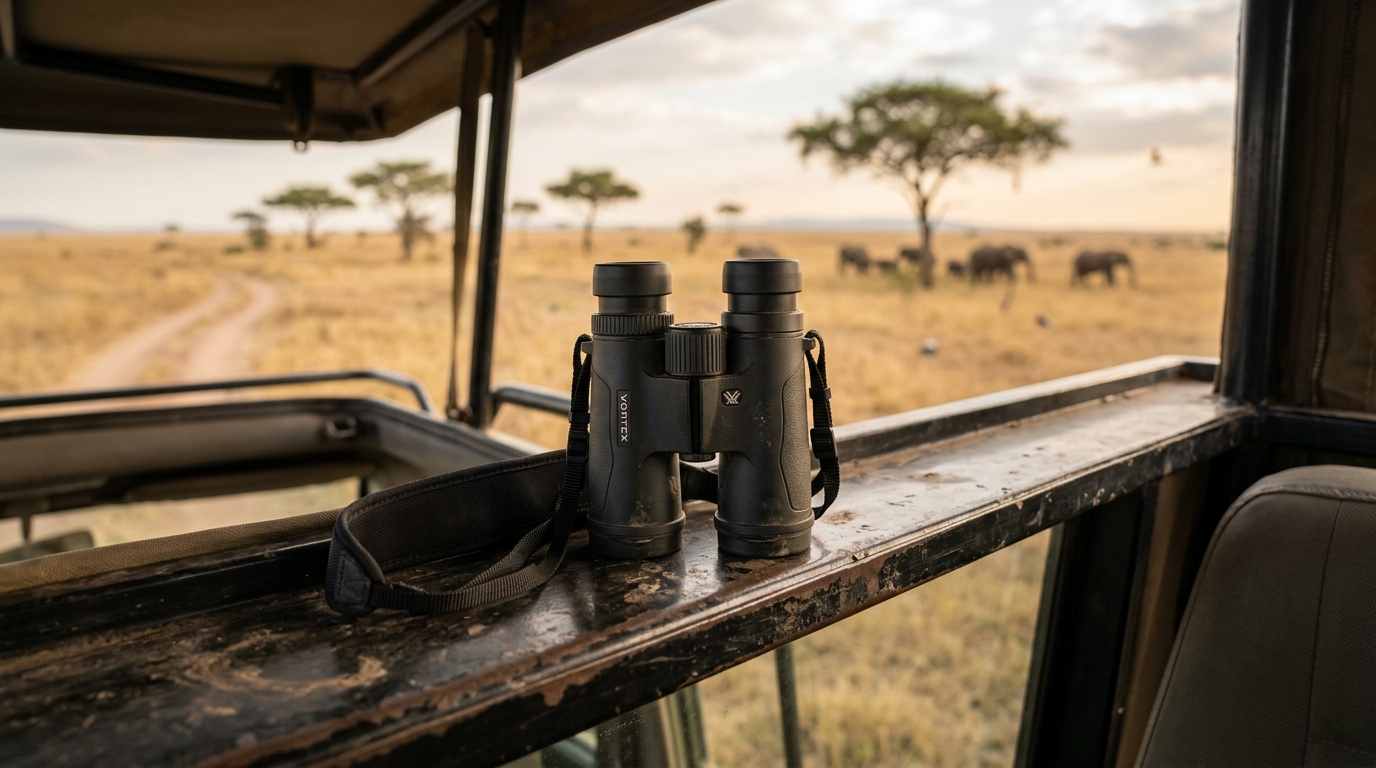
Many first-time safari visitors underestimate binoculars and either skip them or buy cheap ones. This is the single most consequential gear decision you make.
Recommended specification: 8×42. The first number is magnification — 8× is enough to bring a distant lion into clear view. The second is the objective lens diameter — 42mm gathers excellent light for early-morning and late-afternoon viewing. Brands like Nikon Monarch, Vortex Crossfire, and Zeiss Conquest offer excellent quality at various price points.
Compact binoculars (8×25) are lighter but gather less light and are significantly inferior for low-light game viewing.
Camera
Your phone camera will produce useable results, but a camera with a telephoto lens transforms wildlife photography. A DSLR or mirrorless camera with a 100–400mm zoom lens is the standard for serious safari photography. For casual photographers, a superzoom bridge camera (Panasonic FZ300, Sony RX10) with a long built-in lens is an excellent single-unit solution.
- Extra memory cards: At minimum 2 × 64GB
- Extra batteries: Two fully charged (charging opportunities are limited at some camps)
- Lens cleaning cloth: Dust is inevitable
Other Gear
- Power bank (20,000mAh): Camps have charging points but not always during game drive hours. Keep your devices charged in the vehicle.
- Universal travel adapter: East Africa primarily uses Type G (UK three-pin), but lodges often have multi-socket adapters. Bring your own to be safe.
- Headlamp: Essential for navigating camp at night. Lions and elephants do occasionally wander through. Use your headlamp, not your phone screen.
- Reusable water bottle (1 liter minimum): Most quality operators provide water in the vehicle, but having your own bottle is good practice, particularly for activities.
- Small padlock: For tent zippers at some camps. A $3 combination lock provides peace of mind without adding meaningful weight.
Health and Medical Essentials
Note: Consult your GP or travel health clinic before travel for personalized medical advice. What follows is general information.
Malaria prophylaxis: Kenya, Tanzania, Uganda, and Rwanda all have malaria-endemic regions that include the safari parks. The most commonly prescribed prophylaxis for East Africa is atovaquone-proguanil (Malarone) or doxycycline. Begin your medication according to your doctor’s schedule, not the night before departure. Carry extra doses in case of travel delays.
Insect repellent: DEET-based repellent of at least 30% concentration. Apply to exposed skin, particularly at dusk and dawn. Mosquito nets are provided at most camps but repellent is your second line of defence.
Sunscreen: SPF 50+ minimum. Reapply every 2 hours when in an open vehicle. Many travelers are surprised how quickly they burn in an open game drive vehicle on the equator, even in overcast conditions.
Basic medications to carry:
- Antihistamines (insect reactions, dust allergies)
- Imodium and rehydration sachets (stomach upsets are common on any international trip)
- Paracetamol and ibuprofen
- Plasters and blister treatment (particularly for gorilla trekkers)
- Any prescription medications in original packaging with sufficient quantity for the trip plus 3 days extra
Yellow fever vaccination: Required for entry into Uganda and Rwanda, and for some entry routes into Kenya if travelling from a yellow fever-endemic country. Check current requirements for your nationality and route. Carry your yellow fever certificate throughout the trip.
Documents and Money
- Passport: Must be valid for at least 6 months beyond your travel dates, with at least 2 blank pages for stamps
- Visas: Kenya eVisa (USD $34, apply at evisa.ecitizen.go.ke), Tanzania eVisa (USD $50), Uganda e-Visa, Rwanda e-Visa as applicable to your itinerary
- Travel insurance: Carry a physical copy. Ensure your policy includes medical evacuation, a Mara evacuation by air ambulance to Nairobi costs USD $3,000–$5,000 without cover
- Cash: USD is the most useful currency across East Africa, clean, undamaged notes printed after 2009. Carry some KES (Kenya shillings) for tips, local markets, and small purchases in Kenya
- Credit card: Visa is most widely accepted at lodges, airports, and larger hotels. Some remote camps are cash-only
The Luggage Question — Bags for Bush Planes
This is where many first-time safari travelers make an expensive mistake.
Light aircraft weight limits: Most scheduled and charter flights between safari camps in Kenya and Tanzania have a baggage allowance of 15kg checked plus 5kg carry-on per person. Some smaller aircraft reduce this to 12kg checked. The limit is strict, excess baggage charges are high, and in rare cases bags are left for the next flight.
Bag type: The luggage holds of bush planes are irregular in shape and dimensioned for soft-sided duffel bags, not hard-shell suitcases or wheeled luggage. Rigid cases do not fit. This is non-negotiable.
What to do with your large case: Leave it at your Nairobi hotel. Most hotels in Nairobi offer secure luggage storage during your safari period. Pack everything you need for the bush into a soft duffel of 15kg maximum, plus a daypack for the flight and game drives.
Recommended bag setup:
- One soft duffel bag (45–55 litre): main safari luggage
- One daypack (20–25 litre): for game drives, flights, and gorilla trekking
Additional Packing for Gorilla Trekking (Uganda and Rwanda)
Gorilla trekking in Bwindi or Volcanoes National Park requires specific additions to your standard safari kit:
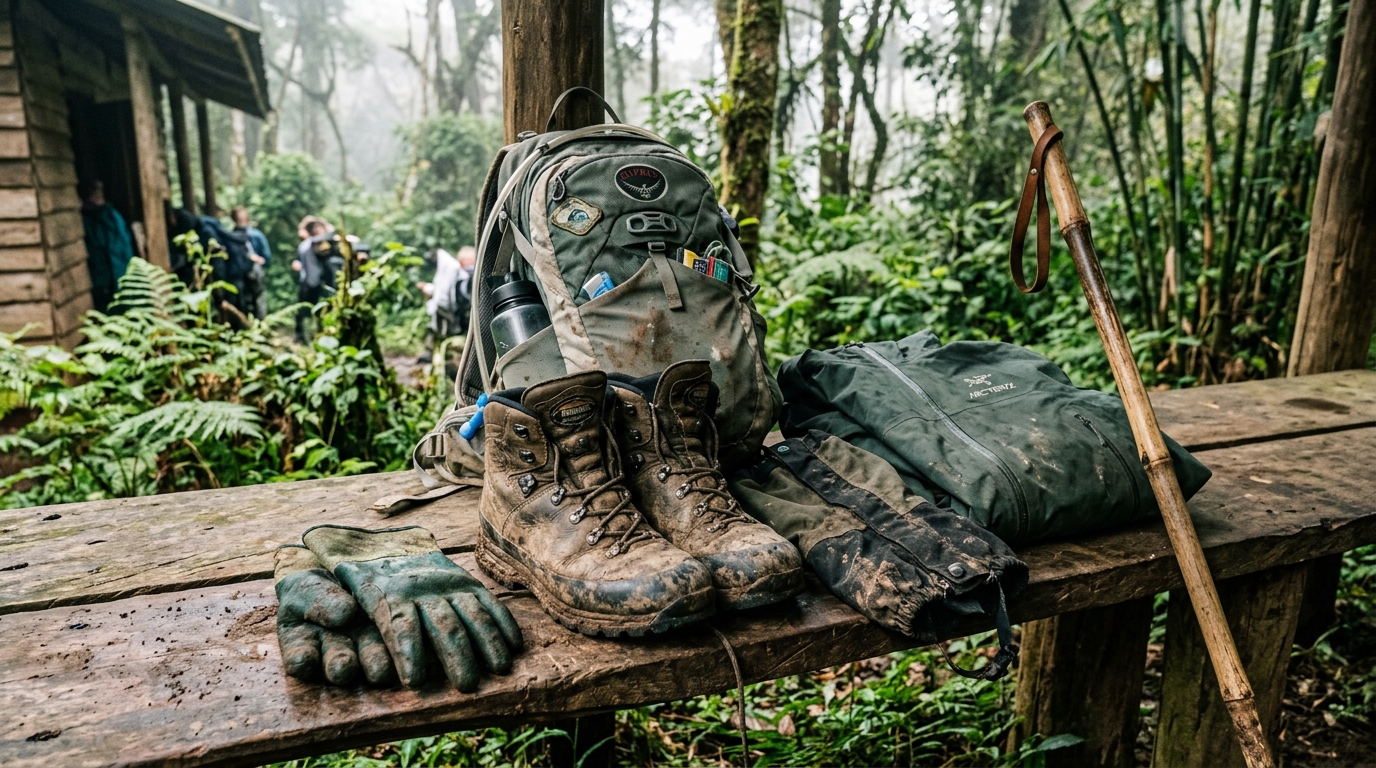
Garden gloves or lightweight work gloves: Mandatory. You will grab vegetation on steep slopes and the undergrowth in both parks includes stinging nettles and sharp-edged plants. Garden gloves weigh almost nothing and are transformative on a steep descent.
Waterproof hiking boots: Already broken in. The forest floor in Bwindi in particular can be very steep and very muddy. Your camp sandals will not work. Ankle support matters on this terrain.
Gaiters: Optional but highly recommended for wet season trekking. They keep mud and debris out of your boot tops on muddy descents.
Long-sleeved shirt and long trousers: Both for physical protection from vegetation and to meet the health protocol requirement that minimises skin exposure near the gorillas.
Walking stick: Available at the trailhead but bringing your own collapsible trekking pole is better — you will use it on the descent as much as the ascent.
Snacks: High-energy bars, nuts, or fruit for a potentially 4 to 6-hour trek. Water is essential — carry at least 2 litres.
What to Buy in Nairobi Before Your Safari
If you arrive in Nairobi and realise you have forgotten something, the following are readily available:
- Sunscreen and insect repellent: Available at all Nairobi supermarkets (Zucchini, Carrefour, Chandarana). International brands present.
- Safari clothing: The Game Parks shop in the Junction Mall and several stores around Westlands stock basic safari clothing including khaki shirts, convertible trousers and hats.
- Binoculars: Available at camera stores and some game parks retail outlets, but selection is limited. Better to bring from home.
- USD cash: Exchange at JKIA arrivals or at Nairobi banks. Rates are reasonable. Avoid airport-side money changers outside the terminal.
Plan Your Safari with Crescent Shores Retreats
We brief every client on packing before travel and are available by WhatsApp for any specific questions about your destination, season, or activities. A thorough pre-departure briefing is part of every Crescent Shores package.
📞 WhatsApp or call: +254 790 292 838 📧 Email: welcome@crescentshoresretreats.com 🌐 Kenya Safari Guide: Kenya Safari Packages 2026 → 🌐 Gorilla Trekking Packing: Uganda Gorilla Trekking Guide → 🌐 Start planning: Contact Our Team →
Frequently Asked Questions — Safari Packing
What colours should I wear on safari?
Wear neutral, earth-toned colours — khaki, olive, sand, brown, grey, and cream. These reduce your visibility to wildlife and are the standard across all professional safari operations. Avoid bright colours (red, orange, yellow), white (too visible and difficult to keep clean), and dark blue or black in areas where tsetse flies are present, as these colours are known to attract them.
Do I need binoculars for a safari?
Yes — binoculars are the single most important piece of safari equipment besides a camera, and the most frequently regretted omission by first-time visitors. We recommend 8×42 magnification as the optimal specification for game drive conditions. Good mid-range options include the Nikon Monarch series, Vortex Crossfire II, and Celestron TrailSeeker. Compact binoculars (8×25) are convenient but gather significantly less light for early-morning and late-afternoon use.
Can I use a hard suitcase for a safari?
Not for any itinerary that includes a light aircraft transfer between camps — which most Maasai Mara, Serengeti, or Northern Kenya safaris do. Light aircraft luggage holds are shaped for soft duffel bags and have strict weight limits of 15kg checked plus 5kg carry-on. Leave your hard case at your Nairobi hotel and pack a soft duffel for the bush portion of your trip.
What camera do you recommend for a safari?
For serious photography, a DSLR or mirrorless camera with a 100–400mm telephoto zoom lens is the standard. For casual photographers who want one versatile camera, a superzoom bridge camera such as the Panasonic FZ300 or Sony RX10 IV offers long zoom range in a single unit without interchangeable lenses. A modern smartphone with a good camera will capture good images at mid-distance but will struggle with distant wildlife. Bring at least 2 extra batteries and 2 × 64GB memory cards regardless of camera type.
Do I really need malaria tablets for a Kenya safari?
Yes. All major national parks in Kenya, Tanzania, Uganda and Rwanda are in malaria-endemic areas. The standard prophylaxis prescribed for East Africa is atovaquone-proguanil (Malarone) or doxycycline. Consult your GP or travel health clinic at least 4 to 6 weeks before travel for personalised advice and a prescription. Also use DEET-based insect repellent of at least 30% and sleep under the mosquito nets provided in camp.
How much luggage can I take on a light aircraft safari?
The standard light aircraft baggage allowance across East Africa is 15kg of checked luggage plus 5kg carry-on, in soft bags only. Some smaller aircraft (6-seater Cessna 206) may reduce this to 12kg. Weight limits are strictly enforced at East African airstrips — excess baggage is expensive and occasionally bags are left for the next available flight. Pack the minimum you need for the bush portion of your trip and leave your main luggage at a Nairobi hotel.
— Crescent Shores Retreats, Naivasha, Kenya Naivasha-based safari tour operator · Kenya · Tanzania · Uganda · Rwanda +254 790 292 838 · welcome@crescentshoresretreats.com

Leave A Comment