
By Crescent Shores Retreats · Naivasha, Kenya · Published May 2026 · 12 min read
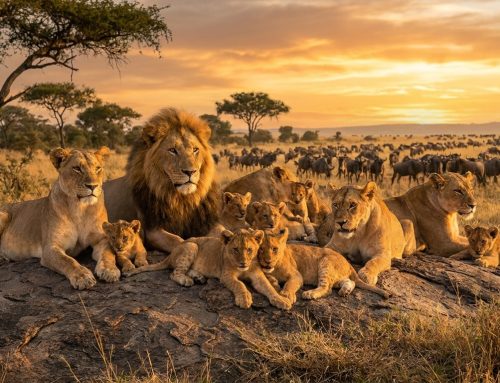
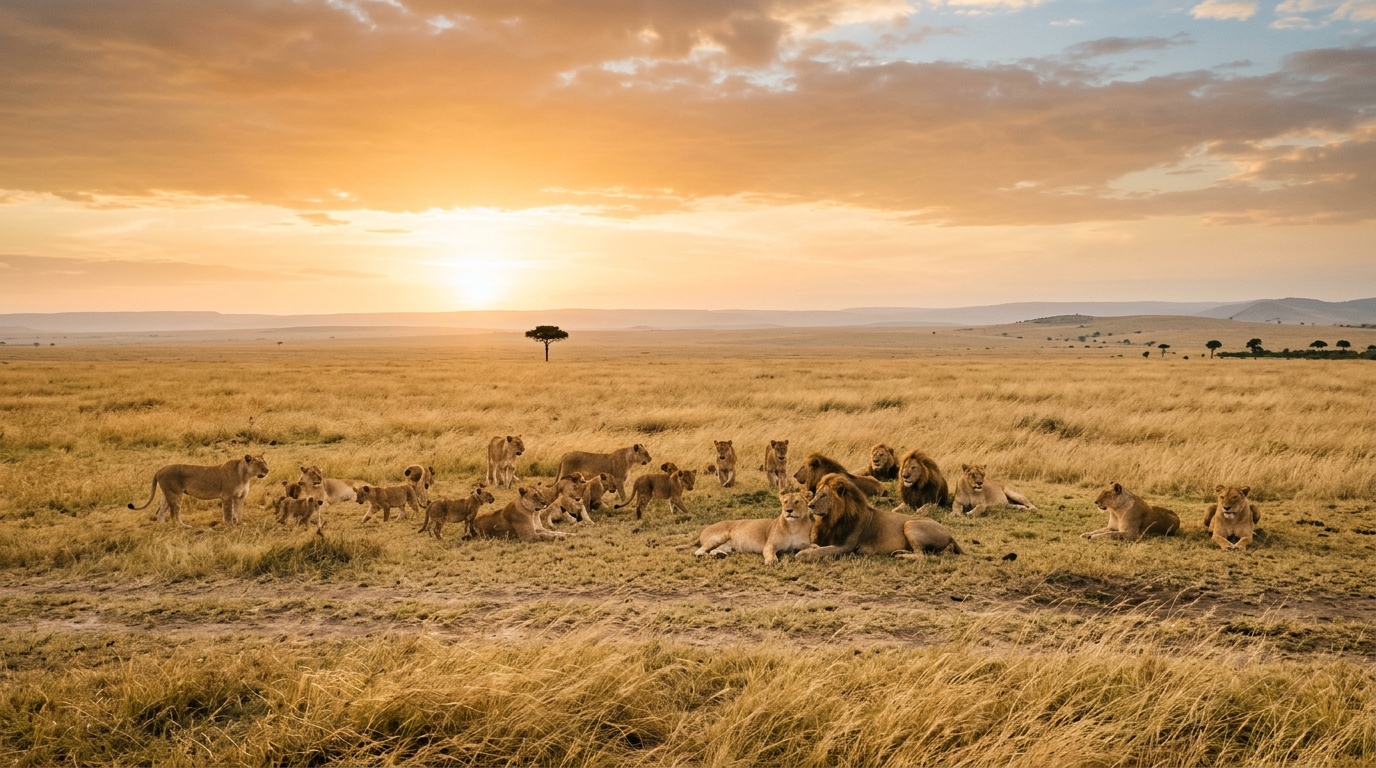
The Maasai Mara is one of the few safari destinations in Africa that is genuinely excellent in every month of the year. Unlike parks that rely on water availability or one specific seasonal event, the Mara’s resident wildlife — including the largest lion population in Africa — is present year-round. But the experience varies dramatically across the calendar, and knowing which month matches your travel goals can mean the difference between good and extraordinary.
The short answer: July to October is peak season, with the Great Wildebeest Migration river crossings at their most dramatic. January, February, June and December are excellent for game viewing with fewer crowds. April and May are the best value and the most photogenic — if you do not mind some mud.
Everything else in this guide explains those choices in detail.
At a Glance — Maasai Mara by Month
| Month | Season | Migration | Wildlife | Crowds | Price | Overall |
|---|---|---|---|---|---|---|
| Jan | Dry | Herds in S. Serengeti | ★★★★★ | Low | $$ | ★★★★★ |
| Feb | Dry | Calving in Serengeti | ★★★★★ | Low | $$ | ★★★★★ |
| Mar | Long rains begin | Herds moving north | ★★★★☆ | Low | $$ | ★★★★☆ |
| Apr | Long rains | Herds in C. Serengeti | ★★★★☆ | Very low | $ | ★★★☆☆ |
| May | Long rains | Herds approaching | ★★★★☆ | Very low | $ | ★★★☆☆ |
| Jun | Dry begins | First herds arriving | ★★★★★ | Moderate | $$$ | ★★★★★ |
| Jul | Peak dry | Migration arrives | ★★★★★ | High | $$$$ | ★★★★★ |
| Aug | Peak dry | Peak crossings | ★★★★★ | Very high | $$$$ | ★★★★★ |
| Sep | Peak dry | Crossings continue | ★★★★★ | High | $$$$ | ★★★★★ |
| Oct | Dry/Short rains | Herds departing | ★★★★☆ | Moderate | $$$ | ★★★★☆ |
| Nov | Short rains | Herds in C. Serengeti | ★★★★☆ | Low | $$ | ★★★☆☆ |
| Dec | Dry | Herds in S. Serengeti | ★★★★★ | Moderate | $$$ | ★★★★★ |
Price key: $ = lowest (green season), $$$$ = peak (July–October non-resident fee USD $200/day)
Peak Season — July to October
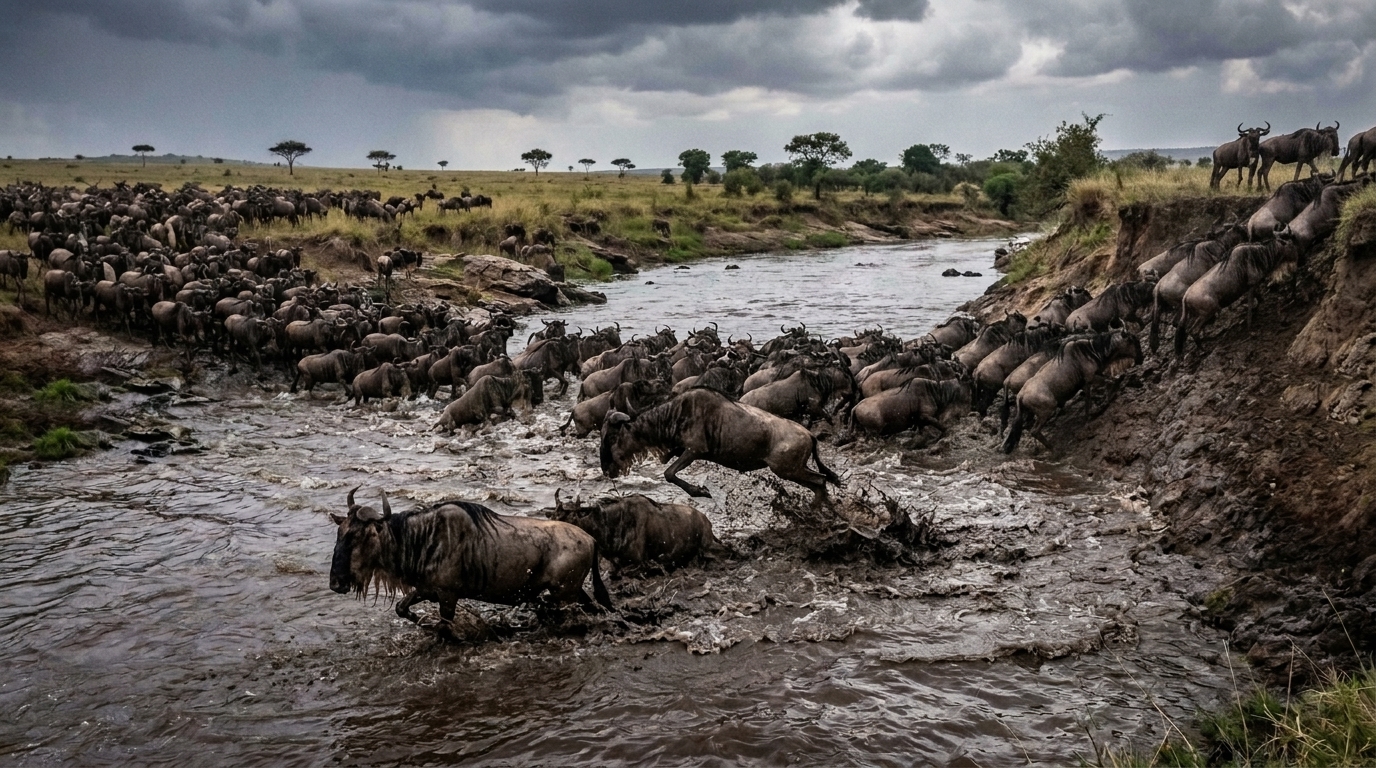
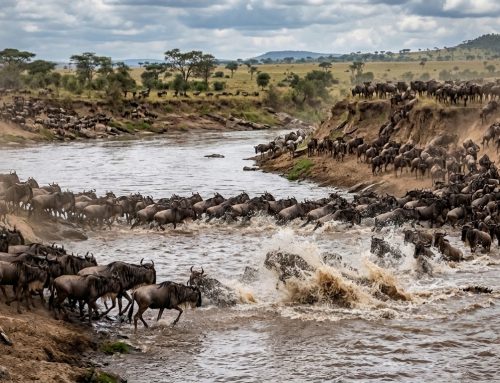
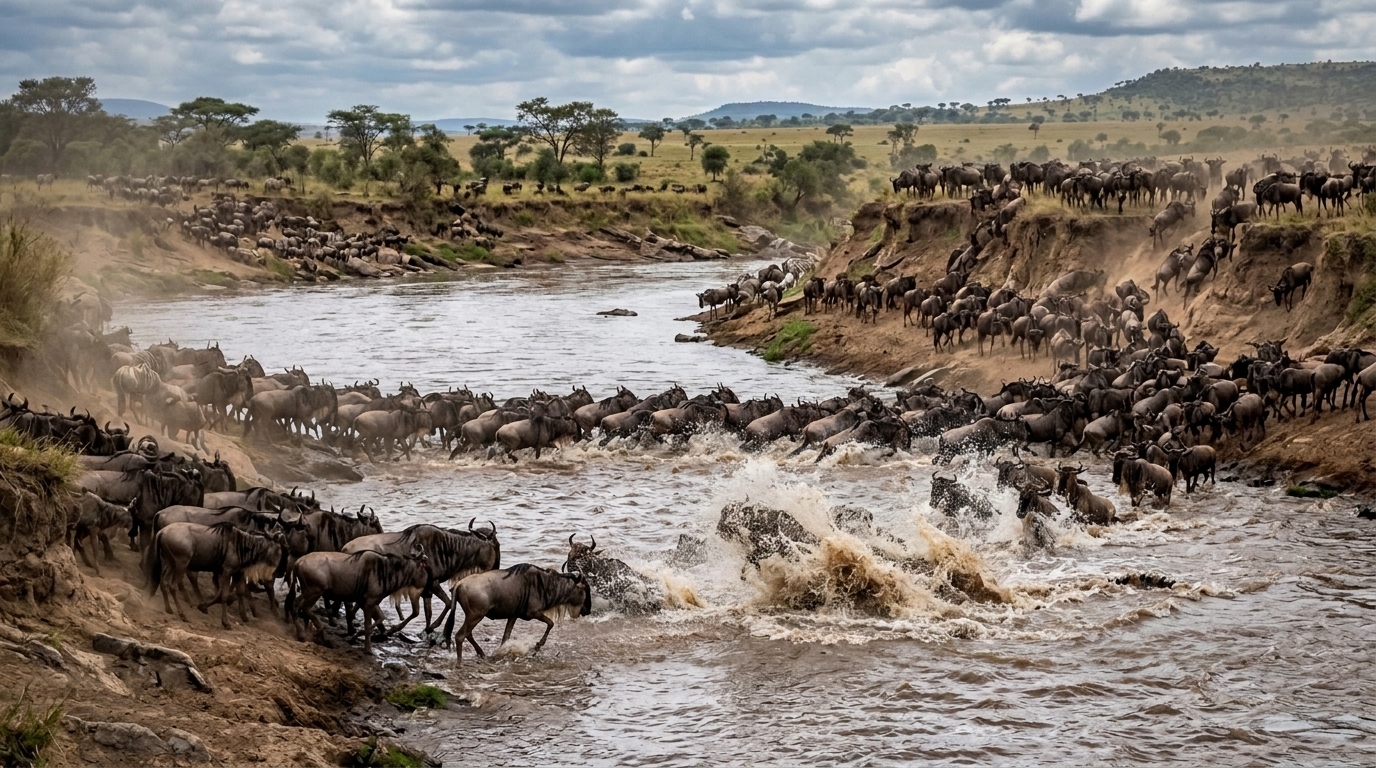
This is the Maasai Mara’s most celebrated window, and its reputation is fully earned. The Great Wildebeest Migration moves north from Tanzania into Kenya from July, bringing approximately two million wildebeest, zebra and gazelle onto the Mara’s plains. The Mara River crossings — wildebeest plunging into crocodile-filled water in their thousands — happen repeatedly throughout this period.
July — The Arrival
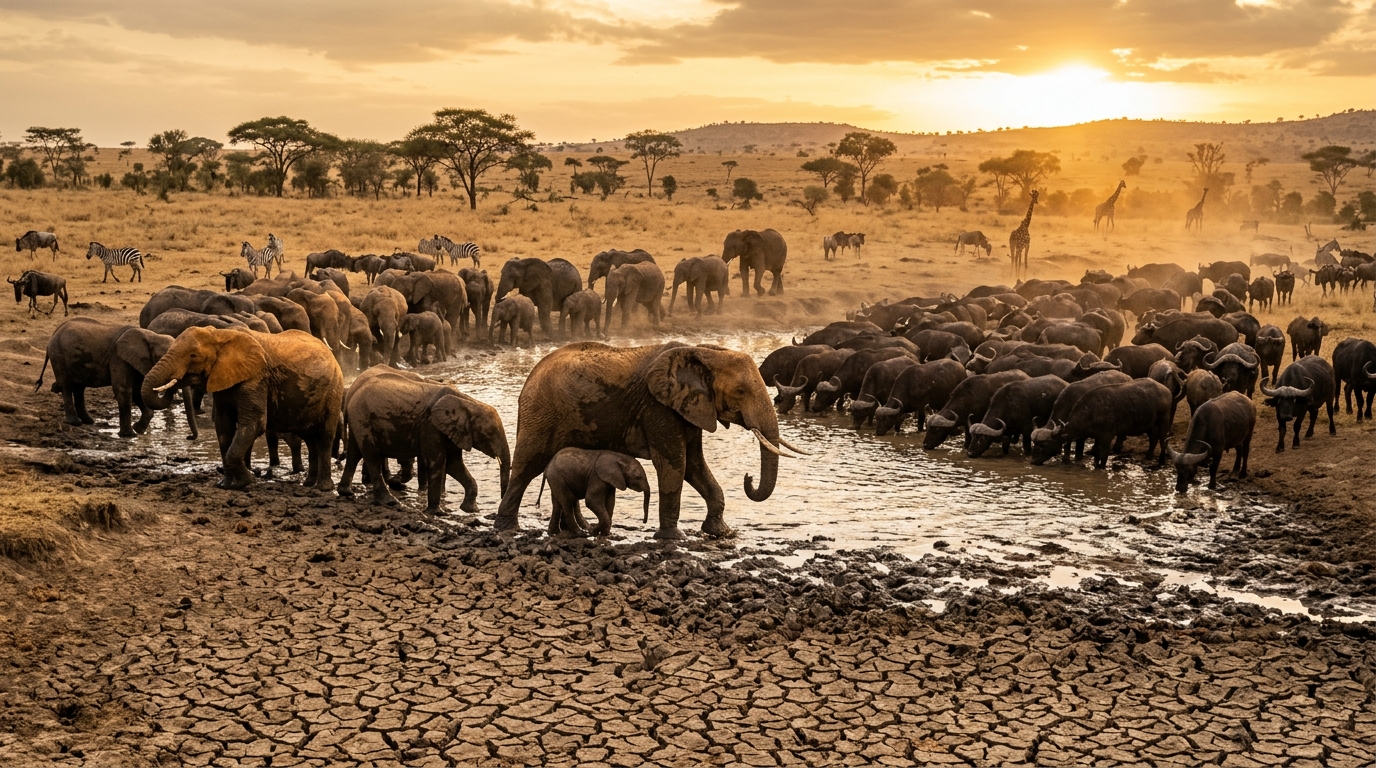
The first herds cross from Tanzania into Kenya in early to mid-July. Crossing frequency is unpredictable at this stage — the herds are still massing, testing the river banks and retreating. Game viewing in the Mara is outstanding even without a crossing: the dry season concentrates predators and prey around waterholes, and lion, cheetah, and leopard sightings are excellent throughout July.
Book by: January for August–September stays. July is more available. Park fee: USD $200 per person per day (non-resident, peak)
August — The Peak
August is the Maasai Mara at its most dramatic. The herds are fully in Kenya, the Mara River crossings are happening at maximum frequency, and the predator activity that follows the migration is intense. It is also the most expensive month and the most crowded — vehicle numbers at major crossing points can reach 30 or more.
Book by: Ideally 5–6 months in advance. Peak-season lodges and conservancy camps sell out completely for August. Our recommendation: Stay in a private conservancy if budget allows — the exclusive vehicle policy keeps crossing viewpoints uncrowded even in August.
September — Crossings Continue
September offers most of August’s spectacle with marginally fewer visitors and slightly lower prices at some properties. The river crossings continue through most of September. Late September can bring the first light rains, which thicken the grass and add drama to the photography conditions. One of the most underrated months for a Mara safari.
October — The Transition
The herds begin moving south again in October as the short rains arrive in Tanzania. Game viewing in the Mara remains excellent — resident wildlife is outstanding regardless of migration — but the river crossing frequency decreases. October offers the best value within the peak window and is ideal for travellers who want a taste of migration season without August’s crowds and prices.
Dry Season Excellence — December to February
This is the Maasai Mara’s second great season — excellent game viewing, dry and clear weather, and significantly fewer visitors than the migration peak. It is also when the Great Migration is in its calving phase in the southern Serengeti — meaning Tanzania’s Ndutu plains offer complementary spectacle to anyone extending their trip.
December — Festive Season Magic
December is outstanding — dry, warm, clear skies, and the atmosphere of Christmas and New Year at the better lodges is genuinely special. Wildlife viewing is excellent with the dry conditions concentrating animals. The resident lion prides are active, cheetah sightings are frequent on the open plains, and the Mara has an uncrowded, unhurried quality that peak season cannot offer.
Booking note: The Christmas and New Year window (December 20 to January 5) is one of the most sought-after booking periods in Kenya’s safari industry. Book at least 4 months ahead for this window.
January — The Best Kept Secret
January is genuinely one of the best months to visit the Maasai Mara, and it remains significantly underbooked relative to its quality. The dry season produces exceptional game viewing, the resident prides are well-fed and active after December’s rains, and the short grass makes wildlife visible at great distance. Prices are lower than peak. Crowds are low. The experience is outstanding.
February — Equally Excellent
February mirrors January’s quality almost exactly. Clear mornings, warm afternoons, excellent predator activity, low visitor numbers. If you are planning a honeymoon safari, January and February in the Mara are among the most consistently romantic months in the calendar — private, beautiful, and reliably excellent for game viewing.
June — The Overlooked Golden Month
June is one of the Maasai Mara’s most undervalued months — and one we recommend frequently to clients who want excellent game viewing without peak-season prices or crowds.
The dry season firmly establishes itself in June. The grass on the short-grass plains is browning, concentrating herbivores around remaining water sources. The Mara’s resident predators — lions, cheetahs, and leopards — are highly active. And from mid-to-late June, the advance guard of the wildebeest herds begins entering the Mara from Tanzania, building toward the full migration. You will see herds. You may see early crossings. You will definitely see extraordinary game.
Lodge prices in June are typically 20 to 30% lower than in July and August. Vehicle numbers are lower. Your guide has more time for each sighting. If there is a month that offers the best combination of value, experience, and quality across the whole year, June makes a strong case for the title.
Shoulder Season — March and November
Both March and November are transitional months — the beginning and end of the long and short rains respectively. Both are underrated.
March: The long rains are beginning but have not yet established. Early March is often still excellent. The Mara is greening from the previous dry season’s end, predators are active, and tourist numbers are low. Late March can be wetter and muddier — timing matters.
November: The short rains typically run for 4 to 6 weeks in October and November. They fall in the afternoons and evenings, leaving mornings crisp and clear — excellent for game drives. The Mara is lush and photogenic. Wildlife viewing is good throughout. Accommodation prices are meaningfully lower than peak. November is particularly good for bird watching as migrant species arrive from Europe and Asia.
Value Season — April and May (Long Rains)
We will be honest with you about April and May: it rains. The long rainy season in the Maasai Mara brings regular afternoon and sometimes morning showers. The dirt tracks can become muddy and difficult. Some remote camps close for the season. River levels rise and certain areas become inaccessible.
And yet — this is the Mara at its most photogenic, its least crowded, and its most affordable.
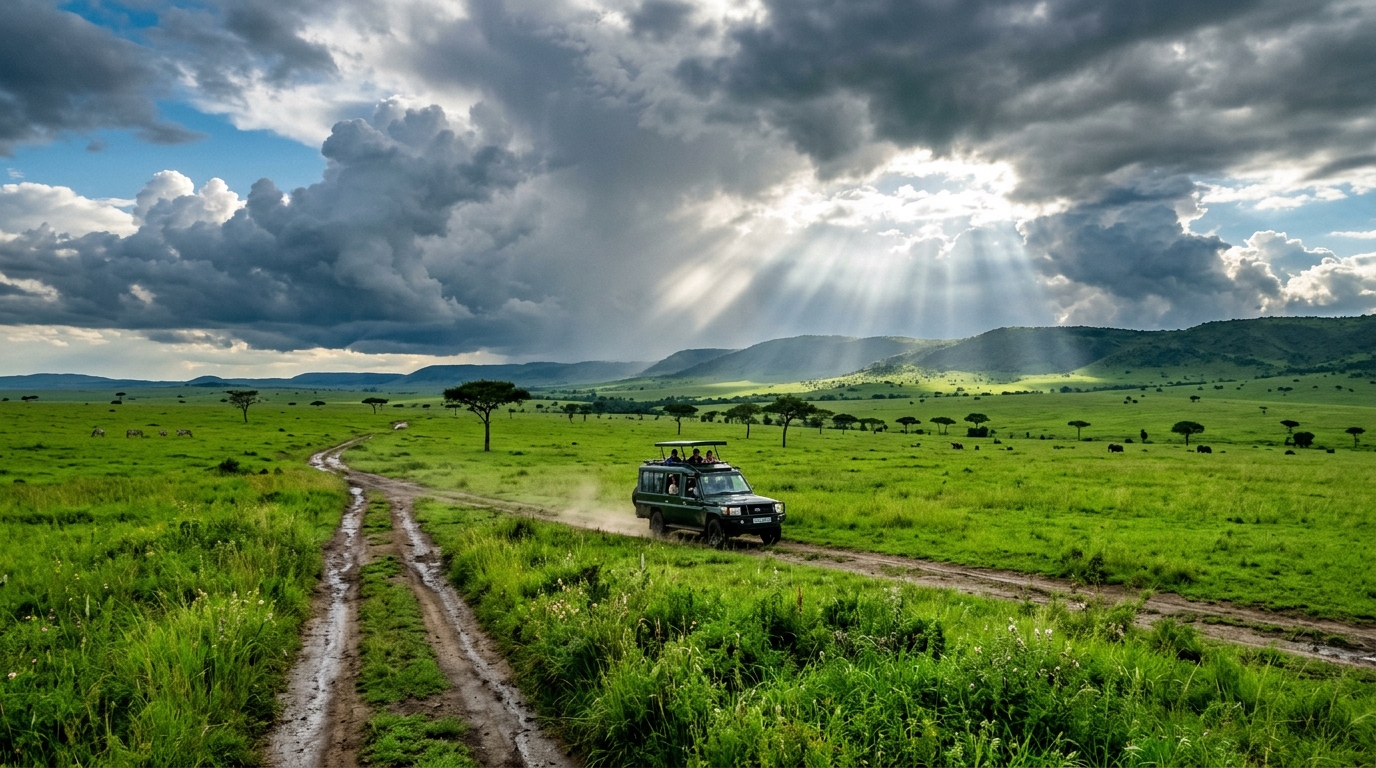
The case for green season:
The Mara in April and May is emerald green, dramatically lit, and completely empty of most tourists. Accommodation costs 30 to 50% less than peak season. You will have your guide’s undivided attention. Sightings of big cats with young cubs are at their highest — the post-rains period sees births across multiple species. The bird life reaches its peak diversity with resident and migrant species present simultaneously.
Game viewing is genuinely good. The resident lion prides, cheetahs, elephants, and buffalo do not take the rains off. Predator sightings can be extraordinary — the calving of resident gazelle and wildebeest in the green season provides concentrated prey, and pride hunts are frequent.
Who should visit in green season:
- Photographers wanting lush, dramatic landscape conditions
- Budget-conscious travellers who want the Mara experience at significantly lower cost
- Birdwatchers, for peak species diversity
- Experienced safari travellers on their second or third visit, seeking a different perspective
- Anyone whose travel window is fixed to April or May
Who should avoid green season:
- First-time safari visitors who want maximum game viewing predictability
- Families with young children who would struggle with muddy vehicle access
- Anyone with tight logistics (some camps close, some tracks are impassable)
The Great Wildebeest Migration — Where Are They Each Month?
Understanding the migration’s position by month is the key to planning the right destination for your timing.
| Month | Migration Phase | Best Location |
|---|---|---|
| Jan–Feb | Calving season — 500,000 calves born | Southern Serengeti (Ndutu), Tanzania |
| Mar–Apr | Herds moving northwest through Serengeti | Central and Western Serengeti |
| May–Jun | Herds approaching Mara border, Grumeti crossings | Western Serengeti corridor |
| Jul | First herds enter Kenya | Northern Maasai Mara, early crossings |
| Aug–Sep | Peak Mara River crossings | Maasai Mara (Kenya) and Northern Serengeti |
| Oct | Herds beginning return south | Departing Maasai Mara |
| Nov–Dec | Herds in central and southern Serengeti | Tanzania |
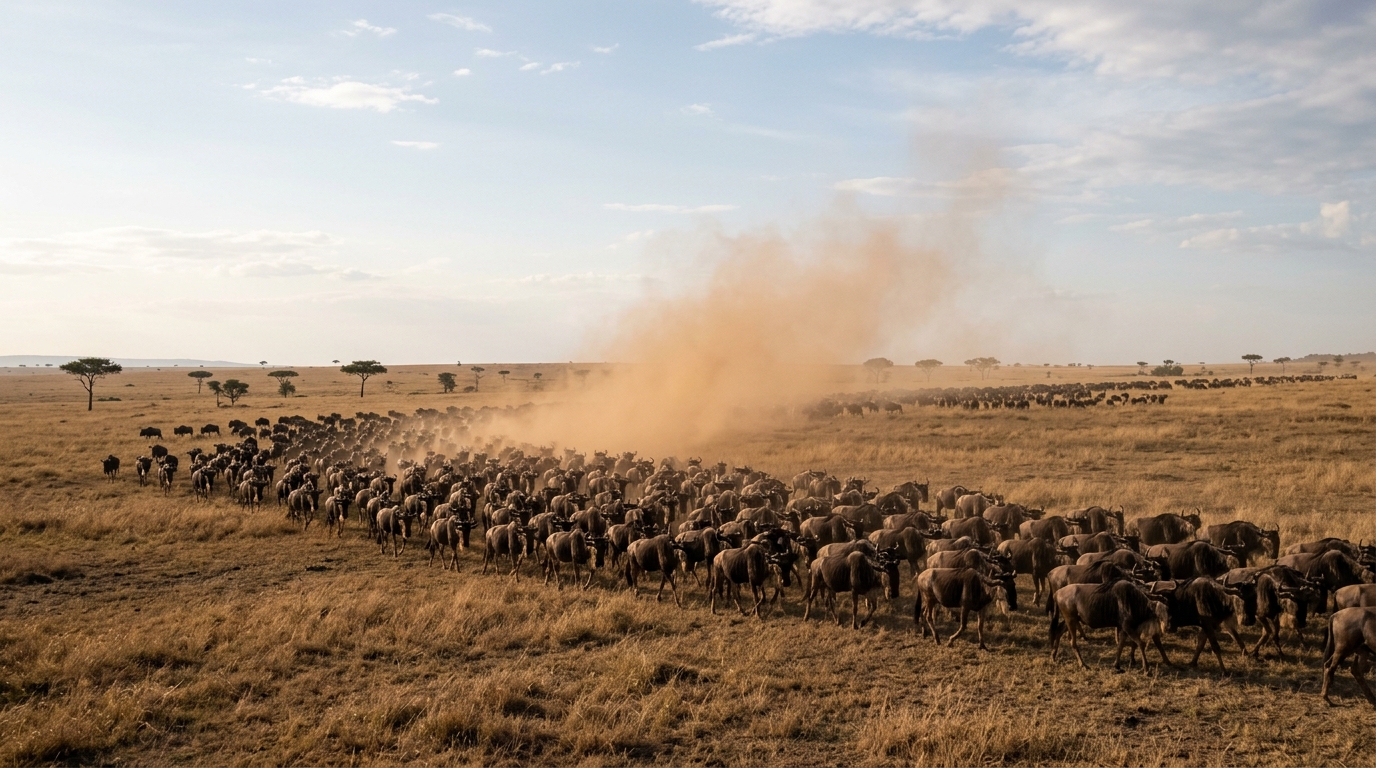
The key insight from this table: If you visit the Maasai Mara from January to June, the wildebeest herds are in Tanzania. You will still have outstanding game viewing — the Mara’s resident wildlife is extraordinary — but you will not see the river crossings. For the crossings specifically, plan for July to October. For the calving season (equally spectacular, far less crowded), plan a Southern Serengeti trip in January or February.
Which Month Is Right for Your Specific Safari?
| Your Priority | Best Month(s) |
|---|---|
| Wildebeest river crossings | August–September |
| Migration with fewer crowds | July (early) or October |
| Best overall game viewing | January, February, June |
| Best value accommodation | April–May |
| Fewest tourists | April, May, November |
| Family safari (school holidays) | July–August, December |
| Photography — dramatic skies | May–June, November |
| Photography — river crossings | August–September |
| Honeymoon | June, January, February, or December |
| Birdwatching peak | November–January (migrants present) |
A Note on Booking Lead Times
- August–September safari: Book at least 5–6 months in advance. These are the most sought-after dates in Kenya’s safari calendar and quality camps sell out completely.
- December (Christmas and New Year): Book at least 4–5 months ahead. The 20 December to 5 January window is extremely competitive.
- January, February, June: Book 2–3 months ahead. More flexibility but do not leave it to the last minute.
- April and May: Often bookable 4 to 8 weeks ahead. Some first-choice camps closed for maintenance, so early booking still advised.
At Crescent Shores, we monitor migration position in real time and brief clients on current herd locations before they travel. If you are visiting in July or August, we can advise on which crossing points are most active in the two weeks before your arrival — something no booking made 6 months in advance can offer without a local operator on the ground.
Plan Your Maasai Mara Safari with Crescent Shores Retreats
We organise Maasai Mara safaris year-round from our base in Naivasha — just 4 to 5 hours from the reserve. We build packages around your specific travel dates, advise on migration position and expected conditions, and handle all logistics from permit to accommodation to guide.
📞 WhatsApp or call: +254 790 292 838 📧 Email: welcome@crescentshoresretreats.com 🌐 Full Mara guide: Maasai Mara Safari: The Definitive Guide → 🌐 Compare destinations: Maasai Mara vs Serengeti → 🌐 Plan your dates: Contact Our Team →
Frequently Asked Questions — Best Time for Maasai Mara
What is the single best month to visit the Maasai Mara?
If forced to choose one month, August is the most reliably spectacular — the wildebeest river crossings are at their peak, predator activity is at its most intense, and the Mara is at the height of its reputation. However, August is also the most expensive and most crowded month. For an outstanding experience with fewer visitors, June or January offer comparable game quality at significantly lower cost and crowd levels.
Is August the best month for the wildebeest migration?
August is the peak month for Mara River crossings — the most dramatic single event in the migration. However, the entire July–October window offers crossing opportunities. September is often equally spectacular with slightly lower visitor numbers. July offers the excitement of the first arrivals with lower prices. If seeing crossings is your goal, book any time in July to mid-October — do not narrow yourself exclusively to August.
Is it worth visiting the Maasai Mara outside migration season?
Absolutely. The Mara has the highest resident wildlife density in Kenya — lions, cheetahs, leopards, elephants, and buffalo are present and active year-round regardless of migration position. The dry season months of January, February, and June consistently produce outstanding game viewing that matches or exceeds what migration-season visitors see. Many experienced safari travellers prefer these quieter months.
What is the Maasai Mara like in December?
December is excellent. It follows the short rains and the Mara is lush and green, the skies are dramatic, and the wildlife is active and well-fed. It is also festive — the atmosphere at camps during Christmas and New Year is celebratory. The resident prides are in excellent condition. December 20 to January 5 is one of the most popular booking windows in Kenya’s safari calendar — book at least 4 months ahead for this period.
When is the cheapest time to visit the Maasai Mara?
April and May are the cheapest months — the long rains season brings accommodation discounts of 30 to 50% compared to peak season. Park fees stay the same (USD $80 per person per day in low season), but lodge costs drop significantly. November is the second-cheapest window. Both periods have their rewards for patient, flexible travellers who value the lush landscape and empty tracks over guaranteed dry-weather conditions.
How far in advance should I book a Maasai Mara safari?
For August and September: 5–6 months minimum. Top camps and private conservancy lodges sell out entirely for these months. For December (Christmas/New Year): 4–5 months ahead. For January, February, June: 2–3 months is generally sufficient. For April–May green season: 4–8 weeks is often workable, though first-choice properties are worth booking earlier. If you are ever unsure, earlier is always better — we have never had a client regret booking too far ahead.
— Crescent Shores Retreats, Naivasha, Kenya Naivasha-based safari tour operator · Kenya · Tanzania · Uganda · Rwanda +254 790 292 838 · welcome@crescentshoresretreats.com

Leave A Comment